

Junk Removal vs. Renting a Dumpster: Which Is Right for You?
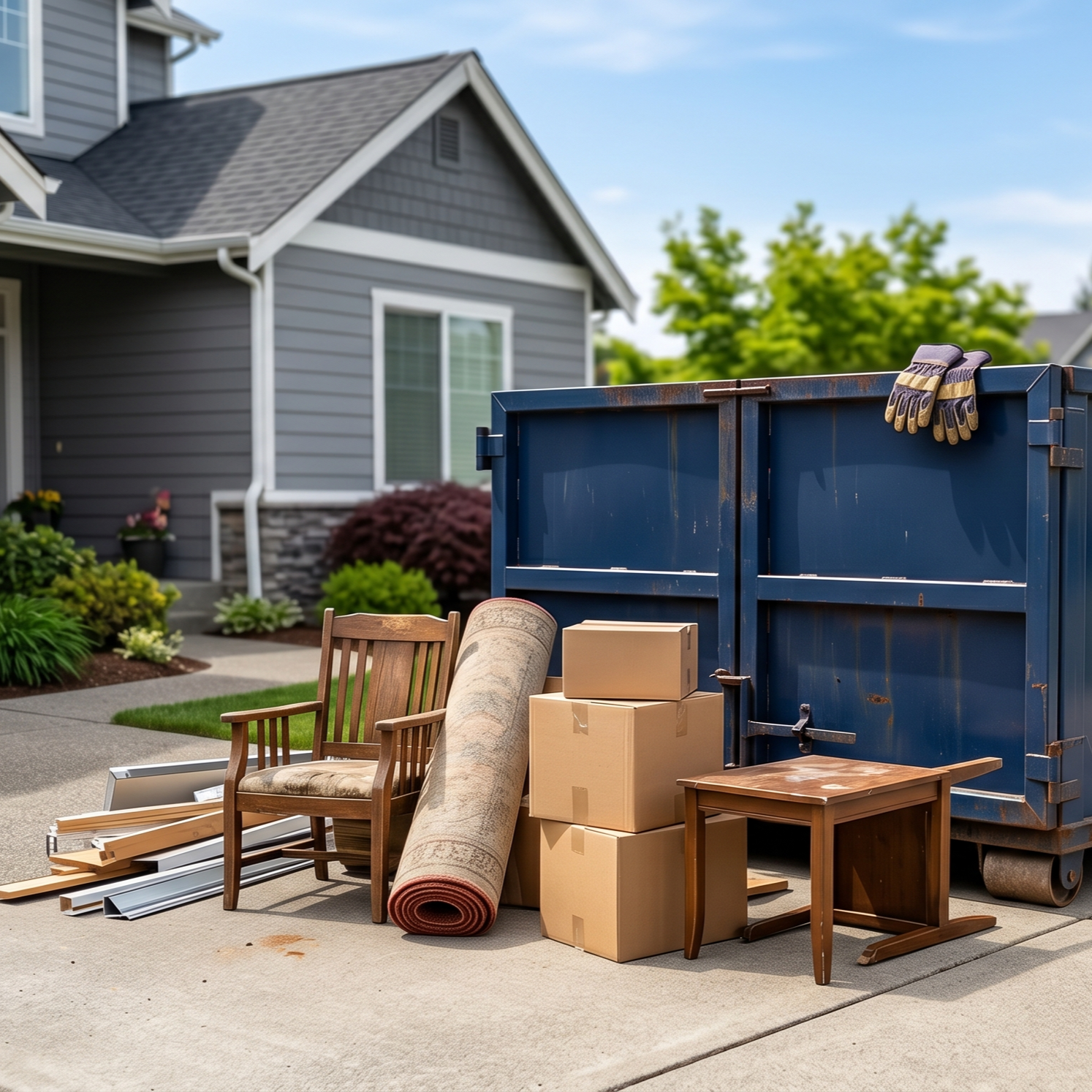
Quick Answer: The difference is who does the lifting and when. Junk removal means a crew shows up, loads everything, and hauls it away — usually same-day, no container in your driveway, minimal effort on your part. A dumpster rental drops a container you fill yourself over days or weeks, on your own schedule. Choose a dumpster for long, self-paced projects that generate debris steadily, like a multi-week renovation. Choose junk removal when the pile already exists, the items are heavy, or you just want it gone fast without doing the lifting.
You've finally committed to clearing out the house — the garage, the spare room, the pile behind the shed that's been growing for years. Now there's a second decision to make: do you have a crew come to haul it all away, or do you drop a dumpster in the driveway and fill it yourself? Both get the junk gone. They just suit very different jobs, timelines, and tolerance for doing the lifting yourself.
The Real Difference Is Who Does the Work and When
A dumpster rental is a container and nothing more. A company drops a metal box in your driveway, and from that point, everything is on you: every item you want gone, you carry, lift, and throw over the side, on your own schedule, until the rental period ends, and they come haul the box away. It rewards a project you'll work on in stages over days or weeks.
Junk removal is the opposite trade. A crew shows up, you point at what's going on, and they do the carrying, the lifting, and the loading — then it leaves with them, often the same day. You're paying for labor and speed instead of renting space and supplying your own muscle.
| Factor | Junk Removal | Dumpster Rental |
|---|---|---|
| Who does the lifting | The crew | You (and whoever you can recruit) |
| Timeline | Often same-day, one visit | Days to weeks, you set the pace |
| Driveway space | None taken — gone when they leave | A large container parked for the rental period |
| Best for | Defined piles, heavy items, fast clearouts | Ongoing projects with steady debris |
| Sorting & disposal | Crew sorts for recycling and donation | You load it all; mixed into one container |
| Physical effort | Minimal on your part | Significant |
When a Dumpster Makes More Sense
A rented container shines on a long, self-paced project where debris is generated a little at a time. If you're gutting a bathroom over three weekends, re-roofing, or doing a slow room-by-room renovation, having a box sitting right there to throw material into as you go is a real convenience. You're not coordinating with a crew's schedule — you fill it whenever you have an hour and a free back.
The trade-offs are the ones people underestimate. The container eats your driveway, sometimes for weeks. Everything in it, you lifted yourself, including the heavy and the awkward. And in Central Florida's rain, an open dumpster collects water fast, which adds weight and makes a soggy mess of anything absorbent that's already inside.
When Junk Removal Makes More Sense
Full-service hauling wins when the junk already exists as a pile, and you want it gone without becoming the labor. A whole-house cleanout, an estate or rental turnover, a single heavy item like a hot tub or a dead refrigerator, or storm debris scattered across the yard — these are jobs where the lifting is the hard part, and handing it to a crew with the right equipment is the whole point.
It's also the better fit for heavy or hazardous-adjacent material you don't want to wrestle. Dragging a waterlogged sofa or a cast-iron tub over the wall of a dumpster is exactly the kind of task that ends in a pulled muscle. A crew brings the people and the machine — a mini skid steer turns an afternoon of hauling brush and broken concrete into a quick, no-strain job. And because a good hauler sorts the load, more of it ends up recycled or donated rather than compacted into a single mixed box headed for the landfill.
A quick gut-check — if you'll generate debris steadily over more than a week, lean dumpster. If the mess already exists and you just want it gone, lean junk removal. The deciding question is usually "do I want to do the lifting?"
Match the Method to the Job
Picture the work honestly before you choose. A weekend purge of an already-full garage, a single oversized item, or a yard full of storm debris is a junk-removal job — the pile is there, and you want it handled. A multi-week renovation where you'll be tearing out material in bursts is a dumpster job because the convenience of a container on hand outweighs the effort of loading it. Some big projects even use both: a dumpster during the messy demolition phase, then a final haul to clear the leftovers that the box couldn't take.
It also helps to be honest about the help you actually have. A dumpster only works if you've got the time and the bodies to fill it — and most people overestimate both. The container that felt like a smart, economical choice on day one turns into a guilt-inducing eyesore by week two when the weekend you planned to load it got rained out or eaten by everything else. If you're picturing yourself doing the work alone, in the heat, around your real schedule, that mental picture is worth trusting. The point of full-service hauling is that the job gets finished in an afternoon instead of stretching across a month of good intentions.
Frequently Asked Questions
Junk removal, by a wide margin. With junk removal, a crew does all the carrying, lifting, and loading — you just identify what's going. A dumpster rental means every item goes in by hand during the rental period. If avoiding the physical labor is a priority, full-service hauling is the clear choice.
It depends on the pace. For a long renovation where debris comes out in stages over weeks, a dumpster parked on site is convenient because you can toss material as you generate it. For a quick demo or to clear debris after the work is done, junk removal is faster because the crew handles it in a single visit. Big jobs sometimes use a dumpster during demolition and a final haul to finish.
Yes. A rented dumpster sits on your property for the entire rental period, which can run from a few days to several weeks, depending on your agreement. It occupies driveway or yard space the whole time, and in rainy weather, it collects water that adds weight and soaks the contents. Junk removal leaves no container behind — it's gone when the crew leaves.
Junk removal is the practical pick for one heavy item like a refrigerator, hot tub, or treadmill. Renting a whole dumpster for a single piece is overkill, and you'd still have to move the item yourself. A crew brings the people and equipment to carry it out and load it, which is the hard part with anything heavy.
Junk removal generally diverts more material from the landfill. A good hauler sorts the load, sending metal to scrap, usable goods to donation, and clean wood and yard waste to recycling or mulching. A dumpster is typically one mixed container that goes to a single destination, so less of it gets separated for reuse.
Yes — whole-house cleanouts, estate clearouts, and rental turnovers are core junk-removal jobs. The crew scales the truck and the number of trips to the volume, so even a fully loaded house is manageable. Because they bring the labor and equipment, you avoid weeks of hauling everything to a dumpster yourself.
The Choice Comes Down to Labor and Pace
Both methods clear a big mess; they just split the work differently. Rent a dumpster when the project is long, you'll feed it steadily, and you don't mind doing the lifting. Call for junk removal when the pile already exists, the items are heavy, or you simply want it handled fast without throwing your back out. Match the method to the real shape of the job, and either one does exactly what you need.
Not sure a dumpster is worth the driveway space? — Skip the lifting and have a local crew haul it all in one visit, sorted for recycling and donation, or compare dumpster rentals in Plant City and Winter Haven. Polk Services LLC serves Lakeland, Highland City, Mulberry. Call (863) 344-5806.
