
Dead & Dying, Storm-Damaged, or Project Clearing
Dead or Dying Tree
The most common call. Palms that died from disease, oak saplings that grew into problem spots near foundations or drives, dead pine snags on cleared lots, gum trees that lost their canopy. Removing the tree before it comes down on its own is safer for the property and cheaper than emergency removal.
Storm-Damaged Tree (In Scope)
Hurricane Milton damaged trees across Polk County — split trunks, dangerous leans, partially lifted root balls. Polk Services handles storm-damaged trees when the scope and hazard profile fit light-duty. Trees leaning on structures, near active power lines, or needing a crane are referred to full arborist help.
Project Clearing
A new driveway, an addition footprint, a workshop or shed site, or a yard reconfiguration sometimes needs a tree gone first. Polk Services performs pre-project tree clearing, coordinated with the follow-on driveway install, grading, or Bush & Lot Clearing — often on the same job.
What Fits the Window — and What We Refer Out
Palms — the Standard Call
Hardwood & Softwood (In Scope)
Ornamental & Landscape
Referred Out (Honestly)
Our Process, Start to Finish
Text photos of the tree
Photos are the fastest path to a scope check. Send a wide shot showing the tree in context, a close-up of the trunk near the base for diameter, and access photos showing what surrounds it — wires, homes, structures, and the drop zone.
Scope confirmation — inside or outside light-duty
Donny reviews the photos. Inside 2-ft diameter / 30-ft height = straightforward light-duty quote. Between 30 and 75 feet with clearance = case-by-case quote after an on-site walk-through to confirm geometry. Above scope or hazardous = honest referral to a full-service arborist.
On-site walk-through when needed
For tall trees, unclear drop zones, or trees close to structures inside the window, an on-site walk-through confirms the scope before quoting. Free either way — better to walk the site than surprise you with a scope revision on the day.
Verbal + texted written quote, scope on paper
Every removal is priced twice. The written quote states the tree scope explicitly — diameter, height, drop zone, and any bundled work like stump grinding or brush haul. No surprise scope changes on the day of the job.
Cut, section & remove
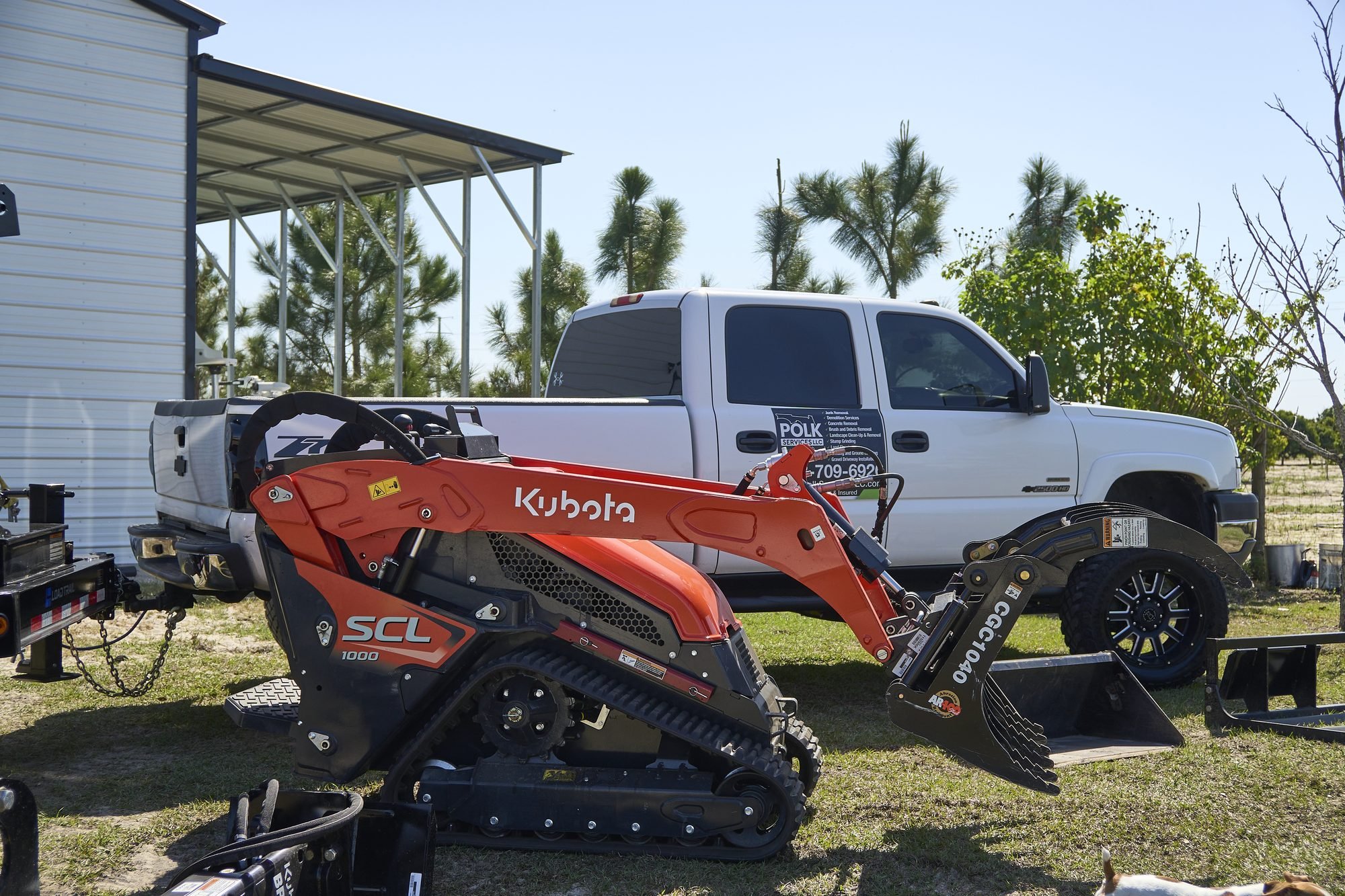
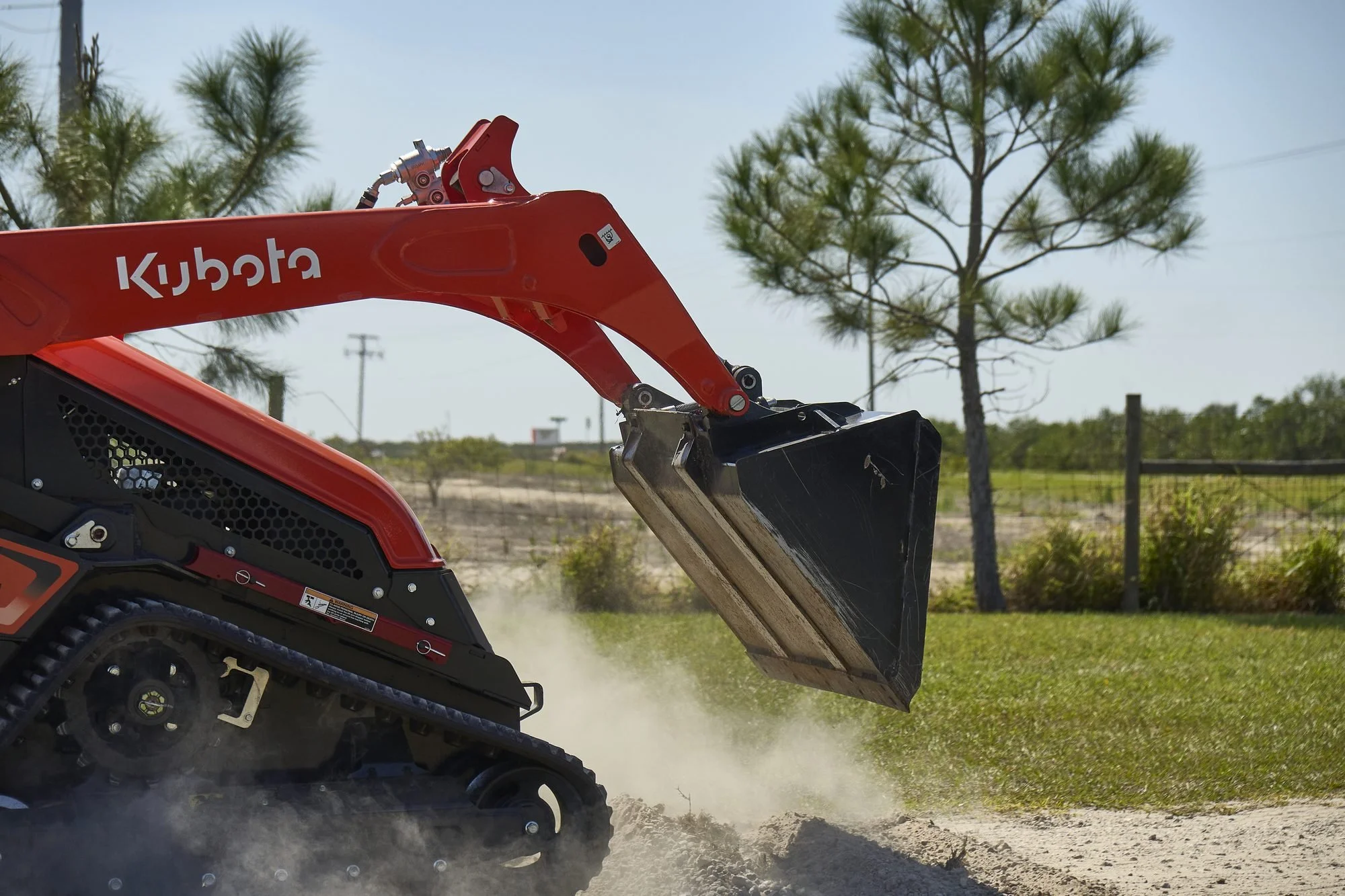
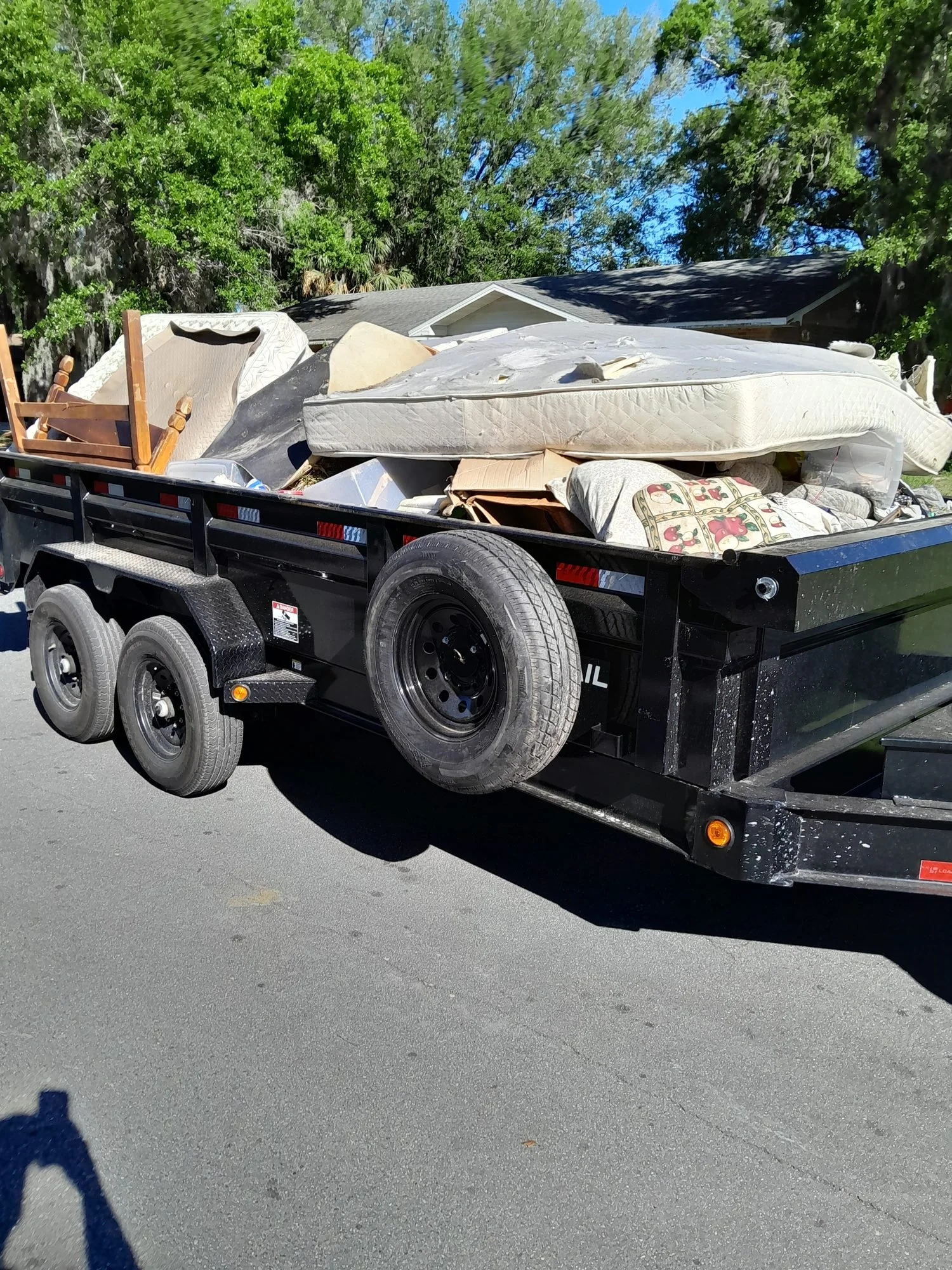
The tree comes down in a controlled sequence; larger trees section into manageable pieces before removal. The Kubota mini skid steer handles the physical move of trunk sections and heavy limbs to the dump trailer.
Optional stump grind, brush haul & rake-clean
Stump grinding (to 24 inches) and brush pile haul-off run on the same visit when bundled. The last step is a rake-clean — sawdust, wood chips, and small vegetation picked up so no residual is left behind.
Pricing, the Cut+Grind+Haul Bundle
Standard Pricing
Standard light-duty tree removal is quoted per tree, factoring in diameter, height, drop-zone geometry, and access. Case-by-case taller-tree removal (up to 75 feet in clearance situations) is priced after an on-site walk-through. Multi-tree jobs are quoted per project, usually below the sum of individual tree pricing.
The Bundle Math — Cut + Stump + Haul
Full tree work is normally three services: cut the tree, grind the stump, haul the brush. Bundled together, the total drops meaningfully below what separate contractors would charge, and everything happens on the same visit.
Bundle with Property Projects
Combining light-duty tree removal with a driveway install, grading, Bush & Lot Clearing, or Complete Property Cleanup brings the total below what separate contractors would charge. Ask on the estimate call.
Honest Scope, No Padded Bids
Because the scope is defined, trees inside the window are priced for light-duty work — meaningfully lower than a full-arborist rate card applied to a small tree. Trees outside the window are referred out rather than padded into a bid.
Payment Terms
Cash, check, credit/debit, Venmo, Zelle, and Cash App (3.7% fee on card/electronic; cash and check free). Standard removals run payment on completion.
Polk Services vs a Full-Service Arborist or Hand-Crew
Light-Duty Tree Removal Questions
What does light-duty tree removal mean?
How do I know if my tree fits your scope?
What if my tree is bigger or more hazardous than your scope?
Can you take the tree down, grind the stump, and haul the brush?
How much does tree removal cost?
How fast can you remove a tree?
Do you handle post-storm damaged trees?
Do you handle palm trees specifically?
Do I need a permit for tree removal?
Is my address inside your service area?
Verified Google Reviews From Real Jobs
Every review below is a verified Google review with full customer attribution, each showing a competency this work depends on.
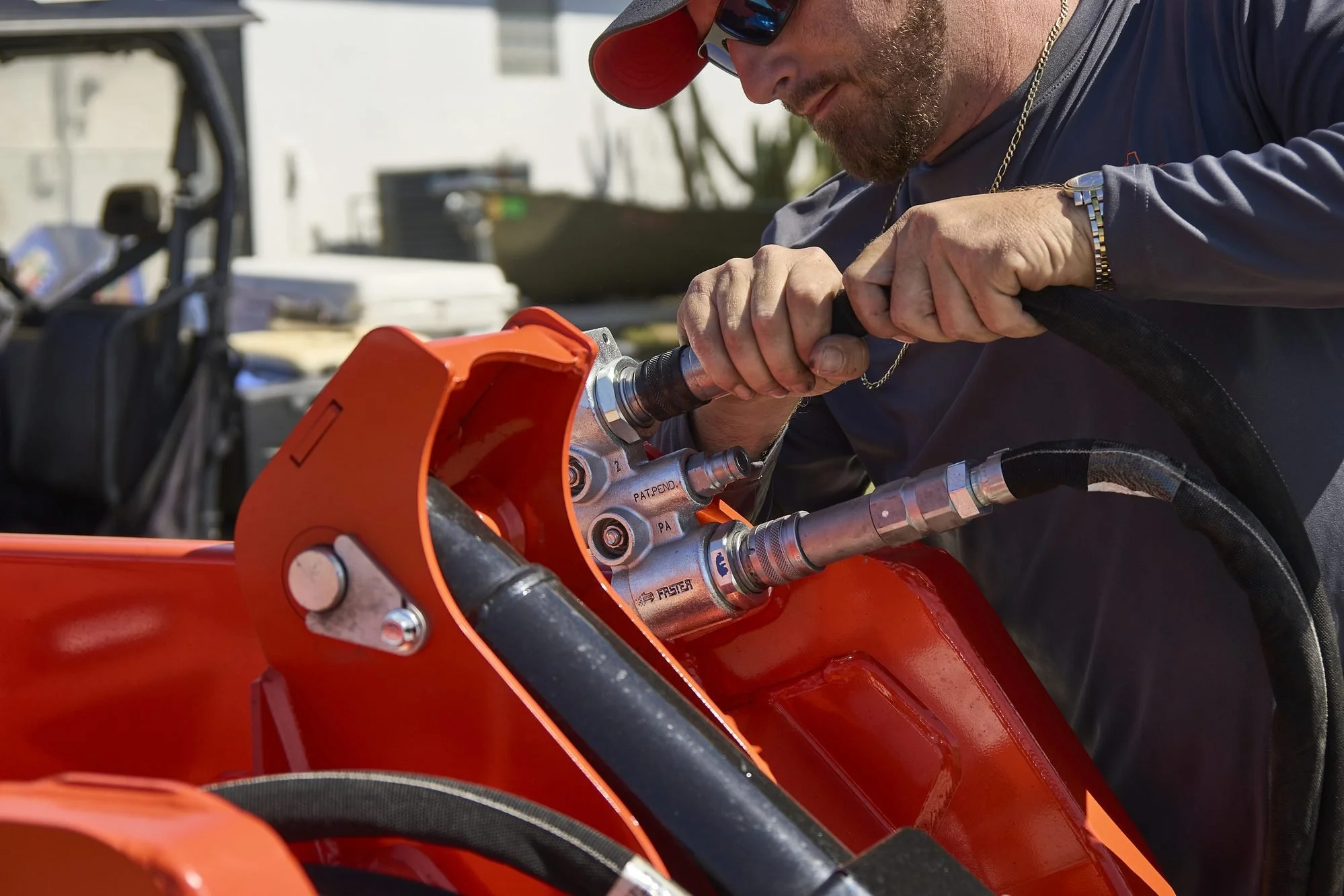
Seven Details That Define a Polk Services Light-Duty Tree Removal
Trunk-Diameter Measurement Discipline
Diameter is measured at breast height (4.5 feet); palms at the base above the root flare. At or under 2 feet is standard light-duty scope; 2–3 feet gets a case-by-case evaluation; over 3 feet requires a full-service arborist.
Height & Clearance for the 75-Foot Window
Trees 30–75 feet sometimes fit light-duty when geometry allows — total clearance on all sides, no wires in the drop radius, no homes or structures within 1.5× tree height, open workspace for sectioning. Polk Services evaluates each case on-site before quoting.
Drop-Zone Geometry
Every removal needs a drop zone — standard rule is a radius of 1.5× tree height. Slender-crown trees and palms drop safely in smaller radii; broad-crown hardwoods need larger. Polk Services evaluates this before quoting.
Power-Line Proximity — the Hard Boundary
Trees within 10 feet of active power lines are outside light-duty scope for safety; line-cleared arborist crews are required. Polk Services won’t attempt work near power lines and routes the customer to utility or arborist coordination.
Sectioning Technique
Trees too tall or heavy for a single drop come down in sections — chainsaw from the crown down, one manageable piece at a time, with the Kubota moving each section to the trailer as it comes down. The standard technique for palms and medium trees in scope.
Stump Handling Coordination
After the tree is down, the stump remains. Polk Services runs stump grinding as a coordinated bundle; stumps larger than 24 inches go beyond light-duty coordination and route to specialized equipment or arborist follow-up.
Brush Processing
Everything off the tree — trunk sections, limbs, leaves, fronds — is brush, hauled with equipment-compacted loading and bundled with the removal on the same visit for lower total pricing than separate calls.