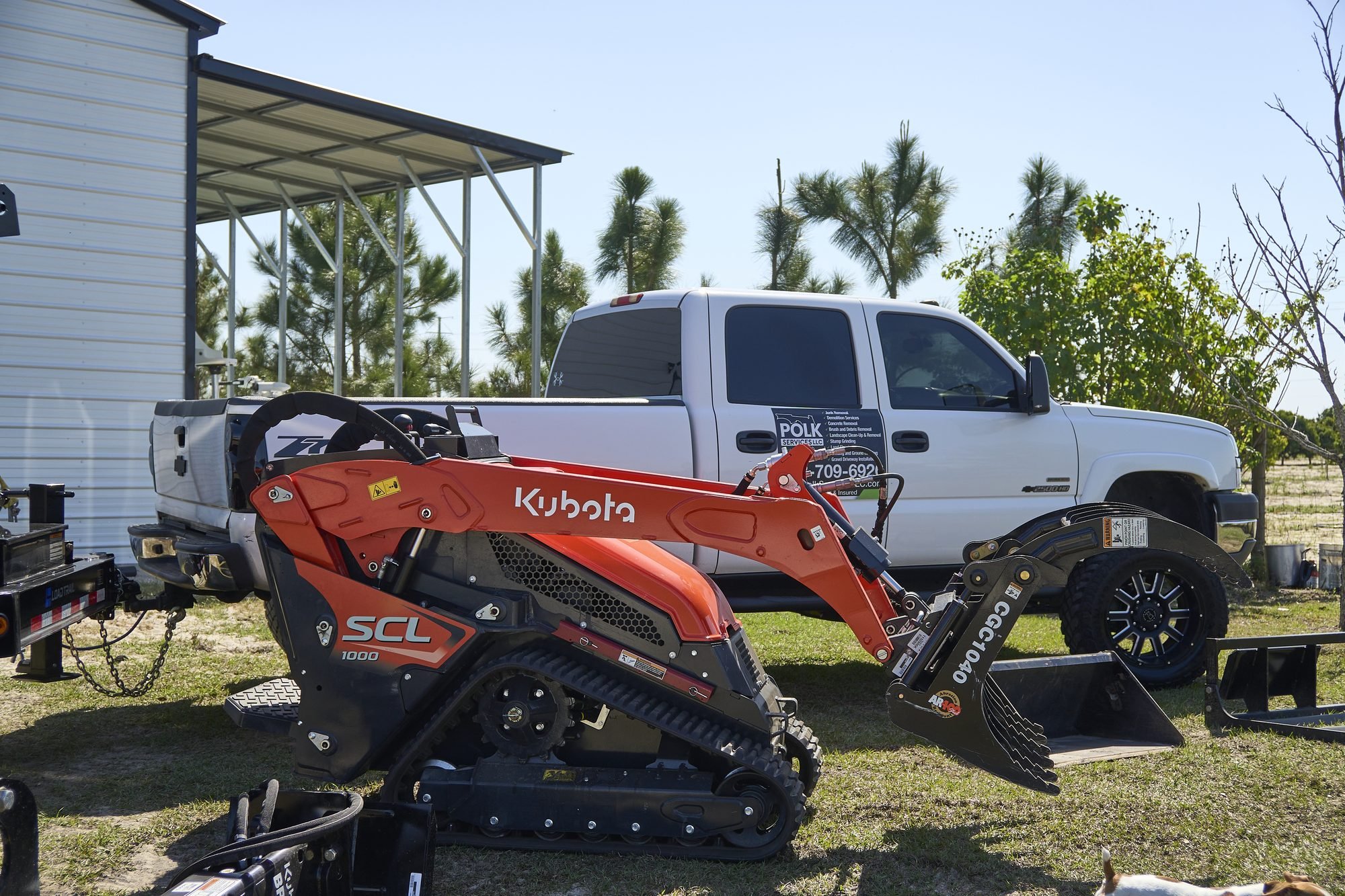

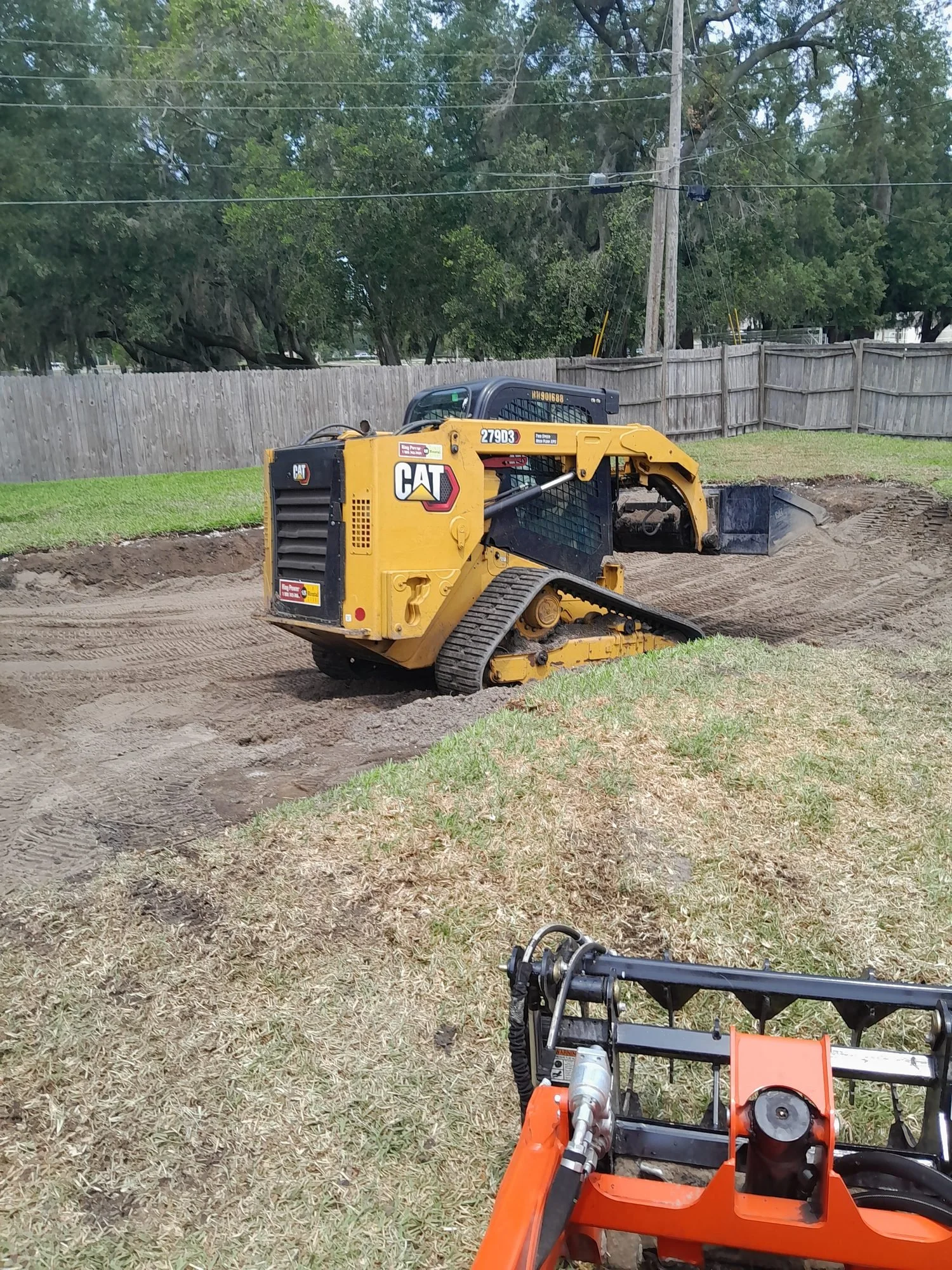
Auburndale keeps a file on the person allowed to knock your shed down. Not on the shed. On the contractor.
There Is No Small Demolition in This City
The line that triggers everything else
The first entry on Auburndale's list of work requiring a construction permit reads: construction or demolition of any building, regardless of size. There is no floor-area threshold under it, no exemption for a shed with no power run to it, and none for one standing on its own away from the house. Any building.
That is what pulls the contractor's file into an ordinary shed job, because the registration requirement is written as a condition on the permit. No permit issues until the paperwork is on file, so on a job that needs a permit, the two questions are really one question.
Where the city gets it from
Section 105.1 of the Florida Building Code, which the city quotes at the top of its own list: a permit is required to construct, enlarge, alter, repair, move, demolish, or change the occupancy of a building or structure. Auburndale applies it without carving out a size exemption on the demolition side.
And the caveat the city puts on its own list
Worth reproducing because it is honest. The city says these are examples of work that does and does not require a permit, that the examples are not all inclusive, and that there will be situations not addressed there. It gives a number for the rest: Construction Services, (863) 965-5530.
One place the same page disagrees with itself
For putting up a shed, the list sets a threshold in the city's own wording: greater than 48 square feet in floor area, more than six feet high, or containing electrical or plumbing. Further down the same page, a question asks whether a permit is needed for a small shed, and the answer is a flat yes, for any shed. We are not going to pick the convenient one for you. The demolition line above is not contradicted anywhere and governs a teardown.
The Order of Work, and Where the City Sits in It
The estimate comes first, then the application
That surprises people. A permit application wants a scope, and a scope is what a written estimate is. So the free walk-through comes ahead of the paperwork, and it is what lets the paperwork start.
The permit is the lead time, and it is the only one we do not control
Everything after it is a day of machine work. Which is why Donny raises the permit at the estimate, and why an Auburndale job is quoted as a firm date once the permit is in hand and as a window before it is.
Power, water, and gas come off before anything is touched
A shed with a light in it has a circuit somewhere, and a workshop may have a hose bib or a sub-panel. That gets confirmed with the utility, regardless of the building's age, and the demolition waits on confirmation.
On anything older, the cladding gets identified before the machine starts
Sheds, barns and workshops built before the mid-eighties can have asbestos-cement siding or corrugated asbestos-cement roofing, and both look like ordinary fiberboard until they are tested. We do not guess at it, and we do not break it. Where the age or the material raises the question, the structure waits for a licensed abatement contractor to clear it. Polk County will not take asbestos at the landfill in any case. The clean debris goes out with us.
The slab is a decision, and it is easier made now
Whatever the structure was standing on stays unless you have asked for it to come out. Piers, a poured pad, a ring of blocks. Decided at the estimate that it is part of the quote; two weeks later, it means bringing the machine back.
What It Costs, and What Moves It
Small structures and playhouse-scale demolition start at a $300 minimum. Beyond that, it is quoted per project as a written number covering labor, equipment, and disposal, with the timeline in it, because a 10-by-12 wood shed on piers and a block workshop on a slab are not the same job in any respect that matters.
What moves it: the material, what is underneath and whether it is coming out, what is still connected, how far the machine has to carry debris to reach the trailer, and whether anything within reach has to survive. In the older streets downtown and around Lena Vista the constraint is usually the gap between the house and the fence line. In the newer subdivisions north toward Lake Juliana, it is usually the same gap for the opposite reason: those lots are wide at the front and tight along the side.
The Polk Services Standard, on every structure
Donny walks the job with you before he leaves, rakes the work area clean before he drives off, texts you 30 minutes before arrival, and gives you both a verbal and a written quote up front. No sub-crews, no surprise pricing, and the site left ready for whatever comes next.
Paying for it
Cash, check, card, and electronic payment accepted. No processing fee on cash or check; Donny states the card fee when he quotes. The city's permit is the variable in an Auburndale teardown. Once it is issued, the structure itself is a day.
The Questions That Decide the Date
Do you pull the permit or do I?
Can I demolish my own shed?
What happens to the debris?
Do you take barns and outbuildings on acreage?
If the Property Is Designated, Ask Before You Book
Auburndale has a historic preservation ordinance and a commission that meets and hears applications. The ordinance is not included in the city's online code or its Land Development Regulations, so we will explain what it does and leave citing it to the city. Broadly: a designated landmark, site or district cannot be altered, moved or demolished without a certificate of appropriateness, and for demolition the test is a stiff one.
Two things keep this small. Very few Auburndale properties are designated, and where one is, the owner generally knows already. The rest of the city's shed and outbuilding stock runs on the ordinary permit track described above.
One number, Construction Services at (863) 965-5530, answers the two questions this page raises: whether your address is designated, and whether your teardown needs a permit. Donny raises both at the estimate and on the day, and tells you which route your job will take before a date is set.