

What Can (and Can’t) Go in a Junk Removal Haul
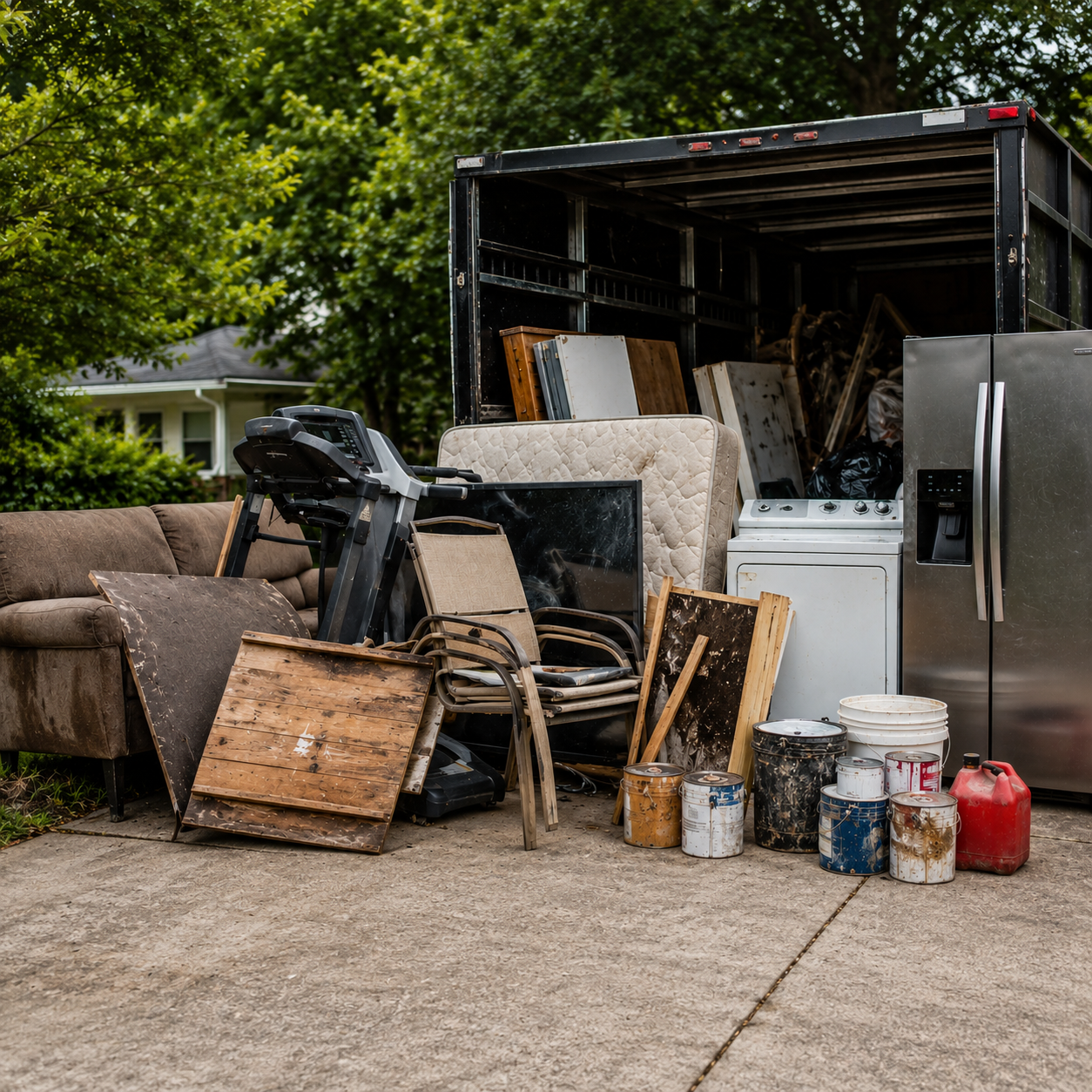
Quick Answer: Most bulky household junk goes on the truck — furniture, mattresses, appliances, electronics, yard debris, and remodel material. The exceptions are hazardous items: wet paint, solvents, motor oil, propane tanks, fuel, and regulated material like asbestos or medical waste. Those need separate handling and can't ride in a general load. Gray-area items like tires, batteries, and refrigerant appliances are usually fine but worth mentioning when you book. Pull the hazardous handful out, point it out, and the crew takes everything else.
You've got the garage half-emptied onto the driveway: the dead treadmill, a sofa the dog finally wore out, three busted lawn chairs, and a stack of paint cans you've moved from shelf to shelf for years. Most of it is going. But you're standing there wondering which of these a junk crew will actually take — and which ones they'll point at and say "not that." The short version is that almost everything goes, with a handful of specific exceptions that exist for good reasons.
The Stuff That Goes Without a Second Thought
Junk removal services take bulky, heavy, or awkward items you can't fit in a trash bin or car trunk. Furniture, appliances, mattresses, exercise equipment, old electronics, scrap wood, and general household clutter are the everyday load. If it's too big for the curbside cart and you want it gone, it almost certainly qualifies.
| Category | Common items |
|---|---|
| Furniture | Sofas, recliners, mattresses, dressers, tables, desks |
| Appliances | Refrigerators, washers, dryers, stoves, dishwashers, water heaters |
| Yard & outdoor | Branches, brush, fencing, old grills, patio furniture, sheds |
| Construction debris | Drywall, lumber, flooring, cabinets, fixtures, tile |
| Household clutter | Boxes, clothes, toys, books, carpet, general junk |
| Electronics | TVs, monitors, computers, printers, small appliances |
The reason a crew can take all of this is that it routes to the right place after pickup — metal goes to scrap, appliances get processed for their components, usable furniture can be donated, and clean wood and yard waste can be recycled or mulched rather than dumped whole.
The Stuff That Can't Ride Along
A small set of items is left off the truck almost everywhere, and it's not the company being difficult. These materials are either dangerous to transport or illegal to dump in a standard facility, or both. They need specialized handling that a general hauler isn't set up — or permitted — to provide.
| Usually excluded | Why it's excluded |
|---|---|
| Wet paint, solvents, motor oil | Hazardous liquids that contaminate loads and soil |
| Propane tanks, fuel, gas cans | Explosion and fire risk in a packed truck |
| Asbestos and contaminated material | Regulated; needs licensed abatement and disposal |
| Medical or biohazard waste | Strict handling rules; not for general haulers |
| Wet or hazardous chemicals | Spill and exposure risk; banned at standard sites |
The thread running through that list is hazardous material. A truck packed with furniture and a leaking can of solvent is a contamination and safety problem at once, and disposal sites that accept general debris will turn away an entire load if hazardous waste is mixed in.
Never hide a propane tank, gas can, or container of chemicals inside a pile of household junk to get it taken. A sealed propane cylinder in a compacting truck is a serious explosion hazard, and mislabeled chemicals put the whole crew at risk.
The Gray-Area Items Worth Asking About
Between the easy yes and the firm no sits a middle group that depends on the company and the local rules. These are usually takeable, but it's worth a quick mention when you book so the crew arrives prepared.
Tires, for example, are accepted by many haulers but often carry separate handling because they can't go to a regular landfill. Batteries sit in the same group. Policies differ by company, and plenty of crews take car and household batteries as long as they know in advance, because the batteries get routed to dedicated recycling rather than onto the general load. The same goes for appliances that contain refrigerant — fridges, freezers, and window AC units — which need the refrigerant recovered before the unit is scrapped. Large quantities of construction debris, concrete, or dirt are heavy enough that a crew may handle them as a dedicated load rather than mixing them with light household junk. None of these are problems; they're just the kind of thing a hauler likes to know about in advance.
Electronics are another item worth a heads-up. Old TVs, monitors, and computers are taken by most crews, but they're routed to e-waste recycling rather than the landfill because they contain metals and components that shouldn't be buried. Yard waste sits in the same easy category as long as it's truly vegetative — branches, brush, and fronds are fine, but a brush pile with a chemical-soaked rag or a paint bucket tossed in stops being yard waste and becomes a contaminated load. The pattern across all the gray-area items is the same: they're takeable, they just have a specific route, and naming them up front keeps the haul smooth.
When you book, give a rough rundown of the load — "a fridge, a sofa, about ten boxes, and four tires." A two-minute description lets the crew bring the right truck and equipment instead of discovering a surprise on arrival.
Why Honest Sorting Pays Off
Pulling the few excluded items out before the crew arrives does two things. It keeps the haul moving — no pausing to sort a leaking bottle out of a box or to figure out what's in an unmarked can — and it keeps the disposal clean, which is what lets a responsible company recycle and donate instead of sending everything to a landfill. A contaminated load often can't be sorted at all, so one leaking bottle can send an entire truckload straight to the dump. Set the paint, propane, and chemicals aside in their own spot, point them out, and let the crew take everything else. The yard clears faster, and the right materials end up in the right place.
Frequently Asked Questions
Yes, refrigerators, freezers, and window air conditioners are standard junk removal items. The one wrinkle is that they contain refrigerant, which has to be recovered before the unit is scrapped, so it helps to mention these appliances when you book. The crew handles the recovery and recycling as part of the process.
Those are hazardous materials, and they're either dangerous to transport or banned from standard disposal sites. Wet paint and chemicals contaminate an entire load, and the ground at the dump, and a propane tank or fuel can is a fire and explosion risk inside a packed truck. They need dedicated hazardous-waste handling, which is separate from general junk removal.
Usually yes, but heavy debris like concrete, brick, tile, and dirt is dense enough that a crew may handle it as its own load. Drywall, lumber, flooring, and cabinets from a remodel mix in fine with general junk. If you've got a large volume of heavy material, mention it so the right truck and equipment show up.
A responsible hauler sorts the load rather than dumping it whole. Metal goes to scrap recyclers; appliances are processed for their components, usable furniture and goods can be donated; and clean wood and yard waste are recycled or mulched. Only what truly can't be reused or recycled goes to the landfill.
You don't need to sort the general junk — that's the crew's job. The one thing worth pulling out is anything hazardous: paint, solvents, propane, fuel, and chemicals. Set those aside in their own spot so they don't end up mixed into a load they can't legally or safely go in.
Volume isn't usually the problem — crews scale the truck and trips to the job, whether it's a single couch or a whole-house cleanout. What matters more is the type of material, since heavy debris and hazardous items change how the load is handled. For a large cleanout, describing the scope ahead of time lets the crew plan the right number of loads.
Almost Everything Goes — Know the Few Things That Don't
The mental model is simple: if it's bulky household junk, furniture, an appliance, yard debris, or remodel material, it's going on the truck. The exceptions are the hazardous handful — paint, fuel, propane, chemicals, and regulated materials like asbestos — that need their own path. Sort those out, point them out, and the rest of the pile disappears.
Got a garage, yard, or whole house full of junk to clear? — Let a local crew haul the furniture, appliances, and debris and route it to recycling and donation. Polk Services LLC serves Lakeland, Highland City, Mulberry. Call (863) 344-5806.
