
If the pile is already at the curb, skip the trim rules. The county's collection limits are the section after next, and where the pile can go comes later again.
Hillsborough Regulates Trees on Built Lots. That Surprises People.
The county's own residential guidance publishes the thresholds in a table, and the yard-tree figure is the same whether the house sits in a subdivision or on its own acreage: a permit is required for trees with a diameter of 12 inches or greater. A street or right-of-way tree is stricter still, and a vacant residential lot drops to five inches.
Pruning counts, which is the part almost nobody knows
The code's definition of tree removal reaches beyond digging one up. It includes the effective removal of a tree through damage that causes, or may reasonably be expected to cause, it to die, and it names pruning that does not comply with the national pruning standard as one of those things. The county puts a number on it in its own guidance: about a quarter of the canopy during the growing season is the maximum recommended, and excessive pruning may result in corrective or enforcement action.
The hurricane cut is named by the county, and not kindly
Hillsborough publishes a document on bad pruning practice that calls out the hurricane cut by name, and says plainly that the idea of thinning a canopy so wind passes through it is false information. The stated result of that cut is torsion damage and more limb loss than an unpruned tree, and the same document names topping and hat-racking a live oak as the same mistake. If a crew sold you one of those, the pile in your yard is the receipt.
The number attached to getting it wrong
The county publishes the penalty for removal without a permit at sixty-five dollars per diameter inch, and it prints the arithmetic itself: a twenty-inch tree comes to one thousand three hundred dollars, with replanting possible on top.
Two things that are genuinely open
A totally dead tree with no living tissue generally requires no permit, except in a wetland or conservation area, and the county's own advice is to photograph it before it comes down. And Florida statute allows an owner to prune or remove without a local permit where an arborist certified by the International Society of Arboriculture or a licensed landscape architect has documented both that the tree poses an unacceptable risk and that removal is the only practical way to mitigate it.
Donny is not an arborist and does not evaluate trees. What he does is haul what has already come down, and say plainly when the thing in front of him is a question for the county's natural resources staff rather than for a trailer.
Four Feet, Six Inches, Fifty Pounds, Two Cubic Yards
Hillsborough collects yard waste once a week from single-family properties, and the published limits are specific. Limbs and branches under four feet long and six inches in diameter. Each container under fifty pounds. Two cubic yards a week, which the county describes as about twelve thirty-gallon containers, rising to three cubic yards in February, March and April. Bundled, neatly stacked or in a container, within six feet of the curb.
On a quarter-acre FishHawk lot after a trim, that is usually enough. On five acres off CR-39, after an oak drops a fourteen-inch limb, it is a wall, because the limb is over the dimension in both directions and the pile is over the volume by a wide margin. The county's paid bulky pickup is scoped to furniture and appliances, and its item lists leave brush out.
And burning it is not the rural answer here
This is the one that catches acreage owners. The Environmental Protection Commission's rules prohibit open burning of residential yard waste and tree-cutting debris across Hillsborough County. What is allowed is a contained fire or campfire for cooking, heating, or recreation, and the county's guidance on fire pits says clean, dry wood only, at least 25 feet from a structure. Five acres and a match is no disposal plan here.
Three Questions Only a Lithia Yard Raises
My lot backs onto a preserve. Can the brush go over the back fence?
A district tree dropped a limb into my yard. Whose is it?
Is there an exemption after a storm?
The County Facility on Your Own Road Will Not Take One Branch
Alderman's Ford sits at 9402 County Road 39 in Plant City, on the same corridor as the Lithia acreage. It takes appliances, scrap metal, tires, paint, batteries, and electronics. It does not take yard waste or wood waste. The Southeast County Landfill, located in Lithia on County Road 672, does not take them either.
The county runs yard and wood waste through two facilities, both on the far side of the county: South County on US 41 in Gibsonton and Northwest County on Linebaugh Avenue in Tampa. Residents get an allowance of two tons a year there on the annual assessment and pay the posted rate after that.
And if a tree service was going to drop your pile on your own allowance: the county bars commercial businesses, landscaping and tree trimming providers included, from using residential accounts to deliver yard waste for a resident.
What it costs to have it taken instead
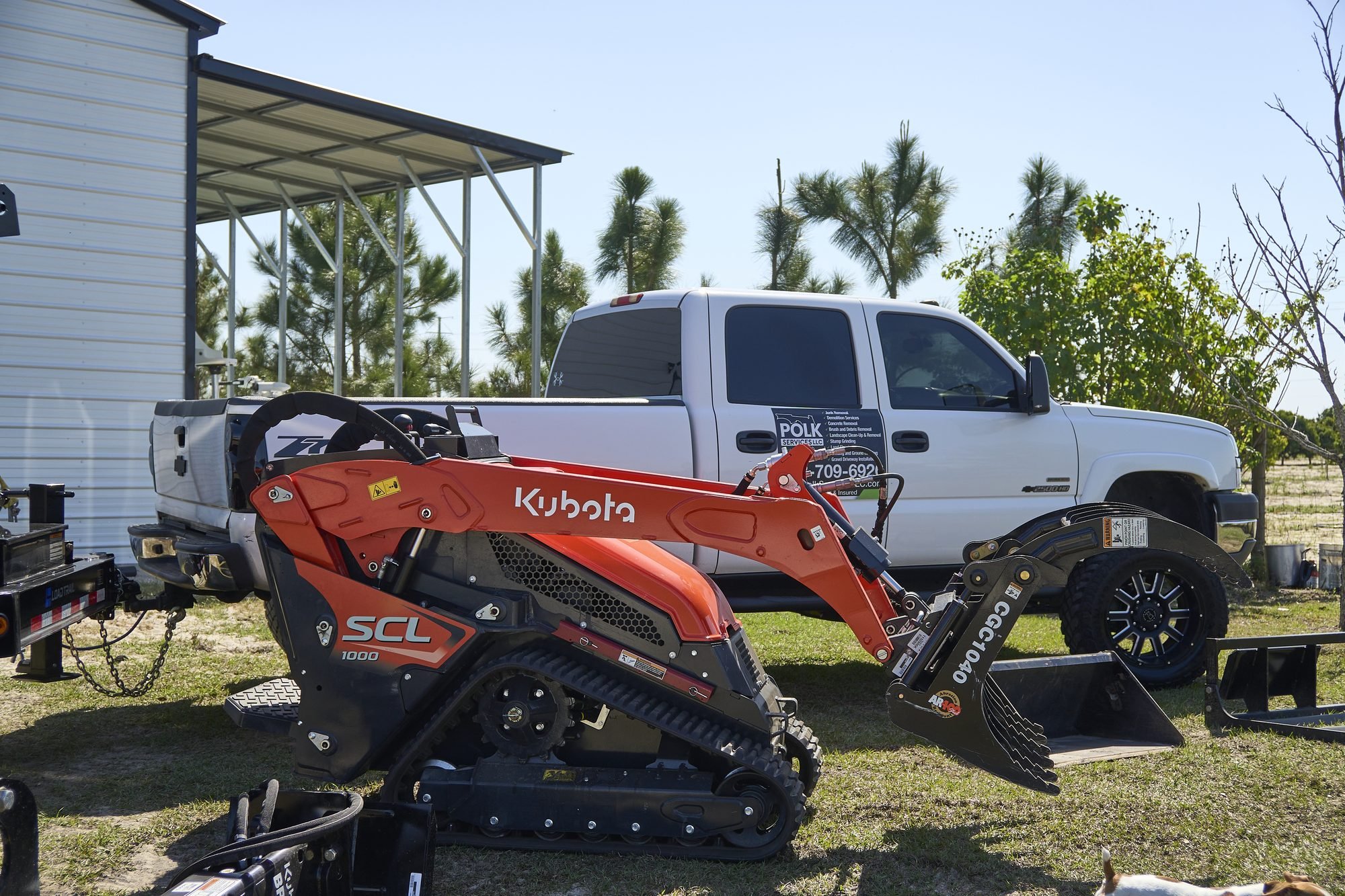
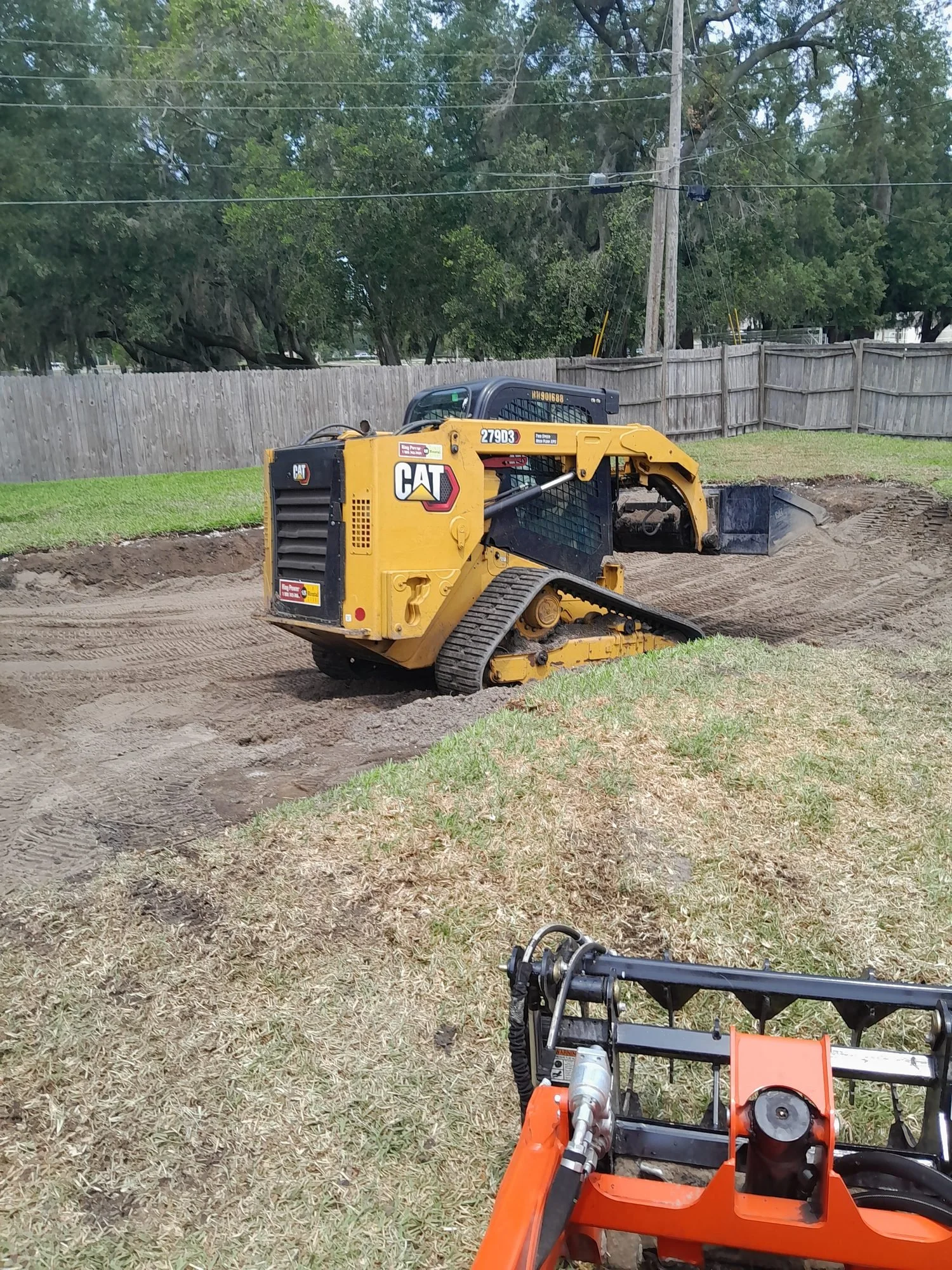
Brush and limb removal is priced by volume, from a $300 minimum for the first four cubic yards. Where a pile needs machine time to reach or move, the skid steer runs at $300 for the first hour or two and $100 per hour after that. Donny gives a range off the photograph the same business day when he can, then confirms it on site.
The Polk Services Standard on every pile
Donny walks the job with you before he leaves, rakes the work area clean before he drives off, texts you 30 minutes before arrival, and gives you both a verbal and a written quote up front. No sub-crews, no surprise pricing, and the site left ready for whatever comes next.
Payment and scheduling
Cash, check, card, and electronic payment accepted. No processing fee on cash or check; Donny states the card fee when he quotes. Storm work depends on weather and access, so Donny confirms the day before rather than promising a week in advance.
The Pile Was the Easy Part. The Tree Is Still Standing.
Once the trailer leaves, the yard looks finished, and the thing that produced the pile is still standing in it. Whatever comes off that tree next year is the decision worth making now.
Two questions decide what next year looks like. One belongs to an arborist: whether the cut it has just had sat inside the national pruning standard, which is what the county measures against. The other you can answer with a tape, because twelve inches decides whether the next round is a Saturday or an application.
Donny will tell you what he saw while he was loading. He will not tell you the tree is healthy. That is the arborist's call.