

Auburndale maintains a maintenance code for commercial buildings, and it is unusually specific about what must come off a building rather than what must be put on one.
Six Zoning Districts, Named in the Section Itself
If a commercial building sits in one of those, the minimum maintenance requirements apply to it. The section carves out existing single-family detached or duplex residential uses that may legally exist inside those districts, and then pulls mixed-use straight back in: mixed-use occupancies must meet these requirements. A house on a commercial street that is still a house sits outside the section. The same house converted to commercial or mixed use sits inside it.
The rest of the list, in the section's own terms
Every broken or missing window glass repaired or replaced, with plywood or other non-translucent material permitted only on an emergency basis. Plywood used to secure openings in a vacant building, or part of one, must be painted to blend with the structure to which it is applied and installed in accordance with building code requirements.
A structure is in violation where more than ten percent of the painted surface or weatherproofing system is exposed to the elements through wear, peeling, dirt, mold, mildew or deterioration. Ten percent is not much on a west-facing Florida elevation, and a wall with the dead hardware still on it is a wall no painter can measure accurately.
Where a Polk Services truck fits into that
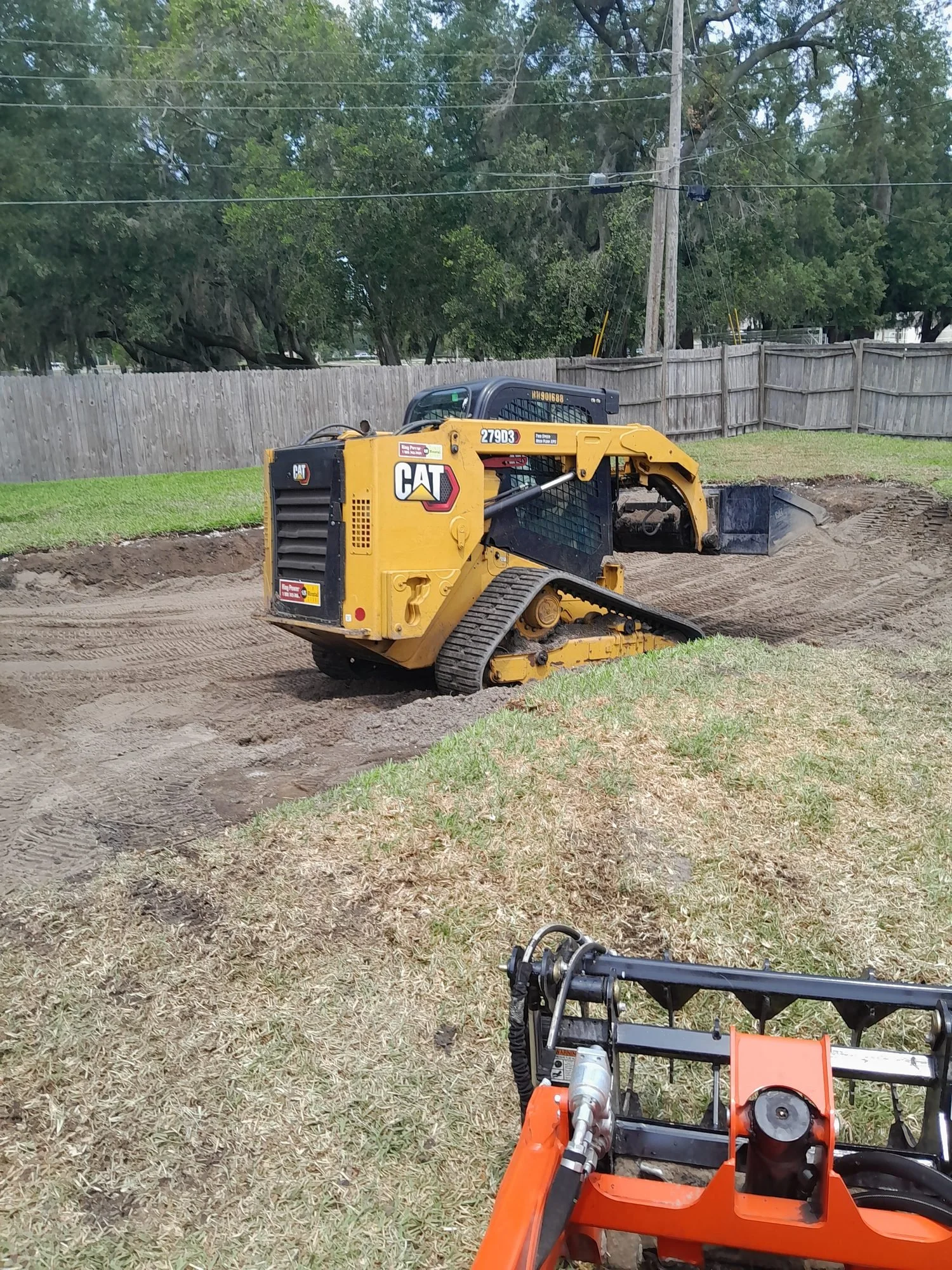
Read the duties closely, and they land differently. An awning is removed, repaired, or replaced. The dead hardware comes off, and the building surface behind it must be repaired or rebuilt. Taking things off is ours; the repair behind them is a painter's or a mason's, and the sequence matters, because nobody can price a wall they cannot see. What comes off the building, out of the unit and off the lot goes in the trailer the same visit.
Thirty Days on a Covering, and No Variance From Any of It
The temporary covering has an expiry
No temporary covering of any part of a structure may remain more than thirty days. That is the whole provision. It reaches the tarp over the failed roof section, the shrink-wrap on the damaged corner, and the sheet over the opening where the door used to be.
And there is no relief valve
The section closes by stating that no variance from these requirements shall be granted, and routes appeals of interpretation to the Board of Adjustment. So the question a commercial owner in Auburndale is actually facing is not whether the standard applies. It is how quickly the list gets worked through.
Which is why the cleanup usually runs ahead of the trades
Strip the dead hardware, pull the failed awning, clear the unit, and have the painter and the glazier work on a surface they can see. Donny sequences it that way as a matter of course.
What Owners and Managers Ask First
Does this apply to my building?
A tenant's sign failed. Whose problem is that?
Can you take the sign down as well?
Do you work occupied plazas?
How fast can you start?
How a Commercial Clear-Down Gets Scoped and Priced
Scoped Off the Elevation
Commercial cleanup pricing is based on what comes off and what comes out, so the walk-through starts at the front elevation and works around. Donny counts the removals, checks the machine's access, and determines where the trailer can sit without closing a tenant's frontage.
Volume, then weight
Standard categories start at a $300 minimum for the first four cubic yards. Masonry, concrete, mortar, and dirt are quoted at the heavy-material rate with a $500 minimum because they price by weight at the scale. Beyond the minimums, it is quoted per project as a written amount that covers labor, equipment, and disposal.
What stays out of the trailer
No asbestos, no wet paint, no chemicals, no pressurized tanks. Older commercial tear-outs that may contain asbestos are tested and abated by a licensed contractor first, and we haul the clean debris afterward.
Paying for it
Cash, check, card, and electronic payment accepted. No processing fee on cash or check; Donny states the card fee when he quotes. Commercial workbooks around the trade that follows and the tenant's trading hours, so Donny asks about both before he sets the day.
The Polk Services Standard, on every job
Donny walks the job with you before he leaves, rakes the work area clean before he drives off, texts you 30 minutes before arrival, and gives you both a verbal and a written quote up front. No sub-crews, no surprise pricing, and the site left ready for whatever comes next.
One Thing Worth Knowing About Auburndale Specifically
Polk County requires a nonexclusive commercial franchise to provide commercial collection service in the county under its own ordinance. The county's chapter says, in as many words, that its provisions and requirements apply only to the unincorporated areas of Polk County unless a municipality consents to be included in an assessment area.
Auburndale is not unincorporated, so the rules reaching a commercial cleanup inside the city limits are the city's own. Its solid waste chapter imposes a 20% surcharge, payable monthly to the city, on the charges for all periodic garbage and trash removal from within the city limits by private contractors registered with the city. Auburndale requires occupants of commercial premises to have their trash and garbage removed by the city and allows offices and businesses to share a dumpster for a minimum of three pickups a week.
Those two provisions sit oddly together, and the tension is the code's rather than ours: the city requires commercial premises to use its collection, and the same chapter contemplates taxing registered private contractors. A one-time clear-down is not periodic removal either way. If you are being quoted for recurring service within the city limits, that twenty percent is somewhere in the number, and Public Works at (863) 965-5511 is the office that administers it.