

Almost every concrete demolition page opens by helping you work out whether your slab has failed. In Lithia that is usually the wrong question, and there is a second thing worth knowing first.
Removing Concrete That Is Doing Nothing Wrong
The cut line will be looked at
When a slab comes out because it cracked, nobody inspects the edge you leave. When it comes out because the owner wants pavers there, whatever stays sits next to whatever replaces it, in daylight, for years. So the line is established before anything is broken, and the slab is lifted out in sections, leaving nothing in the ground.
Finished things cost time
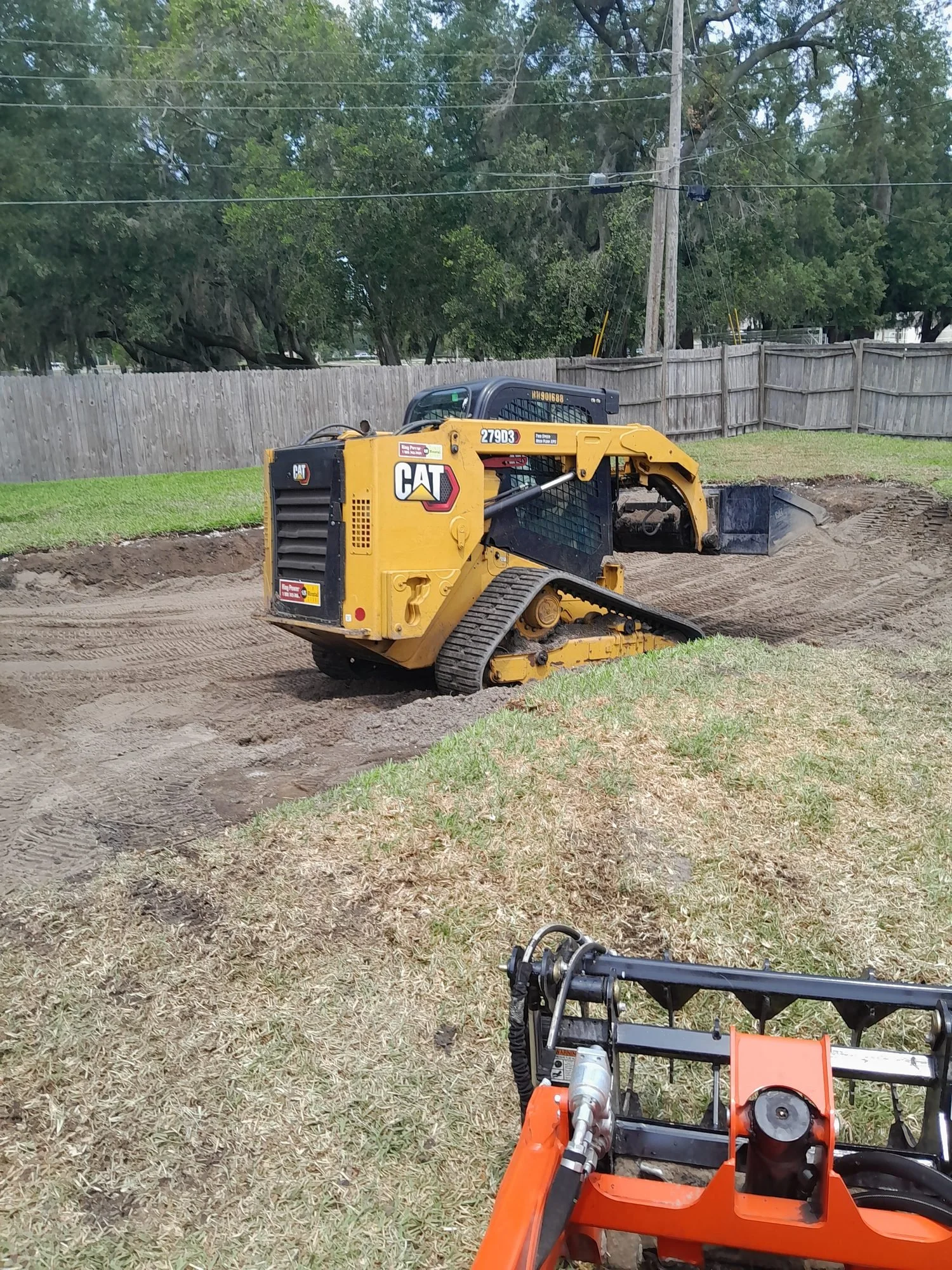
Irrigation under the turf. A screen cage footing four feet away. A paver walk that has to stay where it is. A yard the machine crosses twice and leaves in a state the owner will accept. Protection is not a line item people think to ask about, and it is what most separates one price from another.
The weight is the same either way
Concrete prices are by weight, whatever its condition, and a sound slab weighs what a cracked one weighs. Thickness at the edge is the number people forget when they measure the square footage, and two inches across a driveway is a whole extra load.
The Landfill in Lithia Does Not Take Concrete
Read the county's own list
The Southeast County Landfill on County Road 672 is exactly where a homeowner would assume broken concrete goes. The county's page for that facility lists what is not accepted, and the first item is construction and demolition debris, including concrete and asphalt.
A separate county page, the one telling residents where individual materials go, lists that same landfill as a paid concrete drop-off for multi-family residents. Two county pages disagree about one facility. Call Solid Waste at (813) 272-5680 before loading a trailer on the strength of either.
Where the county sends residents
Two places. The first is its solid waste facilities: the two nearest to 33547 are Alderman's Ford on CR-39 in Plant City and Wimauma. You need a state photo ID with a Hillsborough address, plus your current property tax bill. That falls within a residential allowance the county measures in cubic yards, so confirm it covers concrete when you call. It is harder than it sounds: the centers do not permit self-tipping, so material is unloaded by hand and lifted about four feet to clear the bollards, and both cap trailers at 23 feet. Lifting a broken patio four feet by hand, one piece at a time, is the honest argument for hiring this out.
The second route is on that same page, and most haulers do not mention it: a scheduled curbside pickup for concrete, priced per item, with the call in before the material hits the curb. For a few broken pieces, it is a route worth asking about before you call anyone. It does not work for a driveway, because a driveway is not an item.
Both routes are yours, and neither is open to anyone you hire
The county says plainly that businesses are not authorized to use the collection centers, and the allowance is tied to your property's tax folio. A contractor pays commercial tipping fees, and a hauler quoting as though he can use your residential allowance is describing a rate he cannot get.
Clean concrete has a better destination
Under Florida rule, uncontaminated concrete is clean debris, and the rule says so expressly even where pipe or steel is embedded in it, which answers the rebar question everybody asks. Clean debris may be used as fill or raw material without a solid waste permit, so sound concrete goes to a private crusher and comes back as base. The county runs no crusher of its own, so the destination is a private yard, and it is named in your written quote.
What Is Settled, What Is Not, and Who Sets the Date
Is there a permit for a patio or a slab?
What about the driveway apron?
How far ahead does the utility notice go in?
Does removing a slab trigger a land alteration permit?
What Happens on the Day, and What It Costs
The machine follows the yard
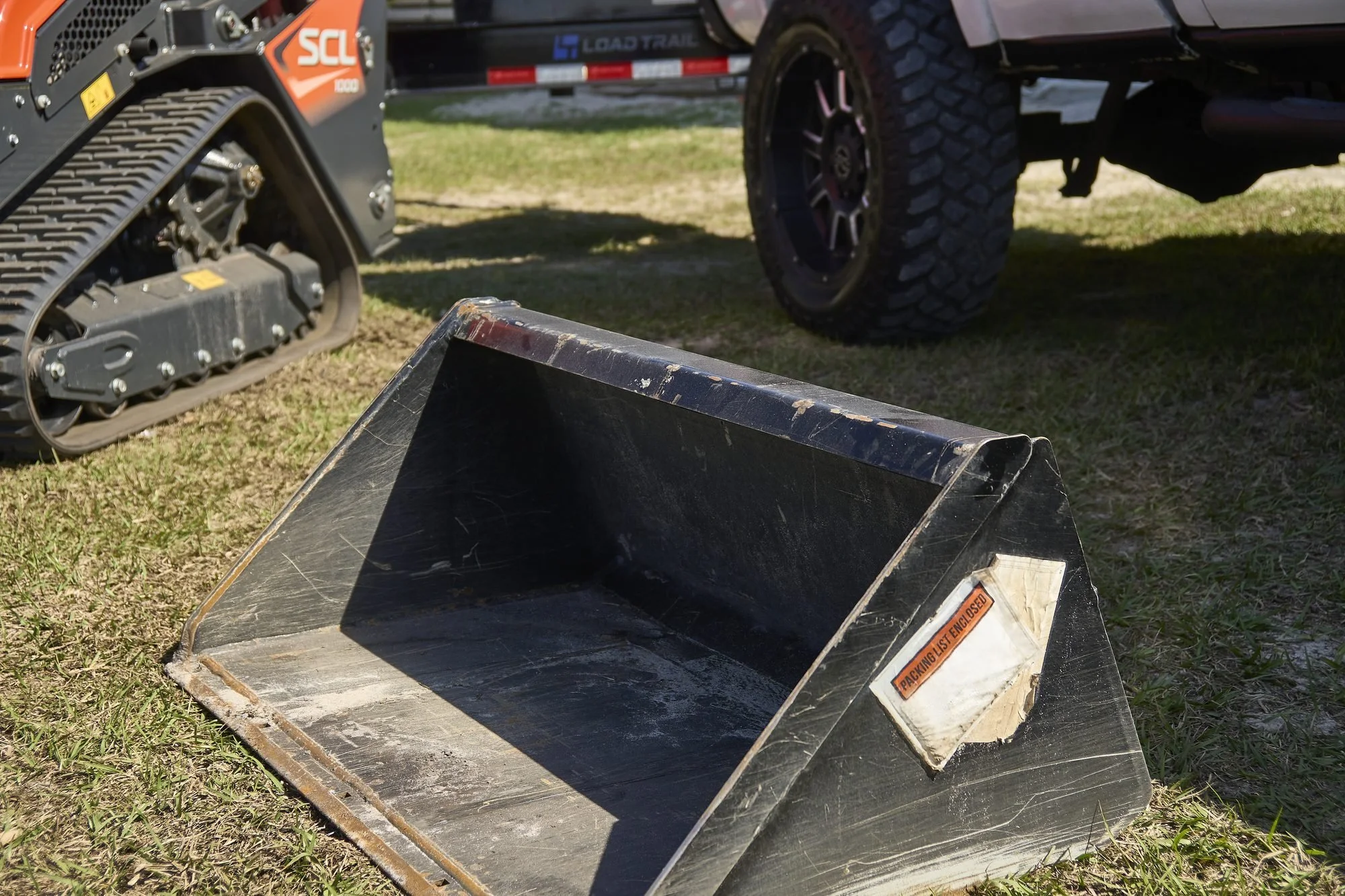
The Kubota SCL1000, equipped with a hydraulic breaker, threads a finished lot. The full-size Caterpillar takes the barn pads, wash racks and equipment slabs down the CR-39 corridor, where the concrete is older and thicker and access is not the constraint.
The number
Concrete carries a $500 minimum for the first four cubic yards, the heavy-material rate and not the general junk rate. Beyond that, it is a written per-project number covering labor, equipment, and disposal, with the destination specified.
The Polk Services Standard, on every slab
Donny walks the job with you before he leaves, rakes the work area clean before he drives off, texts you 30 minutes before arrival, and gives you both a verbal and a written quote up front. No sub-crews, no surprise pricing, and the site left ready for whatever comes next.
Paying for it
Cash, check, card, and electronic payment accepted. No processing fee on cash or check; Donny states the card fee when he quotes. Concrete books by trip count, so a Lithia date gets set once the load math is settled, and not on the morning you call.
The Gap Between Us Leaving and the Next Trade Arriving
On a failed driveway, the job ends when the concrete leaves. On a sound patio coming out for a pool, a lanai, or a paver deck, the concrete leaving is the middle of something.
What is there when the trailer pulls away is a clean, level footprint with a visible edge where the cut was made, and it stays that way until the next trade shows up. That gap runs a few days on a good schedule and several weeks on a normal one. It is your yard in the meantime, and three things are worth deciding before the machine arrives.
Who is responsible for the opening
If the removal leaves a depression or an open edge next to a walkway, a pool cage or a screen door, that is a hazard on your property and under your control from the moment we leave. Donny raises it on the walk-through.
Whether the base stays or goes
Under most residential flatwork, there is a sand or fill layer. A paver contractor usually wants it left and reworked. A pool builder digs straight through it. Ask about your next trade before we quote, because taking the base out and putting one back is two jobs, while leaving it is none.
Whether rain will sit there
A slab was shedding water somewhere. Take it out and the water goes wherever the ground sends it, and where a district drainage swale runs behind the lot that is better thought about now than discovered in the first afternoon storm.
This is not an upsell. It is the difference between a demolition that fits your project and one that leaves you a hole and a phone call.