

Agricultural Irrigation Pump Repair in Newberry: What to Expect
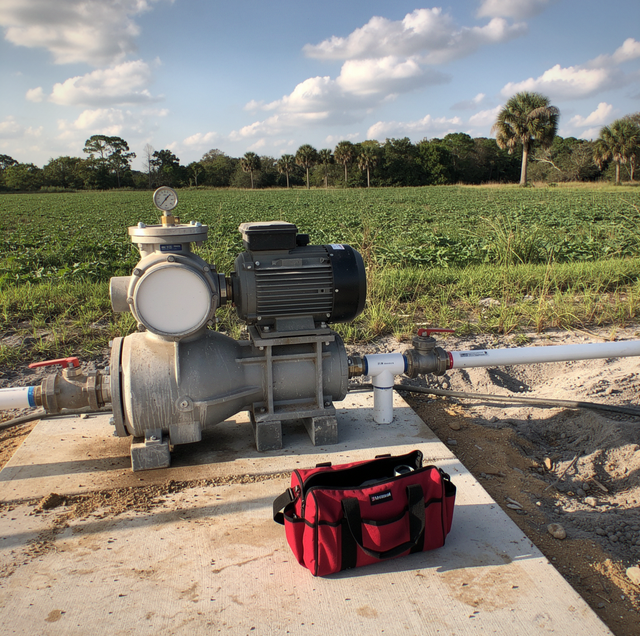
The call usually comes in from the field, not the office. A grower checking pivots on the north side of Newberry notices one zone barely trickling while the rest of the block pressures up fine, pulls a phone out of a shirt pocket, and dials a number saved from a previous season. What happens between that first ring and water moving through the line again follows a fairly consistent order, and knowing the order ahead of time makes the whole process less of a mystery when a pump picks the worst week of the season to act up.
What Happens When You Call In
The first few minutes are a phone diagnostic, not small talk. Whoever answers is trying to narrow down the likely cause before anyone gets in a truck, so expect direct questions: what kind of pump is running the system (surface, submersible, sub-turbine), which zones or blocks are affected versus which are fine, how the problem showed up (a slow fade over days, or dead this morning), and what changed recently, whether that's a new well, a recent power outage, added acreage, or a valve that got worked on.
None of this is filler. A pump that gradually lost pressure over a week points to something different than one that went from full flow to nothing between two irrigation cycles, and a technician who has spent more than thirteen years pulling irrigation pumps across North Florida farm ground is listening for those distinctions specifically, not just logging a complaint. Whether the system runs off a pond, a ditch, or a drilled well changes what gets asked next, too, since intake problems and drawdown problems point in different directions from the start.
The goal of the call is a working theory, not a diagnosis, and that working theory shapes what gets scheduled next: which parts are worth having on the truck, roughly how long the visit is likely to take, and whether it looks like a single-pump problem or something that affects the whole system. Growers sometimes expect a firm answer before anyone has laid eyes on the pump, and the honest limit of a phone call is worth saying up front, so nobody plans around a guess treated as a fact.
Getting on the Schedule Without Losing the Crop
Once the likely cause is roughed out, the conversation shifts to timing, and this is where the work differs from a home service call. Irrigation trouble during an active growing window is generally treated as more time-sensitive than routine residential work, because a stalled pivot or a dead zone during a critical watering stretch puts a crop at risk in a way a slow-filling pressure tank at a house does not. How that plays out in any given week depends on what is already on the board, which is worth asking about on the call rather than assuming either way.
"Moved up" doesn't mean the crop calendar gets ignored in the other direction, either. Scheduling still works around what's actually happening on the ground: whether a field is between cuttings, whether equipment can get through rows without doing more damage than the pump problem already has, and whether the grower would rather wait a day for full access than have a truck cutting through standing crop mid-irrigation. A short conversation about field conditions at this stage, before a truck is dispatched, is what keeps a scheduled visit from turning into a wasted trip and a second call.
Keep zone valves in their positions when trouble started until the technician arrives. Switching things off and on to test can erase clues that would otherwise narrow down the cause before the truck even leaves the shop.
What the Technician Does on Site
A phone diagnostic works less like a full inspection and more like a nurse's intake call before an appointment: enough detail to know what to bring, not enough to skip the exam. On arrival, the walk-through covers the system, not just the part that seems broken. That means the pump body itself, the suction line for leaks or air intrusion, the foot valve, the discharge gauge for a pressure reading against what the system should be producing, the controller, and a sample of zone valves pulled from wherever the reported trouble is concentrated.
Checking the whole path matters because a symptom at one end of the system can start somewhere else entirely. A zone that won't pressure up might be a valve problem at that zone, or it might be a pump that's lost enough capacity that the last zone in line is the first to feel it. Working the system in order, rather than jumping straight to the part that seems obvious, is what keeps a visit from turning into a second visit two weeks later for the actual cause.
For pond, ditch, and river-fed setups, the walk-through also covers the intake screen and strainer, since debris and sediment pulled in during a heavy rain event can throttle flow long before anything mechanical inside the pump has actually failed. On a drilled well feeding the same system, the equivalent check is the wellhead itself: fittings, seals, and whether the column shows any sign of movement since the last visit.
How the Fix Gets Decided
Some fault classes are single-visit work by their nature: a failed pressure or float switch, a worn seal, a fouled foot valve, a contactor or relay inside the control box, a clogged intake screen on a surface setup. Those are parts that come off and go back on at the pad, so the finding and repair are on the same trip. The dividing line is usually whether anything has to come out of the well. When the walk-through points to something on that side of the line, the conversation before any work starts covers what was found, what it would take to correct it, and what the grower wants to do about timing.
Sub-turbine and line-shaft pump pulls are the clearest example of work that sits on the far side of that line. A deep column does not come out in one piece. It comes up in sections, each one uncoupled and laid down as it clears the wellhead, with the shaft, the line-shaft bearings, and the column joints kept in order so the assembly can be read as a whole rather than picked over at random. Across the trade, that makes a pull a planned job in its own right, not a decision reached partway through a diagnostic visit, which is why the finding and the pull are two separate conversations. Short-coupled turbine work is one thing the shop does not take on and instead refers out.
After the Truck Leaves
Once a fix is made, the last step before the truck pulls out is confirming the system actually does what it's supposed to: pressure back where it should be, the zone or zones that were down now running, and nothing else on the system showing a symptom that got missed while attention was on the original complaint. On a farm account, that check happens with the specific field or block in mind, not just a generic pressure reading at the pump.
If a pull or a bigger repair got scheduled for a later date, the grower leaves that visit knowing what's next, not just that a truck will show up eventually. And if the original call came in after hours, the same order still applies the next business day, since shop hours run Monday through Friday, 8 AM to 5 PM, with after-hours calls picked up first thing rather than overnight.
Frequently Asked Questions
The visit still gets scheduled either way. A technician arrives without assuming a single part is the culprit and checks amp draw at the control box alongside the mechanical walk-through, since an electrical short can produce symptoms that look mechanical, like a pump that seems to have lost an impeller when the real fault is upstream in the wiring.
Not automatically. Seasonal ag and pasture work is typically treated as more time-sensitive during active growing months, but a house with zero water still outranks a field running at partial capacity, because a total outage at a residence carries more urgency than a farm system that's still delivering water to most of its zones.
The column and the shaft are read as one assembly rather than part by part. Each shaft section is rolled on a flat surface or set in vee blocks to check straightness, since a bent section shows up as vibration and accelerated bearing wear long before anything seizes. The lineshaft bearings at each column joint are checked for clearance and scoring, and the shaft journals are checked where those bearings ride. Column threads and coupling faces are inspected for galling or stretch, and in an oil-lubricated setup, the enclosing tube and its tension are subject to the same treatment. Reading all of that takes the assembly laid out on the ground, which is a large part of why a pull is treated as its own job across the trade.
Yes. A foreman or family member with authority to approve work can stand in. The technician calls the primary contact with what was found before doing anything beyond the original diagnostic, so approval doesn't require everyone standing at the wellhead at once.
The control box gets checked as part of the same-visit walk-through, including the contactor or relay and the pressure or float switch settings, since a lightning strike or a power surge, both common on North Florida farm ground, can knock a controller out of adjustment without damaging the pump itself.
Ask for the numbers rather than the outcome. The discharge pressure reading taken during the visit is the single most useful figure to keep, because it is the only thing a future visit can compare against to show whether the system has drifted or held. Alongside it, note which zone or block was affected, what was tested and ruled out, and the size or part number of anything replaced. Filed with the well's construction record and the pump's service history, that turns each visit into a data point instead of a memory, and it shortens the phone diagnostic on the next call.
Schedule an agricultural irrigation pump diagnostic — get a phone assessment and a visit scheduled around your crop. Perry-Pump Repair Service LLC serves Lake Butler, Gainesville, and Alachua. Call (352) 320-2412.
