

Can You Just Fill in a Pool with Dirt and Call It Done?
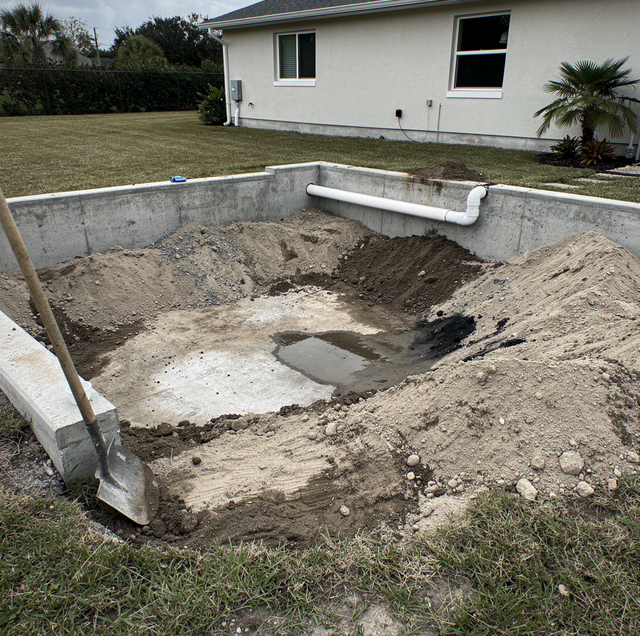
When the water's gone, what's left looks like a hole in the ground, and a hole in the ground seems like something you fill with dirt until the yard is level again. That's the appeal of doing it yourself: skip the noise and the machinery, bring in some dirt, spread it around, let the grass grow back over it. It's a reasonable instinct, and it comes from people who simply want their yard back without turning it into a bigger project than it needs to be.
The short version is that pouring dirt into a shell that's still in the ground doesn't get you a stable yard. It gets you a low spot that keeps coming back, sometimes for a long while before it shows up at all. The fill can look fine the week it goes in. What's happening underneath it is the part nobody sees until the ground starts moving.
Three things are going wrong underground when a pool gets filled this way, and none of them announce themselves right away.
An Intact Shell Has Nowhere for Water to Go
The shell itself is the first problem, not the dirt. A concrete or gunite shell is built to hold water, and it keeps doing that job long after the pump and filter are gone. Pour loose dirt into a shell that's still whole, and you haven't filled a hole; you've filled a concrete bowl. Rain has nowhere to drain, so it collects at the bottom of that bowl, keeping the fill sitting in standing water long after the surface looks dry.
Trapped water: Without an opening in the shell's floor, water that reaches the bottom of the cavity has no path out, so it stays there, keeping the fill above it saturated even as the top layer dries and cracks in the sun.
That trapped water also puts pressure on the shell from underneath. An empty or partly empty shell sitting in ground that stays wet can get pushed upward by groundwater pressure against its underside, and a shell that's been shoved around that way can crack instead of just holding still. So the shell isn't a neutral container waiting to be topped off. It's actively working against the fill the whole time it stays intact.
An emptied shell is not safe to walk into or work inside. Sidewalls and the ground around them can fail without warning, and a partly filled cavity stays unstable ground until it has been compacted in layers.
Loose Fill Settles Because It's Full of Empty Space
The second problem is the dirt, once it's in, and the truck is gone. Dirt dropped into a cavity in bulk doesn't pack itself down. It sits with pockets of air and loose material threaded through it, the same way potting soil poured loosely into a raised garden bed sits higher than it will a season later, once it settles into the gaps around it on its own. Sandy soil makes this worse, because it has so little natural cohesion that individual grains keep finding their way into whatever voids sit nearby, and every grain that migrates into a void is one less grain holding up the surface above it.
That's why a dirt-filled pool doesn't fail all at once. It fails a little at a time, as rain works through the fill and voids collapse under their own weight. What shows up in the yard is a depression, sometimes centered right over where the deep end used to be, sometimes off to one side where the fill happened to pack loosest. It's rarely dramatic. It's a soft spot that sits a little lower every season until someone finally asks why that part of the yard never stays flat.
What's Still Under There When You Start Piling Dirt
The third problem is everything still down there that dirt alone doesn't touch. A pool isn't just a shell; it's a shell wired and plumbed into the yard around it: pipe running underground to fittings throughout the shell, none of which stops existing because the water's been drained. Pipe left in place and simply buried under fill has nothing supporting it once the fill above it starts to settle, and pipe that collapses under that weight leaves its own low spot, on top of whatever the loose fill itself is doing.
Left-in concrete causes a similar problem. Broken chunks of shell or deck sitting loose in the cavity, mixed in with dirt around them, create the same kind of voids that loose dirt creates on its own, just with harder edges to settle around. A cavity that still has structure, pipe, and open space in it isn't finished just because there's dirt visible on top of it. What's underneath is doing the real work of whether the yard stays flat, and dirt by itself doesn't reach any of it.
What Actually Holds Grade Over Time
The version of this job that holds up starts by removing those three problems instead of working around them. Drainage holes are cut through the shell floor first, so water that reaches the bottom of the cavity has somewhere to go rather than sitting there and keeping the fill wet. Broken pieces of the shell and the deck concrete around it get pushed down into the cavity as part of the fill itself, which does double duty: it clears material that would otherwise need to be hauled off, and it displaces volume that would otherwise have to be made up entirely with imported dirt.
Ask what the fill is being compacted with, not just whether it was compacted. A plate and a rammer densify different soils, and a plate run over deep loose material mostly crusts the top while the bottom stays open.
Clean fill goes on top of that broken material in shallow layers, not one deep pour, and each layer gets compacted before the next one is added, which is the part a single deep fill skips entirely. Once the cavity is filled and compacted that way, the surface gets graded so water sheds off the footprint instead of pooling back into the softest part of the yard, which is usually right where the old pool sat.
Frequently Asked Questions
There is no set interval, and anyone offering you one is guessing. What moves it is how much water works through the fill, so the first visible drop usually follows a long wet spell rather than arriving on any schedule. A fill can look sound right through a dry year and then give up noticeable surface in a single heavy season.
Yes. The deck concrete, coping, and any pavers around the pool typically come out as well, since a deck slab sitting on ground that's settling beneath it tends to crack along the same lines as the settlement, right where it meets the old shell.
A diving board and its footing get removed, and if the yard has a screen enclosure or pool cage, that comes down too. Leaving either standing over ground that's still moving is how a structure ends up out of level with nothing but the yard underneath it to account for.
Neither one fixes what is actually broken. Sand poured into an unbroken shell still sits in a bowl with nowhere to drain, and its lack of cohesion means it runs into the voids around buried pipe faster than dirt does, not slower. Gravel bridges instead, holding open the gaps it was supposed to close. The material was never the part that was failing.
Not safely. A structure placed over ground with unresolved voids or an unbroken shell underneath is exactly where that movement matters most: a shed floor or a patio slab will show an uneven fill through cracking or a leaning corner well before the open lawn around it shows anything at all.
Yes. Once the fill and grading are done, sod goes down on the finished surface the same way it would on any other part of the yard, and the roots only interact with that top layer, not with whatever is compacted down inside the old cavity.
A pool that's just had dirt poured into it can look finished for a while, sometimes a long while, before any of this shows up. That delay is most of what makes the shortcut tempting, and by the time a soft spot appears in the yard it's easy to forget there was ever a pool there. The water, the voids, and everything still buried down there all get dealt with before the dirt goes in. There is no version of this in which they are dealt with afterward.
Get the pool removed and the yard graded right the first time — we break drainage into the shell, fill and compact the cavity in shallow lifts, and grade, so water runs off instead of pooling. Polk Services LLC serves Lakeland, Highland City, and Mulberry. Call (863) 344-5806.
