

Why Ag Booster Pump Bearings Wear Out Faster Than You'd Think
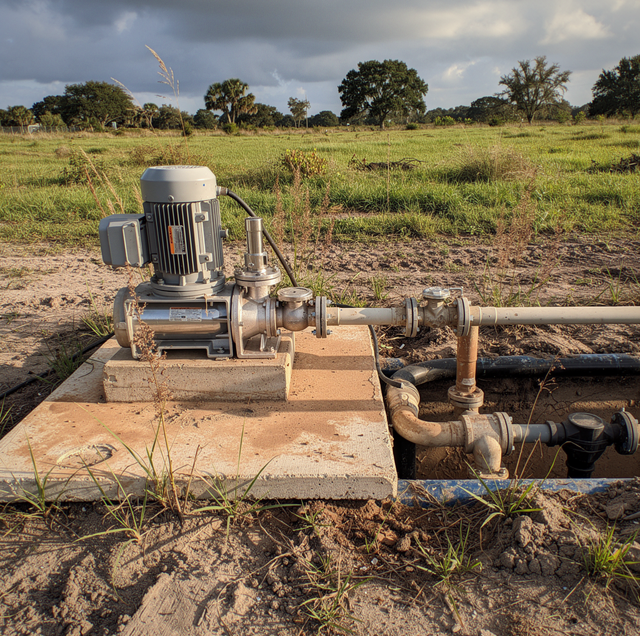
If you have ever asked why the same shop seems to replace bearings on your ag booster far more often than it ever touches the well pump at your house, the difference isn't the quality of the parts. Pull both units apart, and the bearings, seals, and shaft components are often of comparable hardware grades. What's different is where each one lives and how hard it works once it's installed. Your well pump sits below ground, cycling on and off in short bursts as a pressure tank calls for water. Your ag booster sits above ground, in the open, running for hours at a stretch during the growing season, pushing water that hasn't been screened the way a cased well filters it. Those conditions, not the parts inside the housing, decide how long the bearings last.
Duty Hours During Irrigation Season
During the growing season, a centrifugal booster on an irrigation main can run four to eight hours a day, sometimes longer depending on the crop and the block being watered that day. A domestic well pump built into your home's water system almost never sees that kind of continuous runtime; it kicks on when the pressure tank calls for water, refills the tank, and shuts off. Over the course of a week, a well pump's total running time is a fraction of what a booster logs in a single day during peak season.
Bearings and shaft seals both wear on time under load. A machine that spends most of its life turning wears its rotating parts down faster than one that spends most of its life at rest, and that gap compounds over a season rather than resetting each week. Before heat, grit, or start-stop cycling enters the picture at all, the hour count alone accounts for most of the distance between the two units.
Sitting Above Ground in Heat and Dust
A submersible or jet pump serving your house sits in the ground or in a well house, insulated from direct sun by soil, casing, or at least a roof over the pressure tank. A centrifugal booster on an ag main is usually mounted in the open, bolted to a pad next to the main line it feeds, with nothing but its own housing between the motor and direct sun. Heat radiating off a bare pad and the surrounding field adds load on top of whatever the duty cycle is already asking of the motor and bearings.
Dust and airborne field debris settle into everything nearby, including motor vents and the base the unit is mounted on. None of that gets inside a sealed bearing housing on its own, but it does build up on the housing and around seals and vents, and a unit caked in field dust runs warmer than a clean one because the extra layer works against normal heat dissipation. A well pump underground or in a service closet doesn't collect that kind of buildup at anywhere near the same rate.
A booster that sits in full sun on a bare concrete pad runs hotter than one with any shade or airflow around the motor housing, adding heat stress on top of the duty cycle itself.
What the Pumped Water Carries
A well pump draws from water that's been filtered by however many feet of sand, rock, and casing screen sit between the surface and the intake. It's not sediment-free, which is why sediment filters exist on the residential side too, but the water arriving at the pump has already lost a lot of what it started with. Your ag booster, pulling from a pond, canal, ditch, or a shallow well and feeding an irrigation main, is a different situation. That source water carries far more suspended grit and organic matter, and all of it passes through the same volute and impeller that are also carrying the daily duty load described above.
Grit doesn't wear a bearing directly in most designs, since bearings are sealed away from the water stream, but it does abrade the impeller, wear rings, and shaft sleeve, and as those surfaces wear down, clearances open up. Once clearances open, the shaft runs less true, and that added runout puts side load on the bearings that a tighter, less worn assembly wouldn't be transmitting. The bearing failure that eventually shows up upstream, on an already heat-stressed, long-duty-cycle machine, often has its origin partly in wear that started somewhere else in the pump.
The Start-Stop Pattern the Schedule Imposes
Even a booster that runs long hours doesn't run continuously without interruption. Irrigation schedules move block to block and zone to zone, and a controller that starts and stops the pump to match that rotation puts the motor and bearings through repeated startup surges instead of one smooth ramp. Each start pulls more current and more mechanical shock through the shaft and bearings than steady running does, and a booster cycling through several zone changes in a single day accumulates a number of hard starts that a residential pump, cycling gently on and off a pressure tank a few times an hour, never approaches.
The two start-stop patterns aren't really comparable. A pressure-tank cycle is a short burst against a system that's already primed and under some residual pressure. A zone-change start on an ag main is often a restart against a line that's lost pressure while the last zone was running, which means your booster's motor is working harder at the moment of each start than a house pump ever has to. Multiply that difference by the number of zone changes across a full watering day, and the extra mechanical stress adds up over a season in a way the duty-hour count alone doesn't capture.
Off-Season Duty and the Wear That Doesn't Stop
None of this means your booster gets a rest once the growing season winds down. Off-season, the same unit may run far fewer hours, but it's still exposed above ground to whatever the weather brings for the rest of the year, and an irrigation footprint's stretch of intense heat and humidity runs long enough that "off-season" doesn't mean cool or dry. A unit that logged heavy-duty hours all summer doesn't reset to zero wear just because the schedule slows down; the wear already built into the bearings, seals, and impeller carries forward into the next season's duty load.
The reverse is also true. A booster that's seen lighter use for months can still fail early in the next high-duty stretch if accumulated wear went unaddressed, because parts that were already worn down don't get stronger from sitting idle. Treating your ag booster's condition as something that only matters during peak months misses that the same exposure and the same grit-laden water are present, just at a lower daily dose, in every month the unit stays connected to the main.
What Accumulated Wear Looks Like Before It Fails
The wear regime described above doesn't jump straight from fine to failed. Bearings and seals degrade gradually, and the combined effect of duty hours, heat, dust, and grit shows up as a slow shift in how the unit runs rather than a single dramatic event. Clearances open a little at a time. Heat builds a little higher on the housing than it used to. The motor works a little harder to hold the same pressure across the same duty cycle it handled easily the season before.
Those shifts are readable if you know what to compare against. Housing temperature at the bearing end is the most useful of them, taken at the same point in a set on the same block and compared season to season rather than judged in isolation. A running sound that starts as a low rumble at startup and fades once the unit warms is another; it tends to arrive before anything shows up in flow or pressure. Grease weeping past a bearing cap, or grease that comes out darkened and gritty at the next service instead of clean, says the seal around that bearing is no longer keeping the outside out. Perceptible end-play or side-play in the shaft, checked by hand with the unit locked out, says clearance has already opened.
None of those indicators is a countdown, and none of them tells you how many hours are left. What they do tell you is that this booster has moved from the wear it was going to accumulate anyway into the range where a repair is still a repair. That is the window worth acting in, because it is the last one that stays cheap.
A booster that has begun to rumble at startup or run hot at the bearing end should not be pushed through one more block to finish a set. Shaft support is what goes next, and it goes quickly.
Frequently Asked Questions
Yes. A foot valve or check valve that isn't holding lets the main drain back between cycles, so your pump restarts against a partly empty line more often than the schedule alone calls for. That adds starts the controller never counted on, on top of the zone-change starts the schedule already imposes.
It is. The flexible coupling linking the motor shaft to the pump shaft can loosen or become misaligned due to the same vibration load that stresses the bearings. A coupling that's out of alignment adds a side load of its own, which can shorten bearing life faster than either part would on its own.
It can. A booster started across the line takes the full inrush and mechanical shock of a hard start every time. Equipment set up with a soft-start or variable-frequency drive ramps the motor up over a few seconds instead, softening that shock, though the duty-hour and grit exposure covered above still apply regardless of how the unit starts.
Yes. A main serving more zones, or a longer run downstream, makes your booster hold pressure against a larger volume of pipe between cycles. That means it spends more of each start-stop cycle working near its rated load rather than getting the brief, easy ramp a shorter, simpler main would allow.
It can. As a surface source drops during a dry stretch, the intake can end up drawing water with a higher share of bottom sediment than it did when the source was fuller. The grit load into the impeller isn't constant across a season even on the same field, let alone from one field to another.
Not automatically, and the wrong one makes it worse. A totally enclosed fan-cooled motor sheds heat by drawing air across the housing fins via a shaft-mounted fan beneath the shroud at the back end. A cover that shades the housing but boxes in the sides traps the air that the fan just heated and recirculates it, so the motor can end up running hotter under the structure than it did in open sun. An open-sided roof with real clearance behind the fan shroud and around the vents is the version that actually lowers the load.
Have your ag booster's bearing wear assessed before the next heavy-duty stretch — catch heat, grit, and start-stop wear while it's still a repair, not a rebuild. Perry-Pump Repair Service LLC serves Lake Butler, Gainesville, and Alachua. Call (352) 320-2412.
