

Continuous vs. Intermittent Duty Pump Motors: Why One Burns Out
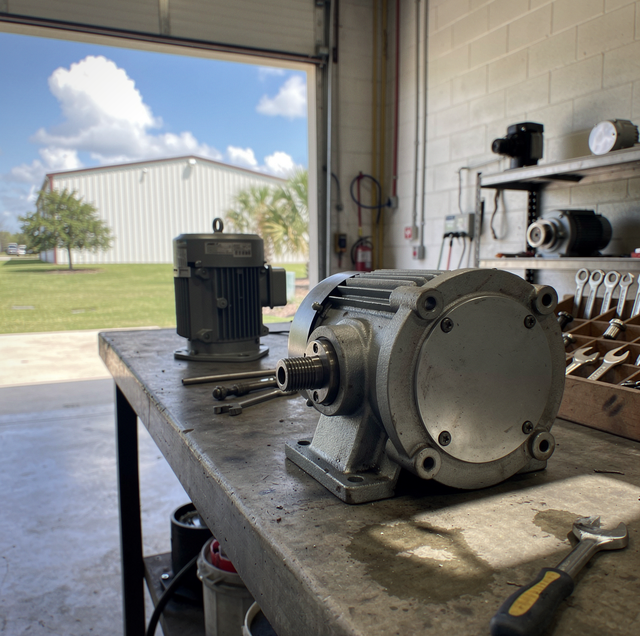
Duty class describes how long a motor is built to run without stopping, not how hard it can pull. Agricultural pumps running 4 to 8 hours daily need a continuous-duty rated motor: heavier windings, greater thermal capacity, longer bearings. An intermittent-duty motor can power a residential sprinkler pump running 30 to 60 minutes per zone, because the gaps between zones are part of the rating assumptions.
A motor comes off an irrigation pump at twenty months. It bolted up perfectly when it went on: same horsepower as the one it replaced, same voltage, same shaft, same four bolt holes, and it moved water without complaint the entire time it lived. When opened up at a service center, the winding is evenly darkened from one end to the other, and the enamel has become brittle.
The motor it replaced ran nine years on that same well. The plumbing did not change in between. The schedule did not change. What changed was one word printed in small type further down the nameplate, well below horsepower, that decides more about how many years a motor lasts than horsepower ever will: the duty class.
Where the Extra Copper Goes
"Heavier windings" is not a marketing phrase. It describes metal. A continuous-duty motor carries more copper in each stator slot, a larger conductor cross-section for the same number of turns, tighter slot fill, and a longer stack of steel laminations behind it. Every one of those additions is mass that has to warm up before the winding reaches the temperature where its insulation begins to suffer.
The heat comes from current pushing through the winding's resistance, and that loss is produced the entire time the motor turns. A winding with more copper sheds the same heat over more material and across more surface area, so the temperature it settles at is lower and the time it takes to get there is longer. That is the whole of what better thermal capacity means: more metal in the way of the heat, the way a thick cast-iron skillet holds a steady temperature where a thin one scorches.
The frame follows the copper. A continuous-rated motor at a given horsepower often comes in a physically larger frame with more external surface area and a larger cooling fan. Enclosure style matters alongside it: an open drip-proof shell pulls ambient air straight across the windings, while a totally enclosed fan-cooled shell keeps that air outside and moves heat through the housing instead. In a dusty pump house, the enclosed version is the one that survives.
The bearings get the same treatment, running longer with more grease volume, chosen to run warm without interruption rather than cool in short bursts. None of this shows up in the horsepower number, because horsepower describes the work available at the shaft in a given moment. Duty class describes for how many moments in a row.
What Heat Does to Insulation
The wire inside a motor is coated with a thin enamel film, and the finished winding is impregnated with varnish or resin that locks the turns together and conducts heat outward toward the frame. Both the film and the resin age, and thermal aging runs one direction only. Enamel becomes brittle, resin loses its grip, and cooling the motor back down undoes none of it.
This is where the rest period matters, and it is the part of an intermittent rating that gets ignored. An intermittent-duty motor is rated on the assumption that it stops and gives back the heat it stored before the next start. Zone-by-zone sprinkler operation supplies exactly that: the pauses between zones are real cooling time, built into the way the system runs. A pump feeding a field for hours never gets a pause. Winding temperature climbs until it plateaus, then holds there for the rest of the run, every run.
What follows is mechanical. Brittle enamel cracks where turns press and rub under vibration. Two adjacent turns touch, and that shorted loop begins drawing current out of proportion to its neighbors, heating faster than the copper around it. The fault widens, spreads to the next turns, and eventually finds its way to ground. From outside, the motor quit suddenly. Inside, it had been quitting for a year and a half.
That progression is why the mismatch shows up as 18 to 24 months rather than as one bad afternoon. Nothing about a wrongly rated motor makes it fail on day one. It works fine, moves water, and burns through its own insulation the entire time it does so.
The bearings sit in the same heat and usually speak up first. Winding temperature conducts down the shaft and thins the grease that keeps the rolling elements off their races, so a rumble that was not there before, or a shaft that has developed play, very often announces the problem before the windings do.
Duty ratings assume the motor breathes. A shed that traps heat, a fan shroud packed with grass clippings, or a motor shoved tight against a wall raises its running temperature, and a correctly rated motor can still cook in that spot.
Why a Warranty Claim Turns on the Plate
A motor warranty is written against the rating printed on the plate, not against the job the motor ended up doing. An intermittent-duty motor asked to hold a continuous schedule was operated outside the conditions it was rated for, and that is the first thing raised when a claim is opened. The rating is not a suggestion; it is the boundary of what the manufacturer agreed to stand behind.
The evidence is not hard to assemble. The duty class is stamped on the motor, and the application it came from is clear in the system itself. A pump feeding acreage for most of a day is not a 30- to 60-minute zone pump, and nobody has to guess about that.
Even a claim that gets honored has a catch. The replacement that comes back is the same motor class, which restarts the same clock and buys another stretch of the same countdown. It is a reset, not a repair. Meanwhile, the pump end, the pressure tank, and the control gear absorb every one of those cycles, and each motor change means the well is down while it happens. That is the reason a shop worth using will not substitute on motor class. A motor that fits is not the same thing as a motor that belongs, and the fit is the part that tempts everyone.
How the Wrong Class Gets Specified in the First Place
Nobody chooses an undersized duty rating deliberately. It arrives through a handful of ordinary paths, and recognizing them is most of the defense.
A parts-counter match: The failed motor gets handed across, and the replacement is selected on horsepower, voltage, and shaft. Duty class is not part of that lookup, so it drops out silently.
An online order: The search filters are horsepower, frame, and voltage. Duty rating appears somewhere in the product description, if at all, and it is not what the listing is organized around.
A system that grew into a different job: An irrigation setup installed to water a yard in zones now feeds a paddock, a garden block, or a livestock line. The equipment never changed. The runtime went from 30 to 60 minutes to hours, and the original rating stopped covering the work.
A pump end that outlived its motor: Casings, impellers, and diffusers routinely outlast several motors. The motor then gets bought on its own, years after the original install, with no record of what was specified the first time.
Assuming continuous is always the safe pick: For a hard-run pump, it usually is, but a continuous-rated motor dropped onto a short-cycling job wears its starting components instead of its windings. Frequent restarts are their own kind of load, and the answer is still to match the class to the schedule rather than reach for the heavier motor reflexively.
Deciding Before You Replace the Motor
The question that settles this is runtime, and it needs to be measured rather than estimated: the total hours the motor actually turns in a day, on the schedule the system runs now, not the one it ran when it was installed.
Once that number exists, the choice mostly makes itself. A pump running in the 4- to 8-hour daily range is in continuous-duty territory, and the heavier windings, thermal capacity, and bearings are what the job requires. A pump running 30 to 60 minutes per zone with genuine idle time between cycles is where an intermittent-duty motor earns its place and does so for years.
Anything ambiguous belongs on the continuous side, and the rest of the system deserves a look at the same time. A waterlogged pressure tank, a failing pressure switch, or a leaking foot valve can turn a short-cycle job into a long-run job without anyone touching a timer, and replacing the motor without finding that leaves the new one in the same trap as the old one.
One last thing about the plate: read it before the old motor leaves the property. Once it is gone, the duty class it was carrying goes with it, and the next replacement gets chosen by horsepower all over again.
Frequently Asked Questions
Look for the duty line on the nameplate rather than inferring it from horsepower. Plates written to the international convention give it as a duty code, where S1 means continuous running and S2 means short-time duty. Domestic plates usually print the word continuous, an abbreviation such as CONT, or a duty period expressed in minutes. That last case is the one to watch: a plate that states a duty period at all, rather than the word continuous, tells you the motor is not rated to run all day. When the line has worn off, the model and serial number can be run against the manufacturer's data to recover it.
Many single-phase pump motors carry a bimetallic thermal protector built into the end bell, which opens the circuit when the winding gets too warm and closes again once it cools. The auto-reset version does that repeatedly without anyone knowing, so the fault presents as a pump stopping and starting on no obvious pattern and is often blamed on the pressure switch. Manual-reset versions stay open until someone resets them, which at least makes the event visible. Either way, the protector is reporting a real overheat rather than causing one, and a technician should trace why the winding reaches that temperature.
It depends on the bearing arrangement the motor was built with. Many are sealed for life, with the grease charge installed at the factory and no way to add more; when that grease is spent, the bearing is replaced. Others are regreasable, fitted with a grease zerk on the housing and a relief plug on the opposite side. On those, the relief plug has to be removed before grease goes in, so the old grease has somewhere to escape. Pumping grease in with the relief plug still closed builds pressure that pushes grease past the inner seal and into the motor. This is service work for a technician, not a maintenance item to improvise.
The motor is typically sent to an authorized service center rather than judged from a photograph, and it is taken apart there. The winding burn pattern is what the inspector reads. Even, all-around darkening across the whole winding points to sustained thermal overload, the signature of a motor run past its rating. A single localized scorch or one damaged phase group points elsewhere, usually a supply-side fault such as a lost leg or a surge event. That distinction decides the claim, and it rests on physical evidence inside the motor rather than on anyone's account of how the pump was used.
Not reliably, because pump motors use different mounting and shaft conventions that are not interchangeable. A threaded-shaft jet pump motor, the J designation in the standard frame system, screws the impeller directly onto the shaft end. A square-flange motor uses a machined C-face with a keyed shaft and a bolt pattern that mates to the pump bracket. A motor built to one convention will not accept a pump end built to the other, regardless of matching horsepower. Voltage, phase, and rotation direction have to line up as well, and on some pump ends rotation is not reversible without changing components.
No, and the two ratings answer different questions. Service factor states how much load above nameplate horsepower a motor can carry, commonly 1.15 on a general-purpose plate. It says nothing about for how long. Running a motor into that margin makes it hotter than running it at nameplate, which spends thermal headroom rather than adding any, and the allowance generally assumes a normal ambient and a motor that is otherwise within its rating. An intermittent-duty motor with a 1.15 service factor is still an intermittent-duty motor, and a technician sizing a replacement reads the duty line, not the service factor, to answer the run-time question.
Have the duty class checked before the next motor goes on the pump — matching the rating to the actual run time is the difference between 8 to 10 years and 18 to 24 months. Perry-Pump Repair Service LLC serves Lake Butler, Gainesville, and Alachua. Call (352) 320-2412.
