

Yard Cleanout Complete? The Ground Still Isn't Ready
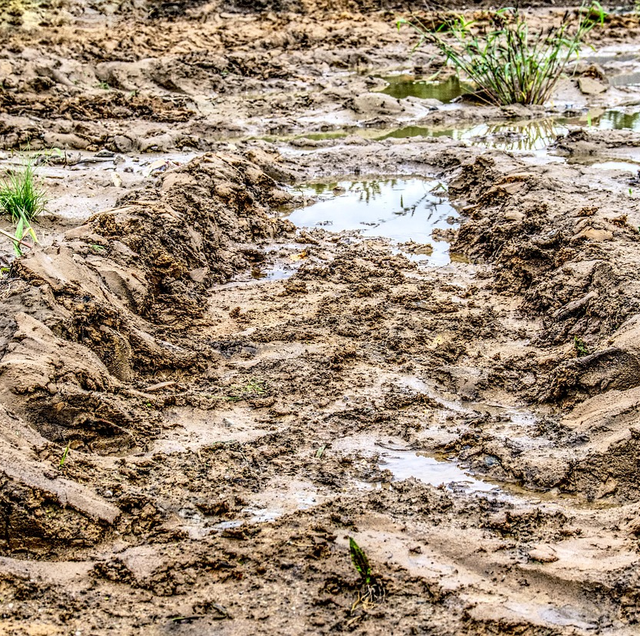
Quick Answer: A big property cleanout moves equipment over a yard in a short window, across the whole property, not just one spot. That traffic leaves compacted tracks, patchy bare soil, and an uneven surface even after every pile is hauled off.
A cleanout crew hauls out three trailer loads of brush, an old shed's worth of scrap wood, a rusted swing set, and a stack of furniture nobody wanted, and by the time the last load pulls off, the yard reads as finished. No more junk piles, no more debris, just grass and dirt. Walk the same yard a week later, and a different picture shows up: a stretch of ground near the driveway that stays soft and low after rain, a strip along the side yard where nothing green is coming back, and a general waviness underfoot that wasn't there before the trucks arrived. That's not separate from the cleanout. It's what the cleanout left behind, spread across the property instead of stacked in one pile.
What a Big Cleanout Does to the Ground Underneath It
A single hauled-off shed or fence removal disturbs one footprint. A full property cleanout is a different kind of job: a skid steer, a dump trailer, maybe a box truck, and workers with hand trucks and dollies, all moving in and out over several hours or days. Every trip has to cross the yard to reach the street or driveway, and most cleanouts don't follow one tidy route. A brush pile by the fence gets a trip, a stack of drywall by the garage gets another, the old grill and the broken patio set each get their own pass. By the end of the job, the yard has been crossed dozens of times from dozens of directions, not from carelessness, but because that's what moving a whole property's worth of material takes.
Each pass presses the soil underneath it. Loaded equipment and repeated foot traffic push air pockets out of the top several inches, packing particles closer together than roots or rainwater can work through. A single crossing barely registers; dozens of crossings, especially where routes overlap, leave a track that doesn't spring back once the equipment is gone.
Wheel Ruts and Compacted Tracks Don't Fix Themselves
The most visible sign is the rut itself: a shallow trench, sometimes just an inch or two deep, sometimes enough to catch a mower wheel, running wherever the heaviest or most repeated trips crossed the yard. But the rut is only the part you can see. The soil on either side of that visible groove is compacted too, just not enough to leave a physical depression, and grass sitting over that compacted band struggles even where the surface looks flat.
Compacted soil, not torn-up soil: the mechanism here isn't really about grass getting crushed. Grass blades bend and mostly recover. The problem is underneath, in the root zone, where compacted soil no longer has enough space between particles for roots to spread or for water and oxygen to reach them. A rut left alone doesn't heal the way a bruise does. The soil structure that got pressed together stays pressed together until something works it back open.
To check whether a spot is truly compacted, push a long screwdriver or thin metal rod into moist soil. If it stops short in a wheel-track line but slides in easily a few feet away in undisturbed grass, that line is compacted.
A carpet that's had a heavy dresser sitting on it for years shows the same kind of packed-down groove after the furniture moves: the fibers don't spring back up on their own because the padding underneath has been flattened, not just the surface pile. Soil under a wheel track behaves the same way. Working it back open, whether with a core aerator, a tine cultivator, or hand tools on a small job, is what actually reverses the pressing, not just raking the surface smooth.
The Bare Patches Are a Map of Where Things Sat and Where Things Were Dragged
Ruts trace where equipment rolled. Bare patches trace where material sat still or got dragged. A brush pile or a stack of scrap lumber sitting in one spot, even for a few days, blocks light completely, and the grass under it doesn't just thin out; it dies back to the soil. Staging areas, where crews stacked and re-stacked material as they sorted it before hauling, receive the same treatment throughout the job, sometimes with several different piles rotating through the same patch of ground.
Dragging does a different kind of damage. An old washing machine, a section of chain-link fence, or a waterlogged sofa pulled across the yard toward the trailer instead of carried scrapes the grass and the thin layer of topsoil under it right down to bare dirt, in a line rather than a patch. That scraped strip has less organic material left in it than the surrounding lawn, which is part of why grass seed thrown on it later germinates unevenly even after the ground gets raked flat.
A dumpster or a loaded trailer parked in one place for a multi-day cleanout introduces a third pattern: a static load rather than a rolling one. A container spreads its weight over a much larger footprint than a wheel does, so the pressure reaches deeper into the soil profile, and it sits there for days instead of passing through in an instant the way a moving wheel does. That's often the single worst spot in the yard once the job wraps up, even though nothing "ran over" it more than once.
Why the Ground Ends Up Wavy, Not Just Marked
Individually, a rut here and a bare patch there read as separate, fixable spots. Looked at across the whole yard, they add up to something else: an uneven micro-grade, a surface that's no longer one consistent plane even though nothing was ever formally regraded. One line got compacted an inch lower than the ground three feet away. Another spot got built up slightly where a pile's loose debris and soil got tracked and mixed into the grass as equipment rolled over it repeatedly. None of it is dramatic enough to look like a drainage problem walking across the yard normally, but it shows up the moment water hits the ground: instead of following the yard's actual slope, a lot of it threads along the old equipment paths, since those slightly lower, denser tracks are exactly where water wants to sit.
A cleanout crew focused on hauling debris was never scoped to catch this, and a homeowner walking the "finished" yard usually misses it too, since no single low spot is severe enough to notice alone. It shows up once the grass struggles in a pattern that traces the old equipment routes, rather than as a single clear low point.
"Cleared" and "Ready for New Grass" Are Two Different Finish Lines
A cleanout's job is to get junk, brush, and debris off the property. That's a real, complete, and separate scope of work, and finishing it doesn't obligate anyone to have the ground underneath restored as well. The confusion happens because both jobs can leave a yard looking the same at first glance: open, empty, and reasonably tidy. Whether that same ground is actually ready to hold new grass, sod, or plantings is a different question, one that depends on whether the soil under the visible surface still has the structure roots need, not on whether the visible debris is gone.
That gap is why a yard can pass the eye test the week the cleanout wraps up and still fail weeks later, once new seed skips over the compacted lines or comes in patchy on the bare, scraped strips while the rest of the lawn fills in normally.
What Leveling This Out Actually Involves
The fix starts with finding the damage, not guessing at it. Walking the yard after a rain and noting where water lingers, or tracks in visible lines, is a fast first pass. A screwdriver or probe test at a few points along suspected tracks confirms compaction depth, and a straight board laid across a suspect area shows whether it's a true low spot or just a surface texture issue.
Compacted tracks that are too shallow to be true low spots usually respond to core aeration or tine cultivation, breaking the pressed soil open a few inches deep without adding material. A rut deep enough to hold water gets filled with matching soil, blended flush rather than mounded, so it doesn't become a new high spot once it settles. A rake attachment or box blade, run in overlapping passes, ties the reworked areas back into the surrounding grade, so the yard reads as one surface again rather than a patchwork of levels.
Call 811 before tilling, aerating deeper than a couple of inches, or digging out a rut to fill it. Irrigation lines and buried wiring are frequently shallow enough for hand tools or small equipment to catch.
Bare, scraped patches need the subsoil loosened before anything gets seeded or sodded over them. Seed or sod laid directly on compacted bare dirt germinates thin and roots shallow, just as it would on a packed track, because the ground beneath it was never actually opened back up.
Frequently Asked Questions
A full regrade reshapes the entire property's slope for drainage, whether or not equipment ever crossed it. Cleanup-related disturbance is narrower: specific tracks, staging spots, and drag lines that need loosening, filling, and blending, not a wholesale re-slope. Most cleanout aftercare touches only the disturbed lines and patches, leaving the rest of the established lawn alone.
Usually not on any useful timeline. Surrounding turf spreads into thin or damaged areas through runners and root growth, but that depends on soil the roots can push into. Compacted bare dirt blocks that spread the same way it blocks new seed, so the patch tends to stay bare or get colonized by weeds that tolerate disturbed soil better than turf grass does.
A single crossing rarely leaves a lasting mark; grass in a spot equipment rolled over just once or twice usually looks and probes the same as the rest of the lawn within a week or two. An actually compacted track shows consistent resistance to a probe test across its whole length, not just at one point, since it was the route equipment used repeatedly rather than crossed once in passing. If firm resistance shows up at a single spot rather than along a line, that points to a staging area where something sat still, not a travel route.
Give reworked soil time to settle, ideally through one real rain or a deliberate watering cycle, before planting over it. Pressing a foot into the area is a rough check: soil that still gives noticeably more than the established lawn around it hasn't settled enough, and sod laid on it can end up bridging a soft spot that dips within weeks.
That spot usually needs more than the wheel-track areas. A dumpster or shipping container sits on a footprint far larger than a tire, so its weight spreads out and drives deeper into the soil over days rather than passing through in an instant, and that footprint often comes out as close to a rectangle matching the container itself. A trailer parked on its wheels and tongue jack instead concentrates load at just a few points, so it usually leaves isolated soft spots rather than one uniform rectangle. Either way, the fix usually requires a full pass with aeration or tilling, plus a topsoil refresh, not just a light raking.
That usually backfires. Loose topsoil sitting on compacted subsoil holds water at the boundary between the two layers instead of draining through, which can leave the patch soggier than before it was topdressed. Breaking up the compacted layer first, then blending topsoil into the loosened base, lets the full depth of soil act as a single, connected layer rather than two that don't drain into each other.
A cleanout gets the junk off the property. What's left after that- the tracks, the bare lines, the slight give and take across the yard- is a separate job with its own fix, and it takes walking the whole property to find, not just patching whichever spot happens to be the most obvious first.
Get your yard's ground disturbance assessed and leveled after a cleanout — compacted tracks broken up, bare patches prepped, and the whole surface blended back to one consistent grade. Polk Services LLC serves Lakeland, Highland City, and Mulberry. Call (863) 344-5806.
