

After a Tropical Storm: What Your Irrigation Intake Needs First
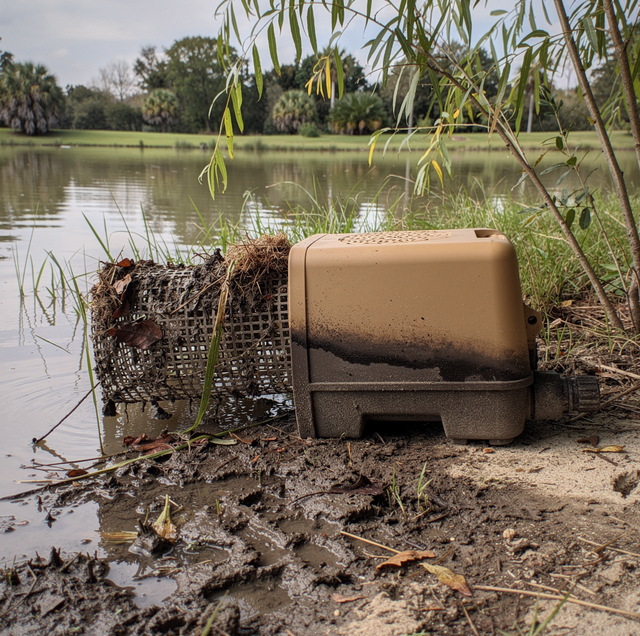
The water has finally gone down, but the field still needs its morning run, and the intake sitting at the edge of your pond, ditch, or river isn't the same setup that was pulling water last week. Branches and matted vegetation are wedged against the screen. There's a waterline stain on the pump housing well above where it usually sits dry. Before anything gets flipped back on, the surface-fed system feeding that irrigation run needs a hard look, not a hopeful restart.
Surface-source intakes work hard even in an ordinary week. Pond, ditch, and river draws pull in sediment and organic debris that wear on impellers all season, tropical storm or not. A named storm just compresses months of that wear into one event and adds problems a calm week never would: surge, submersion, and hardware that no longer sits where it was installed. What follows is specifically about what a storm changes and what must be confirmed before the pump goes back to work. The routine wear a surface source causes on its own is a separate subject; this is about the acute damage one event leaves behind.
The Debris and Sediment a Storm Pushes Into the Intake
A tropical storm doesn't introduce a new kind of load to a pond, ditch, or river-fed intake; it delivers months of ordinary load all at once. Storm surge and heavy runoff carry branches, matted vegetation, leaf litter, and stirred-up bottom sediment straight at the intake screen, often in far greater volume than the source would ever put there on a normal week. A screen packed with debris restricts flow before the pump ever engages, and any grit or sand fine enough to pass through accelerates the wear an impeller already takes on from routine surface-source pumping. A blocked screen and a badly worn impeller can look similar on the pressure gauge, but they call for different fixes, and reading the gauge alone will not distinguish between them. Nothing about the intake gets touched yet, though: the electrical question below comes first, because it decides whether it is safe to be at the equipment at all.
What Flood Water Does to a Motor That Sat Submerged
If the pump housing, motor, or control box sat below the flood line at any point, treat it as compromised until a technician confirms otherwise. This is the one place where guessing wrong is dangerous, not just expensive. Water that reaches the motor housing can sit in the windings, and a motor with water in the windings poses an electrical hazard the moment power is reintroduced. Running it in that state can also destroy the motor outright. The instinct to flip the breaker and see if it still runs is understandable after a hard week, but it's the wrong move here. Note how high the water actually reached on the equipment and leave the restart to someone who can test it safely, rather than switching it back on to find out.
Surge damage from a nearby strike is a second storm-related electrical failure path with its own diagnosis, and it requires no floodwater at all to reach the equipment. Submersion is the one that decides whether the circuit is safe to energize right now, so it is the one that gets answered first.
A pump or motor that sat underwater must not be switched back on to test it. Water inside the windings is an electrical hazard, and running a wet motor can destroy it. Have it checked before power reaches it.
Foot Valves, Screens, and Lines That Shifted in the Surge
Once, and only once, the electrical question has a clear answer, the intake can be worked on by hand. That means power confirmed off at the disconnect, not merely switched off at the controller, and confirmation that the motor and control box were never under the flood line. With both of those established, the screen and intake opening can be cleared by hand before anyone concludes the pump itself is underperforming. Doing it in the other order puts a person's hands on equipment whose circuit has not been ruled safe.
The suction line that ran cleanly into moving water last week may now be sitting on exposed mud, jammed against uprooted brush, or buried under a fresh deposit of sand and silt. Check where the foot valve and intake screen actually sit relative to the current water line. A valve that surges or debris shifts even a few inches can end up drawing air instead of water, or lying in muck it was never built to filter. Any coupling, clamp, or mounting bracket that took the force of moving water should be checked for cracks or fatigue before the line is trusted to hold pressure again.
A foot valve that no longer seals can cause the suction line to lose its prime overnight. If the pump won't hold pressure at startup after a storm, that valve is one of the first places worth checking.
A Changed Channel: When the Source Itself Looks Different
Sometimes the equipment came through fine, but the water source itself is different. A ditch bank can slump into the channel during heavy flow, redirecting current away from where the intake was originally set. A pond's edge can build up a new sediment bar, leaving the intake sitting in noticeably shallower or nearly stagnant water than before. A river or creek can drop, exposing an intake that's now drawing from a pool that no longer connects to real flow. None of that is something a pump can fix. If the source itself has moved, shrunk, or gone stagnant where the intake sits, the fix is repositioning the intake to water that's actually there. Even a channel that looks unchanged at a glance can be carrying a different flow rate than it did before the storm, which changes how well the intake keeps up once the pump is drawing on it continuously again.
What the Storm Keeps Delivering for Weeks Afterward
Clearing the intake once does not close the event out. Material a storm knocks loose upstream does not all arrive on the same day. Bank soil, broken vegetation, and displaced bottom sediment keep working downstream on every high-flow day that follows, so an intake that ran clean on the first restart can foul again weeks later with no new storm involved. Sediment that settled into a pond or ditch bottom during the surge re-suspends the first time the channel runs hard again, and a channel that scoured during the surge can keep shedding material from the new cut for the rest of the wet stretch. Post-storm inspection intervals belong on a shorter cycle than usual until the source is visibly running clear again.
What Has to Be Confirmed Before the Pump Runs Again
A few things need to be established, not assumed, before the pump goes back to work. The electrical side needs a clear answer: was any wiring, the motor, or the control box underwater, and has that been ruled safe by someone qualified to test it? The intake side needs a visual confirmation: is the foot valve seated, the screen clear, and the line actually submerged in moving water rather than resting on mud or exposed bank? And the source itself needs a look: is the intake still pulling from the same water it pulled from last week, or has the channel shifted enough that the intake needs to move with it? A surface-fed irrigation pump that answers yes on all three is worth restarting. One that doesn't deserves an inspection first. Photographing the waterline mark on the equipment before it fades gives a technician a clear record of how high the water actually reached, which is useful information once the inspection starts.
Frequently Asked Questions
Time isn't really the measure; contact is. Even a wire splice or connection point that was underwater only briefly can carry moisture into the winding insulation, and that risk doesn't shrink just because the exposure was short.
A flapper packed with storm grit still closes most of the way, so the line holds prime for a while and then bleeds down slowly. The tell is a pump that primes on the first run of the day and fails to pick up on the second, or that holds fine over a short gap and not overnight. A valve that surge knocked loose or tore off its seat fails outright: the line empties every cycle, and the pump never picks up at all. The partial seal is the harder of the two to catch, because it reads as an intermittent priming quirk rather than a broken part.
Running a pump against a restricted intake risks cavitation inside the pump housing: the water supply can't keep pace with what the impeller is trying to move, and that mismatch is hard on both the motor bearings and the impeller. Clearing the screen by hand is the safer order of operations, once power is confirmed off at the disconnect and the motor and control box have been ruled out as submerged.
Yes, and possibly more than usual. Portable generator output isn't as clean as utility power, and the surges and dips common during outages put extra stress on capacitors and relays that a storm may already have weakened.
Possibly. A control box or panel mounted low to the ground can pull in moisture through vents and seams without ever being submerged, and corrosion from that kind of exposure often doesn't show up for weeks.
No. Storm debris tends to arrive as a mat rather than as loose pieces, and a mat that is pulled apart to clear it can drift back together against the screen as soon as draw resumes. Material still suspended in the water column settles onto the screen during that first run as well. An intake that started a cycle clear can be half-sealed again by the end of that cycle, so plan on a second look right after the next run rather than treating the first clearing as final.
Get your surface-fed intake inspected — confirm it's safe to run before the next watering cycle. Perry-Pump Repair Service LLC serves Lake Butler, Gainesville, and Alachua. Call (352) 320-2412.
