

Irrigation Pump Losing Pressure Mid-Cycle? Six Causes
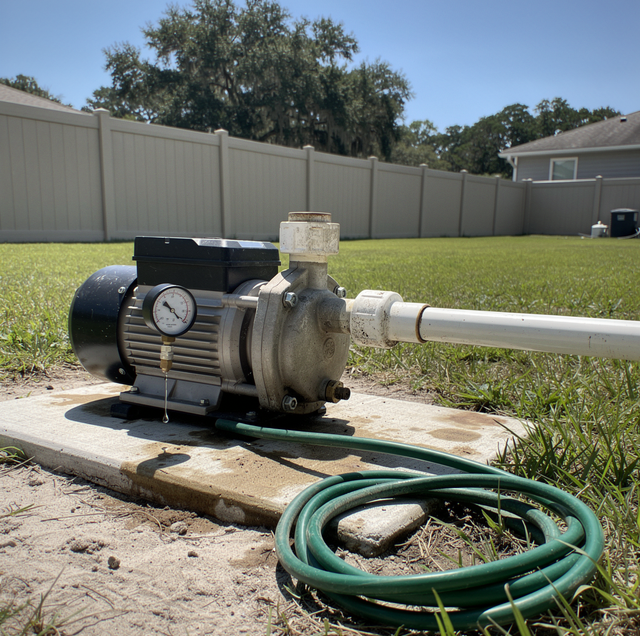
The controller clicks over, a valve opens, and the pump kicks on. For the first minute or two, pressure at the heads or drip line looks the way it should: strong, even coverage, no complaints. Then, somewhere in the middle of the run, it fades. Heads that were popping up firm start to droop. A zone that used to finish in its normal window now needs longer to cover the same ground, if it gets there at all.
That single symptom, pressure dropping partway through instead of failing outright at the start, can trace back to any of six different points in the system. The fact that it develops gradually rather than showing up the instant the pump energizes is itself a clue. Sorting them apart comes down to how the drop behaves, not just that it happened: whether it tracks the runtime, whether rest brings it back, whether it wavers or declines along a single line, and whether anything outside the sprinkler pattern changes at the same time. That usually separates a source-side problem from a mechanical one before anyone opens a control box.
Weak Before the Pump Ever Settles
If pressure never really establishes in the first place, rather than starting strong and fading later, the complaint is not really mid-cycle at all. The usual cause is two or more zones drawing from the same pump at once, either due to a wiring fault or to a controller program that overlaps run times it was never meant to. A pump sized to feed one zone's worth of heads or emitters at a time gets asked to feed two, and demand doubles before the pump has any chance to settle into a steady rhythm.
Before calling for service, note whether the drop returns after the pump rests, whether it holds steady or wavers, and whether it hits one zone or every zone. That detail alone narrows which of these six causes a technician checks first.
This pattern repeats every time the same zone pairing runs, not just occasionally, and if only one zone valve is confirmed open, pressure returns to normal. That consistency is what separates overlap from everything else on this list.
A Fade That Tracks Runtime and Recovers with Rest
Once overlap is ruled out, the well itself is the next thing to account for. The water level in the casing begins to fall as continuous pumping outpaces the rate at which groundwater can move back in to replace it. Unlike overlap, this doesn't show up at the start of a run, because there's usually a reserve of water sitting in the casing above the pump intake to draw on initially. Once that reserve draws down toward the intake, pressure fades progressively rather than dropping all at once.
The tell here is a smooth, continuous decline that worsens the longer the single zone runs, with pressure that partially recovers if the pump is given a rest before the next zone starts. A drop tied that closely to elapsed runtime on one continuous draw, rather than to which zone is running, points at the source rather than the equipment.
A Drop That Fluctuates Instead of Declining
A second cause looks much the same at a glance but reads differently once you watch it closely. Iron and sediment common in well water build up as scale inside discharge piping over time, narrowing the pipe's effective bore, and a section of that buildup can also break loose and partially lodge at a fitting or check valve. Either way, the pump is pushing against a narrower path than it was built for.
The difference from a falling source lies in the pattern: a restriction often causes pressure to fluctuate or surge rather than decline in a steady line, because loose debris shifts position as flow pushes against it, and the drop doesn't reliably track with how long the pump has been running that day. It also shows up regardless of which zone is active, since the obstruction sits downstream of the pump rather than upstream at the source.
Pressure Loss That Brings Clues from Outside the Pump
A mechanical failure inside the pump itself produces its own mid-cycle fade. The seal that keeps pumped water on the wet side of the shaft separate from the motor's dry side wears, cracks, or loses spring tension, and water begins tracking past it into the motor housing, a space that isn't built to run wet.
What separates this from the source-side causes above is that the pressure loss comes with clues outside the sprinkler pattern entirely: dampness or staining at the base of the pump, a grinding or gritty sound near the shaft, or the pump running noticeably hotter than normal partway through the run. A mid-cycle fade paired with any of those extra signs points at the seal, not the well or the piping.
Pressure That Never Firms Up at All
The pressure relief or unloader valve is supposed to bleed off a controlled amount of pressure at startup or divert flow to protect the rest of the system. When grit or mineral fouling gets into the seat, the valve can't fully reseat, and it keeps dumping water and pressure that should be reaching the irrigation line instead.
This one breaks the pattern the other causes follow: it doesn't fade smoothly with runtime the way source drawdown does, and it doesn't recover with a short rest the way a starved well does, because the leak point is the valve itself, not the supply. Pressure that stays soft or inconsistent no matter how long since the pump last ran, on a system where overlap and restriction have already been ruled out, points here.
A pump that runs noticeably hotter than normal, hums without spinning freely, or shuts off and restarts repeatedly partway through a cycle should be shut down and inspected rather than left running through the rest of the schedule.
A Fade That Worsens as Heat Builds
The last of the six depends on sustained heat building up: a capacitor that has gone weak under continuous-duty load. The capacitor gives the motor the extra torque it needs to keep spinning at full strength once it's under real load, not just at the instant of startup. A marginal capacitor behaves the way a battery that tests fine sitting on a shelf sometimes does under actual load: it holds up fine with no strain, then comes up short once heat and sustained demand pile on.
The signature is a motor that starts strong, and either fades or stutters the longer it runs, sometimes with an audible hum or click as it struggles to maintain output. It often worsens across back-to-back zones in the same watering cycle and can be inconsistent from one day to the next as ambient heat and duty cycle vary, which is what separates it from a steady, repeatable mechanical fault.
Reading the Pattern Instead of Guessing
Because these six failure points behave differently once they surface, the way a pressure drop unfolds is diagnostic information in its own right, not just a symptom to report. An overlap shows up before the pump ever settles. A starved well fades smoothly and recovers with rest. A restriction fluctuates instead of declining. A weeping seal brings outside clues with it. A fouled valve never firms up regardless of rest. A weak capacitor fades the longer heat builds. Matching what actually happened, and when, against those six patterns is what turns a vague complaint into a specific repair instead of a guess.
Frequently Asked Questions
Recovery time varies by aquifer permeability and casing diameter, and can range from a few minutes to several hours. A technician measures it directly by comparing the static water level against the pumping water level using a sounding line or electronic water level indicator lowered into the casing, rather than estimating from pressure alone.
Yes. A common cause isn't the program at all but a valve that doesn't fully close, often from a bad solenoid or a torn diaphragm, letting the zone that's supposed to be shut bleed water while the next zone opens. The timer schedule can be entirely correct, and the hardware still doubles demand on the pump.
Water intrusion into the motor housing can trip the motor's internal thermal overload protector, which shuts the pump off and allows it to restart once it cools, resulting in repeated short-cycling rather than a steady fade. Left long enough, the same moisture also corrodes internal bearings.
No. Many single-phase pump motors use a run capacitor, rated for continuous duty, separately from a start capacitor that only energizes briefly at startup. A mid-cycle fade under sustained load is more often a run capacitor issue, since the start capacitor has already done its job and disengaged before heat becomes a factor.
Spring fatigue is the mechanism most people overlook. The spring behind the poppet loses tension over years of cycling until it can no longer reseat the valve against normal line pressure; nothing needs to be lodged in the valve for that to happen. On the bench, the two causes separate cleanly: a fouled valve shows a witness mark or a deposit ring on the seat face, while a fatigued spring comes out clean and measures short of its free length.
By comparing the pump's amp draw at the electrical panel against its nameplate rating, alongside gauge readings taken before and after the suspected restriction. A restriction typically shows normal to high amp draw paired with reduced flow, while a starved or drawn-down source shows falling amp draw too, since the pump is losing its prime along with its output.
Schedule an irrigation pump diagnostic — get the mid-cycle pressure drop traced to its actual source. Perry-Pump Repair Service LLC serves Lake Butler, Gainesville, and Alachua. Call (352) 320-2412.
