

Stump Grinding vs. Stump Removal: Which Do You Need?
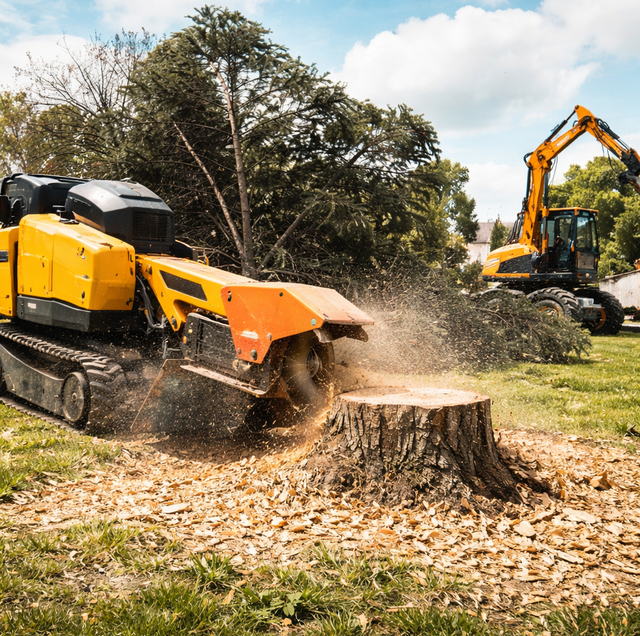
The tree came down last season, but the stump is still sitting in the lawn, and now you face a decision that sounds simple and is not: grind it down or dig it out. People swap the two terms as if they mean the same thing. They do not. Stump grinding and stump removal are two different jobs, with different machines and different results underground. Which one you want depends almost entirely on what you plan to do with that patch of dirt once the stump is gone.
Here is the difference and how to decide.
The Core Difference: What Happens to the Roots
Everything hinges on the root system. Grinding uses a rotating cutting wheel to chew the stump down into wood chips, working from the top down to a set depth below the soil line, then it stops. The visible stump vanishes. The roots stay in the ground and break down over the years that follow.
Removal takes the whole thing out. Instead of shaving the stump off, the crew excavates around and under it to lift the stump along with the main root ball, extracting the mass of woody roots rather than leaving them to rot. That single choice drives how much of your yard gets disturbed, what the spot looks like when the crew leaves, and what you can build or plant there next.
Why Grinding Is the Usual Choice
For most homeowners, grinding is the more practical route. The machine works on the stump itself and leaves the surrounding lawn largely intact, so there is no wide excavation. Because it never digs out the root ball, it avoids the deep crater that removal opens up, and it keeps its distance from nearby tree roots, irrigation lines, and hardscape edges that a digging bucket can catch. It is quicker, and it converts the stump into a pile of fresh wood chips.
Those chips are the other quiet advantage. You can rake them back into the depression as backfill, spread them across a bed as mulch, or have the crew haul them off if you would rather start with bare soil. For a stump you simply want gone so the yard looks whole again, grinding gets you there with the least mess. The trade-off is what stays behind: the roots, decaying slowly underground, which is fine for a lawn but matters in a few specific cases below.
When Full Removal Makes Sense
Removal is the right call when leaving the roots is a problem. If you plan to plant a new tree in the same hole, pour a footing, or set a shed, patio, or fence line where the stump stood, the root ball has to come out, and grinding leaves it in place. Removal also earns its keep when the roots are already lifting a walkway or crowding a foundation, or when you want a clean slate with nothing woody left below grade.
The cost of that clean slate is disruption. Extraction opens a sizable hole where the root ball was, disturbs a wider ring of soil, and leaves you backfilling and re-grading afterward. So removal trades a torn-up yard today for ground that is truly clear tomorrow.
| Consideration | Grinding | Full Removal |
|---|---|---|
| Roots | Left in the ground to decay over the years | Lifted out with the root ball |
| Yard disruption | Contained to the stump footprint | Wide, opens a large hole |
| What you get back | Wood chips and a shallow dip | Bare hole to backfill and grade |
| Best when | You want the stump gone from the lawn | You will replant a tree or build on the spot |
How Depth and Debris Play Into the Decision
Grinding is not one fixed depth. A crew grinding a stump for a lawn usually takes it a few inches below grade, enough to top with soil and sod so nothing shows. If the plan is to replant nearby or lay sod cleanly, they go deeper. The chips and ground wood fill the void, so what you are left with is a soft, mounded spot that settles as it decays rather than an open pit.
That leftover mass is exactly why the two methods are not interchangeable for planting. Grass roots sit in the top few inches of soil and have no trouble growing over a ground stump once the chips are cleared and clean topsoil goes down. A new tree is a different story: its root ball needs open earth to spread into, and the old decaying root mass under a ground stump gets in the way. If a replacement tree in the same footprint is the goal, that points to removal, not grinding.
Matching the Choice to Your Yard
The decision usually turns on your plan for the ground. On a lot being cleared, re-landscaped, or prepped for a new structure, removal keeps old roots from fouling future digging, planting, or grading. For a homeowner who wants a stump out of the lawn, grinding is the clean, low-disturbance answer, and the chips can feed a nearby bed. Sandy soil and steady rain mean left-behind roots break down at their own pace underground, which is a non-issue for turf but worth planning around if you intend to plant a tree or pour a slab there soon. Know what the ground has to do next, and the method follows.
Frequently Asked Questions
Grinding is the faster of the two on the job site. An average yard stump is often ground down in well under an hour of machine time, since the wheel only shaves the wood and never chases the roots. Full removal runs longer: the crew digs a wide pit, works the excavator under the root ball, wrestles the mass loose, hauls it off, then closes and grades the hole. That added labor is one more reason removal is saved for stumps that truly need it.
It is larger than most people expect, because grinding turns a solid stump plus the wood below grade into loose, fluffed shavings that take up far more room than the stump did. A modest stump can throw a wheelbarrow or two, mounded over the hole. If you reuse them as mulch, keep the fresh ones away from young or tender plants: decomposing wood pulls nitrogen from the top layer of soil and can briefly starve nearby seedlings until it ages. Aged chips, or a layer of soil between the chips and the plants, avoids that.
Yes, and it is worth flagging before the machine arrives. A grinding wheel reaches below the surface, so a buried irrigation line, a low-voltage lighting wire, a septic line, or a utility lateral in that footprint can be nicked if nobody knows it is there. Calling for a utility locate marks the public lines, and you should point out any private irrigation heads, drip tubing, or septic parts you know of. Where a line runs too close, the crew can adjust depth or approach rather than risk it.
It depends on what is bothering you. If a mower keeps scalping raised roots, or roots are humping up the turf around the stump, ask the crew to grind those surface roots along with the main stump so the ground sits flat. Grinding the visible root flares also helps when a species tends to sprout, since it takes out some of the tissue those shoots grow from. For a stump tucked in a bed where the roots are out of the way, grinding the stump alone keeps the disturbed area smaller.
For a plain lawn patch with no replanting, a few inches below grade is enough to top with soil and sod. If you want less decaying wood underfoot, ask for a deeper grind. As the buried wood and roots rot, they can draw fungus and the occasional wood-eating insect, including termites, to the soft, moist mass for a while; keeping it away from the house and topping the spot with soil rather than leaving raw chips against siding limits that.
The dip settles because the grind leaves a void loosely filled with airy chips and softened wood, and that filler compresses and rots down over the months that follow, so a spot that looked level at first sinks into a shallow low. This is normal, not a sign the work failed. The fix is to return after the first good rains, top the settled chips with clean topsoil, tamp it lightly, and reseed or re-sod. You may need to top it off again as the last of the buried wood breaks down.
What It Comes Down To
Stump grinding and stump removal solve the same eyesore from opposite directions. Grinding shaves the stump below the surface and leaves the roots to decay quietly, with the yard barely touched and a pile of reusable chips to show for it. Removal lifts the whole root ball out, leaving a hole to fill, but truly clear ground. For most lawns, grinding is the clean, efficient pick; when a new tree or a structure is going where the stump stood, removal earns its extra mess. The deciding question is never which machine is better in the abstract, only what that patch of ground needs to do next.
If you've got a stump to deal with, we can grind it down or clear it out based on your plans for the spot, from stump grinding in Plant City to Winter Haven. Polk Services LLC serves Lakeland, Highland City, and Mulberry. Call (863) 344-5806.
