

What Happens to Your Junk After It's Hauled Away: The Real Route
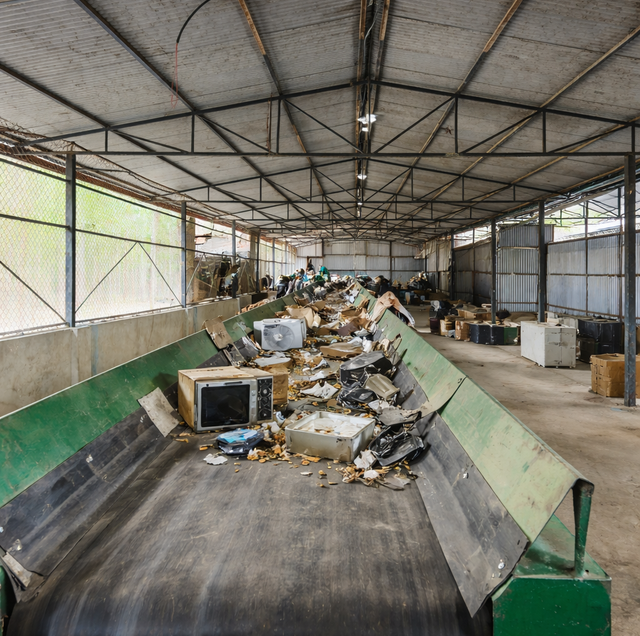
Quick Answer: A responsible hauler sorts your load instead of dumping it whole. Usable furniture and household goods are set aside for donation; metal, cardboard, and electronics are routed to recyclers and scrap yards; appliances get refrigerant recovered; and only genuine trash rides to the transfer station. Prepping items ahead of time and keeping donatable goods clean and dry lets more of your pile stay out of the ground.
The truck pulls away with the old couch, the dead treadmill, and three garbage bags of who-knows-what, and for most people the story ends right there. Out of the driveway, out of mind. But the pile does not vanish. It goes somewhere specific, and what happens in the hours after pickup separates a hauler who cares about waste from one who backs up to the nearest landfill and tips the whole load.
The Load Gets Sorted Before Anything Is Thrown Out
The single biggest misunderstanding about junk removal is that everything ends up buried. On a well-run job, the opposite is true. The moment a load comes off the truck, it gets triaged the way an emergency room sorts patients: not everything needs the same destination, and treating it all as trash wastes both usable goods and disposal money.
Sorting usually happens in stages. The first pass pulls anything still functional or repairable: a dresser with all its drawers, a working microwave, a bike frame. The second pass separates materials that recyclers pay for or accept, mainly metal, cardboard, and clean wood. A third pass isolates items that need special handling because they are hazardous or regulated and cannot legally ride to a landfill with regular trash. Whatever survives all three passes as truly spent- a shattered particleboard shelf, a stained mattress with a broken frame- goes to the transfer station.
That order matters. Once items are crushed together in a compactor, nothing can be salvaged. Sorting first is the only way diversion works.
Where the categories actually go
- Donation takes furniture, working small appliances, tools, and household goods that a family or thrift shop can use as-is.
- Recycling takes cardboard, clean scrap metal, and certain plastics that processors buy back by weight.
- Scrap yards take ferrous and non-ferrous metal, from steel bed frames to copper wiring pulled out of a dead water heater.
- Specialty facilities take electronics, refrigerant appliances, mattresses, tires, and chemicals.
- Transfer station or landfill takes only what is left, ideally the smallest share of the load.
What Gets Donated Versus Recycled Versus Buried
The dividing line between donation and recycling is simple: can a person still use it, or only a machine? A solid oak table with a scratched top is donation material because someone will happily use it. That same table, water-damaged and swollen at the joints, drops down to recycling if the wood is clean, or to disposal if it is coated and contaminated.
Thrift and charity partners have limits, though. They will not take upholstered furniture with stains, tears, or any sign of pests because they cannot resell it or store it. They decline anything with a safety recall or a missing critical part. Knowing those limits is why an experienced crew can call a piece's destination on sight, rather than hauling a reject across the county only to have it refused at the door.
Recycling picks up much of what donation turns away. Cardboard gets flattened and baled. Metal gets separated by type because a scrap yard grades and weighs steel, aluminum, and copper differently. Rigid plastics and clean wood find outlets depending on local processors. The goal at this stage is volume: keep the tonnage headed for burial as low as the recycling market allows.
Burial is the last resort, not the default. A broken-down composite item that no charity wants and no recycler can process- think a cracked plastic storage bin fused with old tape and grime- is what a transfer station is actually for. On a good job, that final category is a fraction of what rolled up in the truck.
Electronics Need Their Own Path
E-waste is where careless disposal does the most quiet damage. Old TVs, monitors, laptops, printers, and phones carry lead, mercury, and other heavy metals that do not belong in a general landfill, and in many places they are barred from regular trash entirely. A responsible hauler keeps electronics separate and routes them to a certified e-waste recycler that dismantles them safely.
Certified processors break a device down to its raw components. Circuit boards are harvested for the small amounts of gold, silver, and copper they contain. Plastics and glass are separated for their own streams. Batteries are pulled before anything gets shredded, because a lithium cell that gets crushed can ignite. The result is that a dead laptop becomes a handful of recoverable materials instead of a brick of toxins seeping into groundwater.
Prepping electronics before pickup: Wipe personal data first. Factory-reset phones and laptops, and remove or destroy hard drives from desktop machines you are truly done with. A reputable recycler will often offer certified data destruction, but the safest hard drive is one you have already handled yourself.
Appliances Carry Hazards You Cannot See
Large appliances look like simple scrap metal, and mechanically most of them are. The complication lives inside anything that cools or heats: refrigerators, freezers, window air conditioners, and dehumidifiers hold refrigerant in a sealed loop. That refrigerant is a potent greenhouse gas, and federal rules require it to be recovered by a certified technician before the metal shell can be scrapped.
The proper sequence is recovery first, then recycling. A technician taps the sealed system, draws the refrigerant into a recovery cylinder for reuse or safe destruction, and only then does the steel, aluminum, and copper go to the scrap yard. Compressors, which hold oil, get handled separately. Done right, a dead refrigerator becomes clean recovered metal and captured refrigerant, with almost nothing left to bury.
Water heaters, washers, dryers, and stoves have no refrigerant but are still mostly metal, so they head to the scrap yard once any usable parts are pulled.
Mattresses, Tires, and Truly Hazardous Items
A few common items are notorious at the transfer station because they cannot be landfilled cheaply, or cannot be landfilled at all.
Mattresses are bulky, springy, and terrible for compactors, so many facilities charge extra to take them or refuse them outright. Recyclers instead cut them apart and separate the layers: steel springs to scrap, foam to carpet padding and other uses, wood frames to mulch or fuel, fabric to fiber. A single mattress that would have swallowed landfill space becomes four or five clean material streams.
Tires are banned from most landfills because they trap gases, float back to the surface, and breed mosquitoes when they hold water. They go to dedicated tire processors that shred them into crumb rubber for playground surfacing, athletic tracks, and road base.
The most careful handling is reserved for household hazardous waste. Paint, solvents, pool chemicals, motor oil, pesticides, propane tanks, and every kind of battery must go to a household hazardous waste facility, never the curb and never a regular trash truck. These items can leak, react, corrode a container, or catch fire, and a landfill is not built to contain them. A good crew tells you upfront which items they can take and which you need to route to a dedicated drop-off, because pretending a can of old thinner is ordinary trash puts workers and groundwater at risk.
If it could burn, poison, or explode, it does not belong in the pile. Set paint, chemicals, and batteries aside for a hazardous waste facility, and let a crew handle the heavy lifting on appliances and furniture rather than wrenching a loaded fridge down the stairs alone.
Why Diversion Is Worth The Extra Steps
All this sorting takes labor, so it is fair to ask why a hauler bothers instead of tipping everything and driving off. Burial is the most expensive and most wasteful ending for most of a load. Landfill space is finite and tipping fees are charged by weight, so every ton diverted to donation or recycling is a ton that costs less and does more good.
There is a community payoff too. A donated couch furnishes a home. Recovered metal re-enters manufacturing instead of being mined fresh. Captured refrigerant stays out of the air. None of that happens if the only stop is the dump. Diversion is the difference between hauling as disposal and hauling as redirection.
How To Prep So More Of Your Pile Gets A Second Life
How much of your junk stays out of the ground comes down to a few minutes of prep before the crew arrives.
Keep donatable goods clean and dry, since a couch stored under a leaky carport for a month is a donation while the same couch left in the rain is landfill. Wipe down small appliances and make sure they still power on.
Keep parts together. A bed frame with its hardware in a labeled bag, a table with its leaf, a bookshelf with its pegs, all stay donatable. Loose and incomplete items usually get downgraded to recycling or trash.
Separate the special cases yourself. Pull electronics, batteries, paint, and chemicals into their own group and flag them for the crew so nothing hazardous ends up mixed into a general load. Set tires and mattresses where they are easy to grab, since they follow their own routes.
Do the machine hygiene. Reset and wipe any device with personal data, and drain fuel or fluids from equipment where you can safely do so. A little sorting on your end lets the crew move faster and lets far more of your pile find a second life.
Frequently Asked Questions
It varies by what is in the load, but a mixed household haul that is sorted well commonly keeps well over half its weight out of the ground, and metal-heavy loads can run higher because scrap is almost entirely recoverable. The number drops sharply when a load arrives soaked or crushed, which is why prep on your end changes the outcome more than anything the crew does after pickup.
Yes, and it is a fair question to ask before you book. Reputable haulers can tell you which donation partners, scrap yards, and recyclers they work with, and some will confirm afterward that a particular piece went to donation. If a company cannot name a single downstream partner and only says "we recycle," treat that as a red flag rather than an answer.
Leave furniture assembled if it is going to donation, since intact pieces are worth more and travel better. The exception is anything too heavy or wide to clear a doorway safely; pulling the drawers out of a dresser or the shelves out of a hutch lightens the carry and prevents wall damage, and the crew can reunite the parts at the truck.
Clean, untreated wood is often chipped into mulch or processed as biomass fuel, so a plain pine frame has a path beyond the landfill. Painted, laminated, or pressure-treated wood is the harder case, because the coatings and preservatives keep it out of most mulch and compost streams, and that material is more likely to be disposed of than recycled.
They get their own careful handling because they are pressurized, not just because of their contents. A can with any propellant left inside can rupture in a compactor or a shredder, so aerosols go to hazardous waste collection, and propane cylinders, even ones you think are empty, are returned to a refill exchange or a dedicated tank drop-off rather than any trash or scrap stream.
Most will take a single item. What changes is the labor at the front end, not the destination: a lone hot tub, piano, or basement treadmill often needs two crew members and some on-site disassembly to clear a stairwell or doorway, and the piece is carried out from inside the home rather than left at the curb. Where it ends up is still decided by what it is, sorted for donation, scrap, or specialty processing the same way one piece out of a full load would be.
Book a sorted, responsible pickup — keep more of your load out of the landfill and skip the heavy lifting. Polk Services serves Lakeland, Plant City, and Bartow. Call (863) 344-5806.
