

Cleaning Out an Abandoned Property: What an REO Turnover Involves
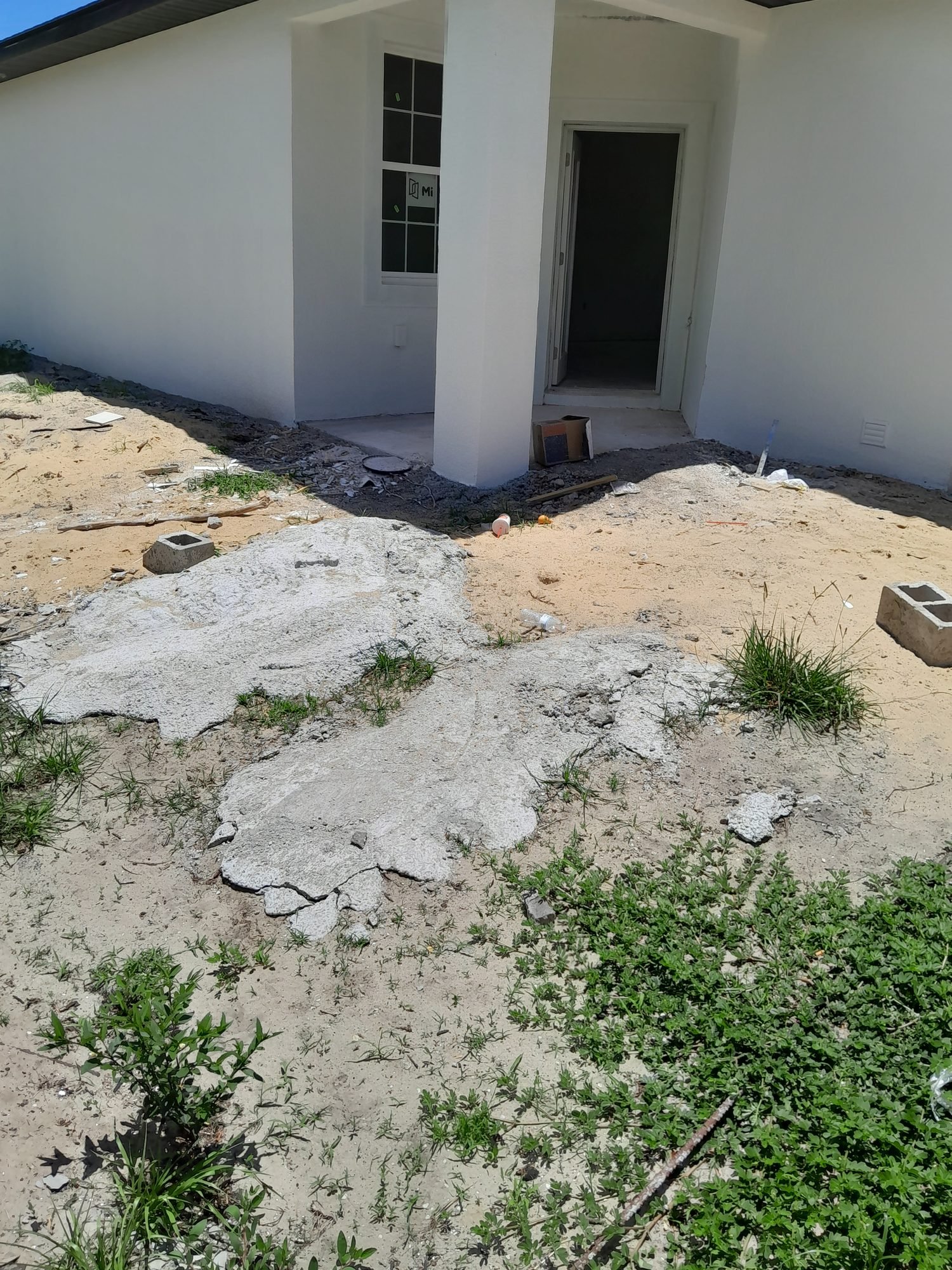
Quick Answer: An REO cleanout is a reporting job with a cleanout attached. Exterior runs first for equipment access, interior second room by room, hazards get identified, set aside, and recorded, and the photo record is the actual deliverable.
A bank-owned property looks, at first glance, like a large house cleanout. Furniture nobody wanted, a yard that has not been cut in a season, a garage packed to the door. The volume is familiar and the work looks like ordinary hauling.
It is not, and the difference has almost nothing to do with how much is in the house. Somebody who is not standing on the property has to be able to prove what condition it was in, what was removed, what was found, and when. Miss that, and a technically finished cleanout still fails, because the person who ordered it cannot close their file.
Why an REO Cleanout Is Judged Differently
An ordinary residential cleanout ends when the truck pulls away and the customer is happy. Nobody audits it.
A distressed-property cleanout ends when a third party accepts the record of it. The person paying is rarely the person who will walk the property, and often has never seen it. Their job is to satisfy a lender, a court, a listing file, or an insurer, all of whom want evidence rather than assurance. That single fact reshapes the work: the sequence changes, the sorting changes, and the closing paperwork stops being an invoice and becomes the product.
Who Ordered the Work Changes What Good Looks Like
Three parties commission this work, and they want different things from the same afternoon.
A property preservation company is running an assignment on behalf of a lender or asset manager. The dispatcher is usually out of market and coordinates from photographs. What they need is line items that match the categories their reporting system expects, so the invoice drops straight in without being retyped.
A listing agent has taken on a distressed property and is working backwards from a photography date, an appraisal, or an open house. Speed and curb appeal carry the day, and the completion record goes into the listing file.
An attorney is coordinating a court-ordered turnover or an estate with a foreclosure overlap. The itemization has to hold up as scope documentation, which means labor, disposal, materials, and any specialty scope broken out separately rather than rolled into one line.
Same property, same debris, three different definitions of a job well finished. Establishing which one you are in belongs at the quoting stage, not at the invoice.
Exterior First, Interior Second
The sequencing looks backwards until you have done it once.
The instinct is to start inside, because that is where the volume sits. Crews that work this regularly go the other way: the lot gets cleared first. Overgrowth, storm-fallen limbs, abandoned yard items, and damaged fence sections come out before anyone opens the front door.
Clearing the exterior first is what lets a mini skid steer reach the structure. Hauling a waterlogged sofa forty yards by hand through chest-high growth costs more time than clearing the path did.
There is a second reason. The exterior is what an appraiser, a photographer, and a passing neighbor see, and it is the part most likely to have generated a code complaint while the property sat empty. Clearing it early takes pressure off the file while the slower interior work proceeds.
What Stops a Cleanout Cold
Long-vacant properties surface things that are not hauling problems, and a crew that keeps working through them is enlarging the problem rather than removing it.
The recurring categories are old paint, solvents and cleaning chemicals, batteries, pressurized vessels such as propane cylinders and fire extinguishers, and prescription medication. None of these belong in a general load. Each has its own destination: household hazardous waste collection for most chemicals, pharmacy take-back programs for medication, and specialist handling for anything sealed and under pressure.
Stop at any sign of suspected biohazard, heavy mold growth, a sealed pressurized cylinder, or a floor that flexes underfoot. Those need licensed remediation, specialist pickup, or a structural assessment before anyone carries weight across them, not a crew pressing on.
Structural condition is the other stopping point. A house closed up with no air movement and no dehumidification holds interior humidity high enough for mold to take a ceiling once there is any moisture source, and a slow roof leak nobody found turns subfloor into something that will not hold a person plus a dresser. Both get recorded and referred rather than worked around.
Evidence of Occupancy Gets Recorded Before It Gets Removed
Finding signs that somebody has been living in a supposedly empty property is common enough to plan for rather than react to. Bedding, clothing, cooking equipment, and food waste turn up regularly.
The handling rule is sequence: photograph first, remove second. Whoever ordered the work may need that record for their own file, and once bedding is in a trailer the evidence of what the property looked like is gone. If the party ordering the cleanout wants law enforcement to see it first, the schedule bends to that rather than the other way around.
The tone matters as much as the process. This is somebody's file and sometimes somebody's misfortune, and the useful posture is discreet and factual.
The Photo Record Is the Product
Three sets of photographs do the work: the property as found, progress through the job, and the finished state. Wide shots from a fixed corner of each room, so the as-found and completed images line up as matched pairs, plus detail shots of each hazard where it sat. Together they answer the questions that come back weeks later, when nobody can revisit the property to check.
Skipping the mid-progress set is the common shortcut and the one that costs. Before-and-after alone cannot show that a hazard was found and segregated in a specific room, or that a floor was already failing when the crew arrived rather than after they carried something across it.
The written closeout should separate interior work, exterior work, structural demolition, disposal, and anything found and referred out. Those separations are what let a dispatcher file it, an agent attach it, or an attorney present it.
The Half That Decides Whether Anyone Comes Back
A cleanout that gets questioned later is almost never questioned about the hauling. It gets questioned about a hazard nobody recorded, a condition nobody photographed, or an invoice that rolled five kinds of work into one line and cannot be broken apart after the fact.
Every one of those is decided while the crew is still on site, and none of them can be reconstructed once the trailer is gone.
Frequently Asked Questions
The party ordering the cleanout issues that instruction, and a crew should not improvise it. In practice, items with apparent value get photographed and set aside separately rather than mixed into a general load, and sealed personal paperwork is commonly held back for the servicer or attorney rather than discarded on site.
A great deal. No power means no interior lighting in rooms that may already have covered windows, so battery work lights or a generator become part of the plan. No water removes the simplest dust control during demolition. Disturbed dust in a long-closed house also carries spore and rodent-dropping load that a paper nuisance mask does not filter, which is why a fitted N95, or a half-face respirator with P100 cartridges, goes on at properties that look merely dusty.
Volume matters less than access and scope. A packed but reachable single-story house with a driveway to the door can move quickly. The same volume behind an overgrown lot, up a staircase, or with structures needing demolition first stretches into multiple days. Accumulation at hoarding levels is a different job again, because sorting for hazards has to happen item by item rather than by the armload.
That determination sits with the servicer, asset manager, or attorney handling the property, and it varies by situation and jurisdiction. A cleanout crew works to written authorization from that party and should decline to proceed on a verbal or ambiguous instruction. If authorization is unclear, the right move is to pause and get it in writing rather than to interpret it.
They route to different specialists, which is why the finding gets described rather than just flagged: a decomposition source is an odor and residue problem, heavy mold is a spore problem, and the scopes are written differently. Close the affected room and leave it undisturbed rather than fanning or airing it, so the remediation contractor can assess it intact. What gets recorded is location, rough extent, and whether the affected surface is porous or non-porous, because that is what a remediation scope is built from.
Completion shots framed from the same standing positions as the as-found set, so a reviewer can compare pairs instead of guessing which room they are looking at, each carrying a date and a room label because most systems file by room. Disposal is more useful shown as load count or a scale ticket than as a single line. Keep a copy of the written authorization in the same packet, since the packet is what gets filed and the conversation is what gets forgotten.
Distressed properties get cleared every day by crews who treat them as volume work, and most of those jobs are fine right up until somebody asks a question nobody can answer. Worth remembering where the packet goes next: a dispatcher drops it into a reporting system, an agent attaches it to a listing file, an accountant or an adjuster reads it months later having never seen the property. Assemble it for that reader rather than for the person standing in the driveway.
Coordinate a cleanup — interior and exterior scope handled in one job window, with photo records and itemized completion paperwork for your file. Polk Services LLC serves Lakeland, Highland City, Mulberry. Call (863) 344-5806.
