

What Has to Move before Carpet Removal: Furniture and Baseboards
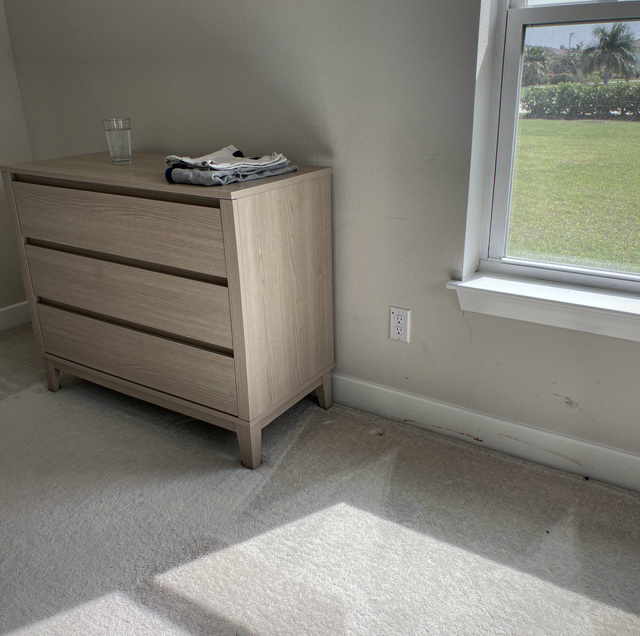
You cleared the room, or thought you did. Boxes are stacked, the closet is empty, and the floor looks ready enough to start. But carpet removal has its own definition of ready, and a tidy room does not automatically meet it. What matters is what is still sitting on the carpet, what is fastened through the sub-floor beneath it, and what was trimmed to fit the old floor height. Those are three different questions, and a quick straighten-up rarely answers any of them.
Furniture Comes Out Before the Carpet Work Starts
Carpet runs as one continuous piece under anything that is not fastened down, so before the crew arrives, everything freestanding, including dressers, beds, sofas, chairs, end tables, and bookshelves, needs to be clear of the carpeted area. That part is on you, since it is ordinary household furniture rather than equipment tied to the removal itself. A smaller category follows a different rule: a piano, a gun safe, an aquarium, and a large television still have to be clear of the carpet, but getting them there calls for handling suited to what they actually are rather than a routine one-person carry. Arranging that sits with you too, separate from the carpet removal appointment, and it is worth doing ahead of time rather than the morning of.
Items Fixed to the Floor Stay Put
Fixed fixtures: A toilet, a pedestal sink, a floor-mounted radiator, a built-in bookcase, and a kitchen island are common examples in a carpeted space, and none of them belong on your moving list. Carpet was cut around each of these when the room was originally installed, fitted to the shape of the fixture rather than run underneath it, and carpet removal follows those same cut lines in reverse. Nothing about pulling carpet requires shifting a fixture that was already built around. If any of these needs to come apart, that is plumbing or carpentry work handled on its own, separate from the carpet scope, and arranged apart from the appointment rather than as a step inside it. A heavy piece bolted to a wall for stability, like a bookshelf anchored with an anti-tip strap, is not the same thing: if it can be unbolted and carried out, it is furniture that has to move, and if the carpet runs underneath it rather than stopping at its edges, that is the sign it was never treated as a fixture in the first place. For everything else fixed to the floor, the rule is simple: if it was already excluded from the carpet at install, it stays excluded from the removal now.
Doors Can Swing Differently Once the Carpet Is Gone
Door clearance: A door in a carpeted room is often hung or trimmed to clear the pile, with just enough gap at the bottom to swing over the carpet without dragging. That clearance was set for the floor as it existed then, not for whatever is underneath once the carpet and padding come out. Carpet and its padding together commonly account for close to half an inch of floor thickness or more, which on its own is often enough to change how a door clears the sub-floor, even before any new flooring goes down in its place. Once the floor height changes, the same door can swing differently than it did the day it was hung, catching on the sub-floor or closing at a different angle than before. This is not something carpet removal causes on purpose. It is a side effect of changing what the door was originally fitted to clear, and it is worth knowing about before the appointment rather than being surprised by it afterward.
A door trimmed to clear old carpet pile may drag, stick, or swing at a different angle once the sub-floor underneath is exposed. That is a separate carpentry adjustment, not something carpet removal resolves on its own.
Baseboards and Shoe Molding: What Actually Has to Come Off
Baseboards: carpet does not butt against the face of a baseboard the way it might against a tile edge. Instead, the edge of the carpet tucks into the gap left beneath the board, which is why, in most stretched-in installations, the baseboard itself never has to come off for the carpet to come out. The tack strip holding that edge in place is typically set back roughly half an inch from the wall, inside the same gap the baseboard leaves, which is why the cut edge of the carpet lands under the board rather than stopping at it. The board stays on the wall the entire time, and removal works around it rather than through it.
Shoe molding: the thin strip of quarter-round trim that sometimes runs along the bottom of a baseboard is a different piece entirely, and it is usually the one actually touching the carpet. Shoe molding often sits directly on top of the carpet's tucked edge, covering the gap the baseboard leaves at the floor. Because it rests on the carpet rather than the wall, it is the piece that sometimes has to come off for the floor work to proceed. Not every room has it, and not every room that has it needs it removed, but it is the genuine variable, not the baseboard.
Run a hand along the base of the wall before the appointment. A thin strip sitting on top of the carpet edge, not flush against the wall, is shoe molding, and it is usually the piece the scope conversation is actually about.
Who Moves What: A Quick Scope Reference
The categories above answer the same question from different angles. Clearing them out works the same way clearing a driveway does before a moving truck backs in: the crew needs open floor to work, not a room that still doubles as storage. Here is the short version side by side.
| Item in the Room | Who Moves It | Why |
|---|---|---|
| Freestanding furniture (beds, sofas, dressers, shelving) | You, before the appointment | Carpet runs as one piece underneath anything not fixed in place |
| Heavy or fragile items (piano, gun safe, aquarium, large TV) | You, with handling suited to the item | Weight and fragility are separate concerns from carpet scope |
| Fixed fixtures (toilet, pedestal sink, radiator, built-in bookcase, kitchen island) | Nobody, they stay in place | Carpet was already cut around them at install |
| Doors | Nobody moves them, but check the swing after | Floor height changes once carpet and padding are gone |
| Shoe molding | Comes off if it sits on the carpet edge | It rests on the carpet, not the wall |
| Baseboards | Usually stay on the wall | Carpet tucks under the board rather than butting its face |
Frequently Asked Questions
Not always. Older or lower-spec installations sometimes butted the carpet directly against the baseboard face instead of tucking it under, and those do need the board off before the carpet comes out. Most stretched-in installations tuck the edge under instead, so the board stays put, but the difference is not visible until the edge is exposed, which is why it is worth checking rather than assuming.
Most sectionals are not one piece. They separate into individual sections rather than needing to be carried whole, and the number of sections a sectional has is what matters when describing the room, since that determines how it comes out, not its overall size.
No. That falls under specialized handling, and arranging it is separate from the carpet removal appointment. Plan for it ahead of time, not the morning of.
Not in most cases. Carpet typically runs continuously from the room into the closet with no seam or transition strip at the doorway, so there is nothing extra to handle at that threshold during removal. The exception is a closet with a different floor material just inside it, such as tile or vinyl, where a transition strip sits right at the opening and marks where the carpet ends. That strip stays in place during removal, just like a baseboard; it is not carpet, so it is not part of what comes up.
Because of how it is finished, not how it is fastened. Shoe molding is often sealed to the baseboard with a painted caulk line that hides the seam, so the two can read as one solid unit visually. Underneath the paint, it is still a separate strip nailed on for trim purposes, which is why it can be treated as its own piece rather than part of the baseboard.
No. Closet floors are typically covered by the same continuous piece of carpet as the room outside them, just cut and fitted to the smaller footprint. That means whatever is stored in the closet follows the identical furniture rule as everything else in the room, even though it is easy to treat a closet as separate storage rather than part of the floor that has to be cleared.
Settle the scope before the crew is standing in the room — send a few photos of the space so you know exactly what needs to be clear before they arrive. Polk Services LLC serves Lakeland, Highland City, and Mulberry. Call (863) 344-5806.
