

Construction Debris Removal: 6 Steps After a Renovation
Quick Answer: Sort renovation debris by type (clean wood, metal, cardboard, concrete/masonry, drywall, and reusable fixtures), set aside anything usable for donation, and route metal and concrete to recyclers. Match the leftover volume to the right method: a rented dumpster for a big job, a haul-away crew for a fast one-day clear, or municipal pickup for small amounts within their limits. Never disturb suspected asbestos or lead in pre-1980 materials; that is licensed abatement work.
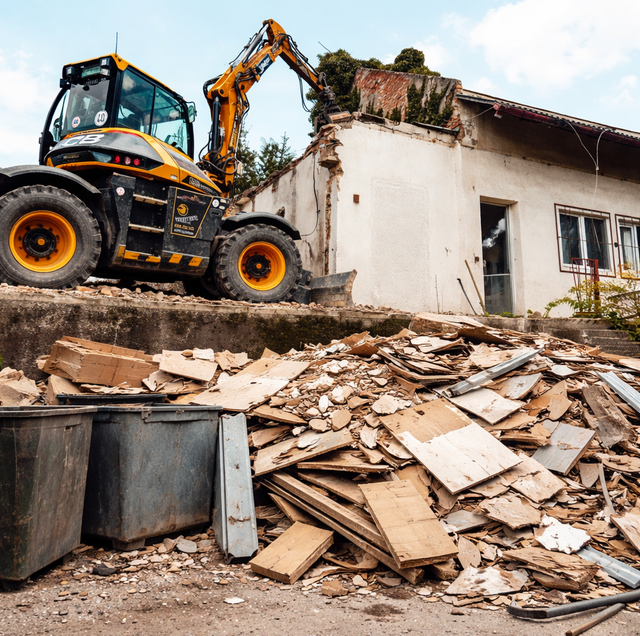
The remodel is finished, the new fixtures are in, and the space finally looks the way you wanted. Then you turn around and see the pile: torn-out drywall, snapped studs, cracked tile, a ripped-out vanity, and a mountain of cardboard from everything that got installed. Renovation debris has a way of doubling in volume the moment the project wraps. It is heavy, awkward to carry, and rarely one clean material. A single kitchen redo can leave you with wood, metal, ceramic, gypsum, and plastic packaging all tangled in the same heap.
The goal is not just to make the pile disappear. It is to move it out in a way that keeps recyclable and donatable material out of the trash, gets the right method matched to the weight and volume you have, and keeps anything hazardous away from your hands and your curb. Sorting first, choosing the removal method second, and flagging the dangerous items before you touch them turns a chaotic heap into a short, predictable cleanup.
Start By Sorting Debris By Type
A mixed pile is expensive and slow to deal with because nobody can recycle it and every method charges by weight and volume. Separating as you go, or in a single sorting session afterward, is the step that pays off at every later stage. Think of it like emptying a junk drawer onto the counter before you decide what to keep: once everything is in visible groups, the decisions get easy.
Break the pile into these groups:
Clean Wood: Framing lumber, plywood offcuts, trim, and unfinished boards. Keep painted, stained, and pressure-treated wood in a separate pile, because those cannot go to the same wood recyclers or mulch operations that accept clean scraps.
Metal: Old ductwork, copper pipe, aluminum trim, steel brackets, nails pulled from lumber, and a torn-out cast-iron tub. Metal has scrap value and is one of the easiest materials to divert from the trash.
Cardboard And Packaging: Flatten boxes from new appliances, fixtures, and flooring; they stack down small and go straight to cardboard recycling. Pull the foam and plastic film out first, since those are not accepted with cardboard.
Concrete and Masonry: Broken slab, brick, block, mortar, and tile backer. This group is dense and heavy, and it will easily blow past a weight limit if it goes in with everything else, so it usually gets handled on its own.
Drywall: Torn-out gypsum board is bulky and crumbly. Some regions recycle clean, unpainted drywall into new board or soil amendment; painted or moldy pieces are handled as regular waste.
Reusable Fixtures: Cabinets that came out intact, solid-core doors, light fixtures, a working sink or faucet, unbroken tile in the box. These go to the donation pile, not the debris pile.
Once the pile is in groups, you can see what has value, what can be recycled, and what is simply waste.
Donate What Still Has A Second Life
A surprising amount of what comes out of a renovation is not broken, just no longer wanted. Cabinets removed in one piece, solid interior doors, working faucets and light fixtures, unused tile, extra flooring, and functional appliances all have resale or reuse value. Building-material reuse centers and some charity home stores accept these, often with a pickup service for larger loads, and many issue a donation receipt.
A few things donate go smoothly. Keep cabinets attached to their doors and hardware where possible, cap or bag loose plumbing fixtures so small parts stay together, and set donatable items aside before they get buried under drywall dust and broken tile. Anything cracked, water-damaged, or missing critical parts is debris, not a donation, so be honest about condition before you load it.
Recycle The Metal, Concrete, And Masonry
Two of the heaviest material groups are also two of the most recyclable. Scrap metal yards take ferrous and non-ferrous metal, and copper and aluminum in particular are worth separating rather than tossing. Concrete, brick, and block get crushed and reused as aggregate for road base and fill, which keeps a very heavy material out of the landfill and often off a per-ton disposal charge.
Keeping these streams clean matters. A concrete load mixed with wood, plastic, and drywall may be rejected by a crushing facility or downgraded, so pull the rebar and stray trash out first. Clean, separated loads move faster and cost less to handle than a single mixed heap.
Know What Counts As C&D Waste
Renovation leftovers fall under a category disposal sites call construction and demolition waste, or C&D. It covers the structural and material debris a building project generates: lumber, drywall, roofing, concrete, brick, tile, glass, insulation, piping, wiring, and fixtures. C&D is handled differently from household trash and often goes to dedicated transfer stations or C&D recycling facilities rather than the regular municipal stream.
The reason the distinction matters is that C&D debris is dense and volume-heavy, and disposal sites price and sort it on its own terms. Knowing your pile is C&D tells you where it can go and helps you avoid the mistake of trying to force heavy building debris into a service built for bagged household garbage.
Handle Hazardous Materials The Right Way
Some of what a renovation exposes is truly dangerous, and this is the part to slow down on.
Old paint, solvents, and adhesives: Leftover oil-based paint, thinners, strippers, construction adhesives, caulk tubes, and any container of unknown chemical belong at a household hazardous waste facility, not in a dumpster and never at the curb. Batteries pulled from old smoke detectors or hardwired fixtures go there too. These items can leach, ignite, or react, so they are kept out of the general waste stream on purpose.
Asbestos and lead in pre-1980 materials: This is the most important safety point in any older renovation. Homes built before 1980 may contain asbestos in popcorn ceilings, vinyl floor tile and its adhesive, pipe insulation, joint compound, and some roofing, and lead in old paint layers. Intact, these materials are usually not a hazard. The danger comes from disturbing them: sanding, cutting, scraping, or breaking releases fibers and dust you cannot see and should not breathe.
Abatement is regulated, specialized work, not a DIY task, and mixing that material into your regular debris pile puts you and anyone who handles the load at risk. When in doubt about a pre-1980 surface, treat it as suspect until testing says otherwise.
Do not try to remove or bag suspected asbestos or lead-painted material yourself. Sanding, cutting, scraping, or breaking these pre-1980 materials releases fibers and dust you cannot see and should not breathe, so stop, get the material tested, and leave positive results to a licensed abatement contractor.
Choose Your Removal Method And Prep For A Fast Clear
With the pile sorted, donations set aside, and hazards flagged, the last decision is how the remaining debris actually leaves. There are three common paths, and the right one depends on how much you have and how fast you need it gone.
Dumpster Rental: A rented roll-off makes sense for a large or multi-day project where debris piles up steadily, and you can load it yourself at your own pace. You handle all the lifting and sorting, and you are responsible for staying under the container's weight rating.
Haul-Away Service: A junk removal or hauling crew comes to you, does the heavy lifting, and takes the load in one visit. This fits a finished renovation where the pile already exists, and you want it gone in a single day without touching it yourself, especially when it is heavy or awkward.
Municipal Pickup: Some city or county programs take limited construction debris, but almost always with tight limits: small quantities only, specific bundling and length rules, and often no acceptance of concrete, tile, or large fixtures at all. It works for a minor project, not a full remodel.
Dense material fills a weight limit long before it fills a container, so concrete, tile, and masonry are the items that quietly blow past a rating. Splitting the very heavy material from the light, bulky material lets each go out by the right method.
A little prep speeds everything up. Stack lumber and flatten cardboard so the load is compact, break down large items only when it is safe to do so, keep the sorted groups in separate piles, and clear a straight path from the debris to where a truck or dumpster sits. Set the load somewhere with firm footing so a crew can carry heavy pieces safely, and remember that renovation debris is a real lifting-injury risk, so team-lift the heavy pieces or let equipment do the work rather than muscling a slab or a cast-iron tub alone.
Frequently Asked Questions
No. Curbside carts are rated for bagged household garbage, and most haulers set a per-item weight cap around 40 to 50 pounds and prohibit construction materials entirely. A few chunks of tile or drywall can exceed the cart's weight rating, jam the truck's compaction mechanism, or get the cart tagged and skipped. Building debris is C&D waste and needs a dumpster, a haul-away crew, or a C&D transfer station.
You cannot tell by looking. Nine-inch vinyl floor tiles and the black cutback adhesive under them are two of the most common asbestos-containing products in pre-1980 homes, and the fibers are microscopic. The only reliable answer comes from a lab: an accredited testing service analyzes a small sample under a polarized-light microscope. Until you have that result, leave the flooring intact and unsanded rather than prying it up.
Clean wood is unpainted, unstained, untreated lumber, and it can be chipped into mulch, animal bedding, or biomass fuel. Pressure-treated wood, which usually has a green or brown tint and often a grid of small incisions along the board, is chemically treated to resist rot and cannot go to those same recyclers or be burned. Keep the two in separate piles, because one contaminated board can get a whole load of clean wood rejected.
A truly empty, fully dried-out latex paint can is often accepted as regular metal or trash, but any can with liquid paint still in it is not. Latex paint can be dried out with hardener or kitty litter and then disposed of per local rules, while oil-based paint, solvents, and strippers always go to a household hazardous waste facility regardless of how little is left. The liquid, not the can, is what makes it hazardous.
A full-service hauling crew will take a mixed load, but a pre-sorted pile usually clears faster and diverts more material from the landfill. Sorting also matters when the load is very heavy, because dense concrete and tile can hit a truck's weight limit while the bed still looks half empty. Separating the dense masonry from the light, bulky drywall and cardboard lets the crew load safely and route each stream to the right destination.
Give the crew or dumpster a firm, level staging spot and a clear straight path from the debris to it, ideally wide enough to walk through carrying a sheet of plywood without turning sideways. Avoid soft ground, since a loaded roll-off can crack a driveway or sink into a lawn, and plywood laid under the container helps spread the weight. Clearing parked cars and low branches ahead of time keeps a truck from having to reposition, which is what usually slows a pickup down.
Skip the heavy lifting and let a crew clear the whole pile in one visit — sorted, recycled, and hauled off fast. Polk Services serves Lakeland, Plant City, and Bartow. Call (863) 344-5806.
