

Pool Demolition Prep: The Check Most Homeowners Skip
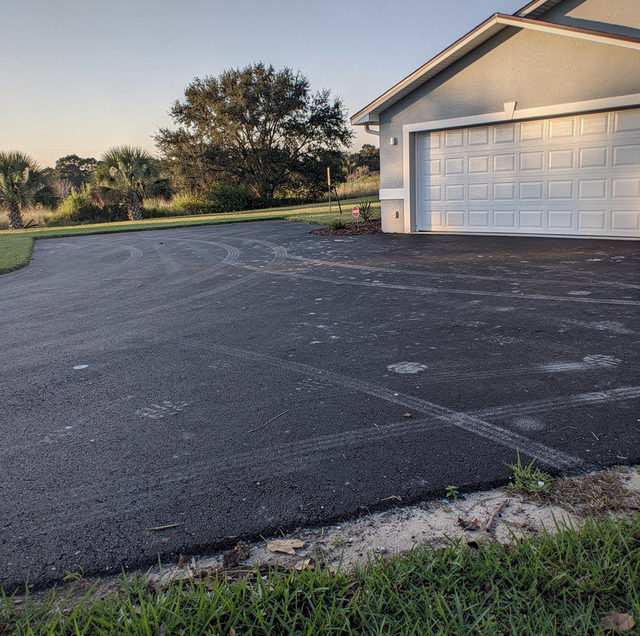
Quick Answer: Clear the deck completely, move vehicles off the driveway rather than to one side, plan pet supervision around a gate that will remain open, and take photographs of the yard before anything starts.
A pool demolition is a backyard job reached through a front-yard property, and almost everything a homeowner actually controls happens along that path and in the rooms beside it. What follows is everything else, zone by zone, ending at the moment the first machine comes through the gate.
The Route In
Width gets all the attention, and it is only half of what stops a machine. Overhang height: low tree limbs, a sagging utility line, or a carport eave can block a route as completely as a narrow fence gap, and nothing about a tape held across the ground will tell you about it. Look up along the whole path, not just across it.
Ground condition: Soft ground matters just as much as clearance. A side yard that has been soft or saturated for days, from irrigation runoff, a low spot that holds water, or recent rain, can be a bigger obstacle than a tight measurement, because a machine that fits will still sink. If that strip has been wet, say so when the job is booked, not on the day.
The Pool Area Itself
Everything on the pool deck is fair game to move, and most of it should be moved by the homeowner beforehand rather than left for someone else to handle on the way in. Furniture, planters, a grill, umbrellas and their bases, solar lights staked along the coping, pool toys, deck boxes, hoses, and anything leaning against the screen frame all need a new spot away from the work zone. Anything left in place either gets moved by the crew, which slows the start of the job, or gets damaged, and neither outcome is one you want. Pick a staging spot away from both the pool area and the route in, such as a side porch or a garage, so cleared items are not simply relocated into the crew's path.
If the pool has a screen enclosure, leave it alone. Panels, framing, and footers all come down as part of the job, and pulling spline out of an overhead panel means working off a ladder over a hard deck for no gain in the schedule. What is worth doing is clearing whatever is leaning against the frame or hanging from it, all of which is reachable from the ground.
Irrigation running through or near the pool area needs two things from the homeowner: know where the zone shut-off is located, and mark any sprinkler heads that sit close to the work area so they are not a surprise underfoot. The lines themselves are the crew's problem to solve, not something to dig up or disconnect in advance.
The Rest of the Yard
Vehicles are the most commonly overlooked item on this list, mostly because homeowners think of the driveway as parking rather than as part of the job site. A demolition crew often needs the driveway as a staging area for equipment, materials, and a debris path, not just a spot to leave a truck for a few hours. Clear cars off the driveway entirely, not to one side of it, well before the scheduled start, and ask ahead of time how much of the driveway the crew expects to use so nothing is still sitting there that morning.
Pets need a plan that covers the entire working day, not just the first hour. A gate that is normally the boundary of a dog's world may be open, propped, or removed entirely for periods during the job, and unfamiliar noise and machinery are enough to unsettle even a calm animal. Keep pets inside, in a separate fenced area, or off the property for the day rather than assuming the usual yard boundaries will hold.
A dog crated indoors still feels the breaker through the slab. Where the crate sits matters as much as where the gate is, so put it on the far side of the house from the pool deck.
Take photographs of the yard before anything starts: the fence line, the deck, plantings near the work path, the driveway, and the route in from a few angles. It takes two minutes and gives both sides a shared reference point if a question comes up later about what the yard looked like beforehand.
Inside the House
The disruption is not confined to the yard. Rooms that share a wall with the pool area or sit close to the route the equipment travels can feel vibrations from the work even though nothing inside is being touched directly. Walk those rooms and take down anything hanging on a shared wall, and move framed items or anything breakable off narrow shelves in that part of the house.
Windows facing the poolside deserve a second look, too. Blinds, curtains, or anything propped on a windowsill in a room that looks out on the work area is worth clearing back or securing, both to protect it and to keep it from rattling loose on its own during the day. A room that seems far from the pool by walking distance can still share a foundation wall with it, so use the floor plan, not just the yard, to decide which rooms need a walkthrough.
Frequently Asked Questions
It stays where it is, and the route works around it, because moving a condenser means disconnecting a refrigerant line, and that is a licensed trade's job, not a demolition decision. What helps is clearing a working margin around the unit and saying at the walk-through that it is there, since a condenser is the single most common thing that turns a wide-looking side yard into a one-machine route.
Flag both together. A limb over the route and a fence panel in the way are handled the same way, as part of the job, by the crew, with the machine already on site. Overhead limb work off a ladder is not a homeowner task. What is yours is telling the crew they exist, ideally with a photo taken from where the machine will be standing.
Skip the last mow and skip watering the days beforehand. Long grass is no obstacle to a machine, and a lawn that has just been irrigated is softer under tracks than one that has been left to dry, which shows up as deeper marks along the route. If a sprinkler timer runs automatically, turn it off for the working days rather than trusting it to skip.
Assume no. The constraint is not the car's footprint; it is the turning radius of a truck backing a trailer in and the swing of a ramp coming down off the back of it, both of which need clear space well beyond the trailer's own width. A car left on the apron also sits directly under the grit path when a loaded trailer pulls out.
Yes. Anything buried at a shallow depth near the route or the work area, such as low-voltage garden lighting wire or a shallow drain line, is worth flagging the same way you would flag a sprinkler head, even if it is not directly in the equipment's path.
Nothing needs to be moved by the homeowner. Clearing the equipment and the plumbing that feeds it is part of the crew's scope, and the electrical and gas disconnects at the pad are scheduled with the licensed trade ahead of the start date. Detaching any of it beforehand only creates extra work on the day.
Walk the deck and the shared interior wall once more on the morning itself. Those are the two zones that drift back overnight: a chair gets carried out with a coffee, and a picture goes back on a hook, and both are quicker to catch before the gate opens than after.
Book a pool demolition walk-through — get a clear picture of what needs clearing before the crew arrives. Polk Services LLC serves Lakeland, Highland City, and Mulberry. Call (863) 344-5806.
