

Comparing Gravel Driveway Quotes? Check the Math First
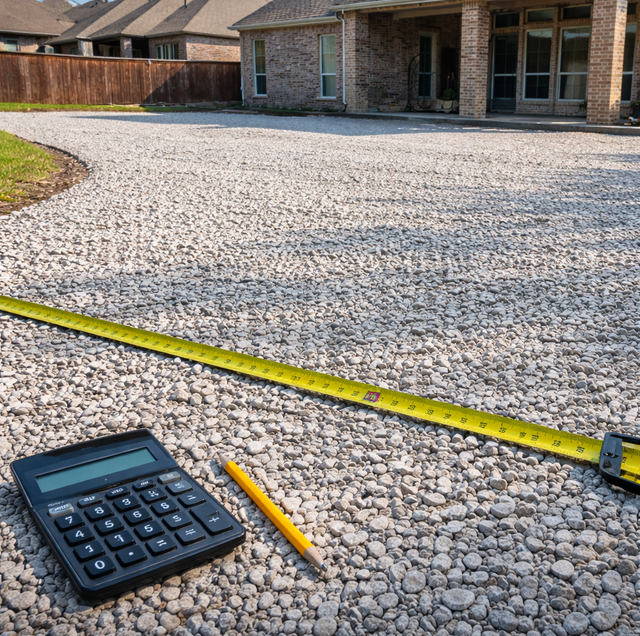
Two gravel driveway quotes for the same property rarely add up the same way, even when both installers looked at identical ground. That's not usually a sign one of them is wrong. A driveway quote is built out of several separate units: square footage, material volume, timeline, and payment structure, and each installer can measure or state any one of those a little differently without doing anything wrong. Before a side-by-side comparison means anything, it helps to know which parts of two quotes are naturally apples-to-apples and which ones need translating first.
Confirm the Square Footage Is the Same Ground
Two installers walking the same property don't always measure the same area. One might include the turnaround or the strip along the garage apron in the total square footage; another might quote only the main run and treat those areas as extra. Neither approach is wrong on its own, but a quote covering less ground will naturally come back lower without being a better deal for the same finished result.
Ask each installer for the measured square footage as its own number, separate from the total, and check it against a rough measurement of your own, length times width for the main run plus any turnaround or extension you expect covered. If two quotes list noticeably different square footage for what you thought was the same job, that's the first thing to resolve before looking at anything else.
Some Bids Are Priced by the Ton, Others by the Yard
Base and fill material is ordered in two ways: by weight (in tons) or by volume (in cubic yards). The two aren't interchangeable without knowing the material's density, and density varies by what's being delivered. Crushed concrete and angular limerock run heavier per yard than crushed asphalt millings, so a quote stating tonnage for one material and yardage for another can reflect very different amounts of actual coverage, even when the numbers look similar on paper.
If one quote is priced by weight and another by volume, ask the installer using tonnage what that converts to in yards for the material they're proposing, or vice versa. An installer who can answer that conversion without hesitation is working from real numbers for your job, not a rough guess carried over from the last one.
Loose Delivered Volume Isn't the Same as Compacted Volume
A cubic yard of material measured loose on a delivery truck doesn't stay a cubic yard once it's spread and compacted into place. Compaction squeezes air and gaps out of the material, so the finished, compacted volume typically runs 20 to 25 percent less than what arrived loose. An installer who orders yardage based on the compacted depth your driveway actually needs, and accounts for that shrinkage in what gets delivered, is quoting a number that should hold up once the work is done. One who quotes loose yardage without mentioning the difference may be ordering short, which shows up later as a base that's thinner than it looked on paper.
If two quotes list very different yardage for what appears to be the same job, ask whether each number is the loose delivered amount or the compacted finished amount. A gap that looks alarming on paper sometimes resolves into two installers describing the identical finished result in different terms.
Fewer Listed Visits Isn't Automatically Faster or Cheaper
Proper compaction of a base occurs in stages, and each layer must be compacted before the next is placed. A quote that lists a single visit for a job that needs a full base rebuild is either working with a smaller scope than it sounds, or planning to compact everything in one pass, which tends to leave the lower layers loose, no matter how solid the surface looks afterward.
Compare how many visits or phases each quote outlines, and ask what happens during each. A quote with more listed visits isn't automatically the more thorough option; it might just reflect a bigger job, but a quote with noticeably fewer visits than another for what looks like the same scope is worth a direct question about how the base gets compacted in that shorter timeline.
Deposit and Payment Terms Change What a Bid Asks of You
Two quotes with similar totals can still be structured very differently once you look at when money changes hands. Some installers ask for a deposit before scheduling, with the remainder due on completion. Others break payment into stages tied to specific milestones: prep complete, base complete, finish complete. A bid that asks for a large upfront deposit is asking you to carry more risk before any work happens, which can make a real difference between two similar-looking numbers, even when neither is more expensive overall.
Ask specifically what triggers each payment, not just the total deposit percentage. A payment schedule tied to visible progress provides a natural checkpoint to confirm that the work matches the quote before the next payment is due.
Ask for the Same Material Name From Every Bidder
Left to their own defaults, different installers will often propose different base or finish materials for the same job, one favoring crushed asphalt millings, another defaulting to limerock screenings, simply because that's what each one normally stocks. That's a legitimate difference in approach, but it also means the yardage math, the finished look, and the compaction behavior aren't the same between those two quotes, even if the square footage matches exactly.
If you want quotes that actually line up side by side, ask at least two installers to price the same material by name rather than "gravel" or "stone" in general. You can still get a separate quote for their preferred alternative, but having one apples-to-apples comparison on a shared material removes a variable that otherwise makes the whole comparison harder to trust.
Reading the Numbers Before You Compare Them
The goal when comparing multiple quotes isn't to find the lowest total on the page. It's confirming that every number you're looking at is actually describing the same measured square footage, the same compacted volume of the same named material, a realistic timeline for the base it's building, and a payment structure you understand before you sign anything. Two quotes that hold up against all of that and still land close together give you a genuine choice. Two quotes that look close but fail one or two of those checks were never really comparable in the first place.
Three quotes is usually the sweet spot. Beyond four, the extra bids tend to repeat information you already have, and the added scheduling delay from coordinating more site visits often costs more in lost time than any small difference between the numbers turns up.
Frequently Asked Questions
Ask the installer for the flat rate they used per square foot, even if they normally present a single total. A number that won't break down that way makes it hard to tell whether it's based on the actual measured area or a rough guess from the drive-by. An installer working from real measurements can usually give you that rate without much delay.
Yes, and it's easy to miss when comparing square footage alone. A driveway that regularly carries a boat trailer, RV, or work truck needs a deeper, denser base than one built for occasional car traffic, which changes the material volume even when two quotes cover the identical footprint. If your situation includes heavier or stationary loads, make sure every quote you're comparing was scoped for that vehicle, not just priced off the square footage.
Three is usually enough to see a real pattern in scope and approach. Beyond four, the extra quotes tend to repeat information you've already gathered, and the added scheduling delay from coordinating more site visits often costs more in lost time than any small difference between the numbers turns up.
Yes, and it's worth being specific about what "same format" means here. It's less about getting every installer to list identical categories and more about getting each one to state their numbers in the same units and the same order: square footage first, then material by name and volume, then a visit-by-visit timeline, then payment terms, every time. Quotes stated in a consistent order are far faster to compare line by line than quotes that are each internally detailed but organized completely differently from one another.
That's usually a sign the underlying material and labor costs for your area are fairly consistent across installers. At that point, the details worth focusing on shift away from the numbers themselves and toward the specifics: timeline, payment structure, and how thoroughly each installer answered the technical questions about base, fabric, and grading.
Most installers would rather know the actual scope difference than be asked to blindly match a number without the reasoning behind it. Matching a lower figure without knowing what it leaves out just pressures someone into cutting the same corner. A more useful conversation is to describe what the other quote included and ask directly whether that scope makes sense for your property.
Get a written, itemized quote for a gravel driveway — see the measured square footage, materials, and timeline before you compare bids. Polk Services LLC serves Lakeland, Highland City, and Mulberry. Call (863) 344-5806.
