

Why Smoke Smell Keeps Failing the Intake Check
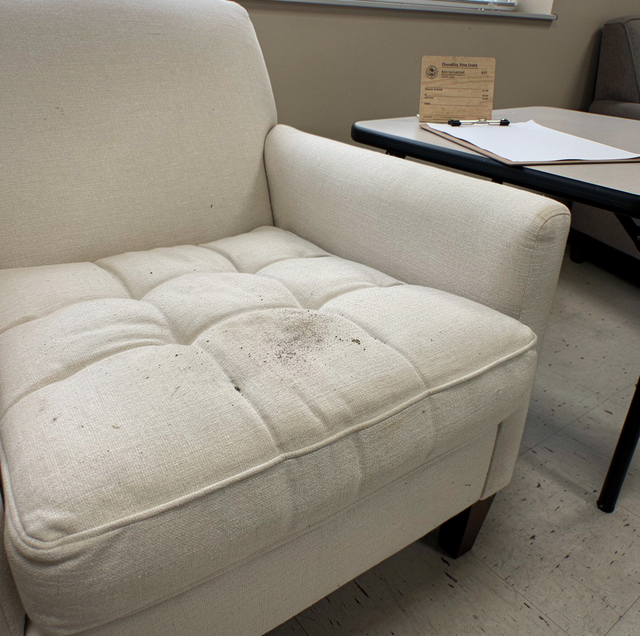
Someone crouches beside the couch at the donation drop-off or the resale consignment desk, leans in for a couple of seconds, and straightens back up already shaking their head. No swatch test, no lab report, just a nose held close to the cushion for a moment and an answer that doesn't change no matter how clean the piece looks. Smoke odor fails that check faster than almost anything else in the room, because the smell was never sitting on top of the material. It's already inside it.
What the Nose Catches That the Eye Misses
A donation program's intake bar already screens out plenty on sight — tears, sagging frames, stains that won't lift. Odor doesn't wait for a visual cue like those do. Upholstery foam is open-cell, so residue travels through its whole thickness rather than sitting on top, the way a wooden cutting board holds the smell of garlic deep in its grain long after the surface has been scrubbed clean. Fabric, the batting beneath it, the webbing, and the frame underneath all take on the same residue. None of that shows up as a stain or a scorch mark. A visual scan takes a few seconds from arm's length; catching an embedded odor takes actual proximity, which is why the check for it looks different from the check for everything else on the list. It shows up as a smell, and a smell is exactly what a nose held close is built to catch. None of this makes the decision for the donor: the crew flags what the check finds, and the donor decides whether to bring the piece in anyway.
Wrap or bag a smoke-smell piece before it leaves the room, so residue doesn't transfer onto the exit path or anything else riding in the truck. A moving blanket over the cushions is usually enough for the trip.
What Airing It Out Actually Does
Airing out is the first move almost everyone makes, and it does something: the top layer of fabric loses whatever loose particulate was sitting right on its surface, and the smell backs off enough that the piece seems better. What doesn't move is the residue already worked into the foam core and the frame. Those compounds are semi-volatile, meaning they don't flash off into the open air; they release slowly, over a much longer period, mostly from wherever the material is warmest.
A few days outside barely touches the reserve sitting in the middle of a cushion, so the odor that seemed to fade comes back once the piece is indoors again. Humid outdoor air can even work against the effort, since damp air lets some of that surface particulate resettle onto the fabric as the material cycles between damp and dry, so a piece aired on a muggy afternoon can test worse than one left untouched in a closed, dry room.
How Far Surface Cleaning Reaches
Spot cleaning and a thorough vacuum handle whatever residue is sitting in the ticking, the visible fabric layer, and that's real progress on dust, loose fibers, and anything right at the surface. It stops there because the fabric is only the outer shell. The foam and batting underneath hold the bulk of what's driving the smell, and a cloth or a handheld cleaner never reaches past the weave it's pressed against.
Running the same pass a second or third time doesn't go any deeper than the first pass did; there's no cumulative effect from repeating a method that was never reaching the source. The piece can look freshly cleaned and still carry the same odor it had before anyone touched it, because looking clean and being clean at the core are two different outcomes.
Why Deodorizers and Sprays Fail
A fabric spray or a canister deodorizer adds a second scent on top of the first, rather than removing the underlying scent. For a little while, the fragrance is the stronger of the two, so the piece passes a quick pass-by. Fragrance compounds are lighter and evaporate faster than the oily residue smoke leaves behind, so the added scent is the first thing to go, while the heavier compounds are still working their way out of the foam.
Layering a second or third product on top just stacks more surface fragrance on top of the same base odor, without changing what's happening underneath. What's left once the perfume is gone is the same odor, sometimes read as worse now that it carries an odd sweetness underneath it.
Why Professional Cleaning Falls Short
Hot water extraction and steam cleaning go beyond a spray bottle, lifting residue from the fabric and the outer layer of foam it's bonded to. Pushing that same moisture deep into a thick cushion isn't something a cleaning technician wants to do, because damp foam breeds mold long before it fully dries, so the extraction is limited to what the surface layers can safely hold and release. The core of the cushion, where most of the absorbed residue sits, is outside the range the process reaches.
A cushion that tests clean the same afternoon it was treated is sometimes still damp enough at the surface to temporarily mute the odor, which is a different outcome from the residue actually being gone. A piece can come back from a professional cleaning smelling noticeably better at the surface and still fail the same close-range check once the fabric fully dries and the deeper residue keeps doing what it was doing before.
Why Replacing the Cushion Covers Doesn't Solve It
Swapping the cushion covers is the closest most people get to an actual repair, and it removes real odor along with the fabric that's replaced. What stays behind is the foam insert inside each cushion, the batting wrapped around the springs or webbing, and the frame itself, the parts that took on the deepest residue in the first place.
Even a fresh foam insert bought to match only solves the problem if every absorbing layer underneath the cover is swapped along with it, not just the top cushion someone can see. A new cover sitting over an unchanged foam core buys a short window before the smell works its way back through the fresh fabric, since nothing about swapping the outer layer changes what the inside is still holding and slowly releasing.
Why the Smell Returns on a Warm Day
Every one of these attempts encounters the same underlying behavior: smoke residue re-releases more quickly as the surrounding material warms. A piece that sat quietly in a cool garage can smell noticeably stronger once it's carried into a sunlit room or the back of a closed vehicle, because heat pushes the semi-volatile compounds trapped in the foam back toward the surface faster than they escape in a cold space. Humidity speeds up the same process.
That same swing in temperature is why a piece can test differently in a cool morning room than in the same room once afternoon sun has warmed it. That's why a piece can seem to pass a quick check in one setting and fail the same check an hour later somewhere warmer — nothing about the material changed in that hour, only how fast it was giving up what it was already holding.
Frequently Asked Questions
Corner blocks and the glued joints that hold the frame together can also absorb residue, especially in older pieces where the wood is more porous and the glue lines have begun to loosen. Those joints sit deep inside the frame, well behind the padding, so nothing short of disassembly reaches them. A frame with visible glue separation is one more place odor can sit that a surface check never touches.
Solid hardwood frames are denser and retain less residue than particleboard or MDF frames, which are made from compressed wood fibers with far more surface area for smoke compounds to settle on. Two similar pieces exposed to the same smoke event can end up smelling noticeably different once fully aired, even when the frame material alone is considered.
Down and feather fill holds residue the same way foam does, but it can't be pulled out and replaced as a single insert. The fill is sewn into channels stitched through the cushion, so treating it means working with the fill still in place rather than swapping in a fresh block the way a foam cushion allows.
Both sources fail the same close-range check regardless of how the smoke reached the material. What the check responds to is how deep the residue sits, not how it got there, so a single dramatic event and years of gradual exposure can both leave a piece unable to pass. Intake staff isn't trying to identify a source; they're checking for the same close-range presence every other piece gets tested for.
Ozone chamber treatments oxidize odor compounds at or near the surface and can noticeably reduce odor immediately after treatment. The effect is uneven through a thick cushion and does not hold, since residue deeper in the foam continues to migrate toward the surface long after the treatment chamber is gone.
Arms and headrests come into direct hand and skin contact, so oils and residue build up in that fabric on a different schedule than they do in a seat cushion. The dust cover stapled to the underside of the frame holds its own share of trapped odor too, out of reach of a seat-only check. That's why some intake checks test more than one spot on the same piece before signing off.
Move the piece out before the smell carries into the next room — so it doesn't work its way into anything else stored nearby. Polk Services LLC serves Lakeland, Highland City, and Mulberry. Call (863) 344-5806.
