

Why New Sod Dies: The Grading Problem Underneath It
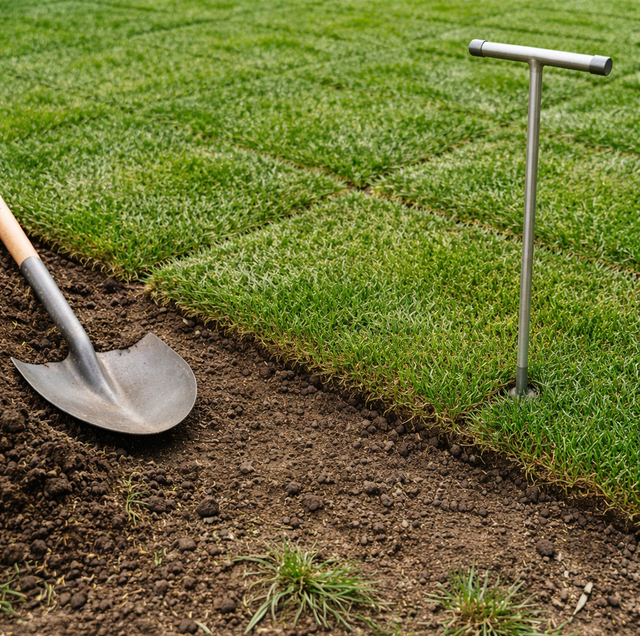
Quick Answer: New sod usually dies from what's under it, not what's on top. Roots can't push through compacted dirt; they can drown in a low spot that never drains, or tear apart when fill settles under the sod's weight. Fix the ground first.
What's Actually Killing the Sod Isn't Always Visible
When new sod turns brown in patches, feels spongy underfoot, or just never seems to root down no matter how much you water it, it's tempting to blame the sod itself: a bad batch, the wrong grass, a missed watering day. But sod's needs are simple. A new root system needs air in the soil, moisture it can actually use, and dirt loose enough to grow into. When a lawn that was laid a few weeks or months ago is still thin, patchy, or dead in the exact same spots, the ground underneath usually failed one of those three requirements before the first roll was ever unrolled.
Sod ships with a thin mat of soil and roots already attached, often less than an inch deep. That starter layer can keep the grass looking green for a while even over bad ground, because the roots haven't needed to reach past it yet. The real test comes a few weeks in, once the sod has to extend new roots down into whatever soil is actually there. That's when a grading fault stops being invisible and starts showing up as dead grass.
Compacted Subsoil Stops Roots Before They Start
Heavy equipment traffic, repeated foot traffic during a build, or just years of a hard-packed yard press soil particles together and close off the small gaps between them. New sod roots are thin and can only follow the path of least resistance through soil; they can't force their way through ground that's been squeezed shut. Laid over compacted subsoil, roots grow down an inch or two, hit resistance, and either stop cold or turn sideways and grow shallow and wide instead of deep.
You can feel this difference yourself. Try pushing a screwdriver or a length of rebar into ground that's been driven over repeatedly, then into an untouched flower bed a few feet away. The compacted spot stops your hand within an inch or two; the loose bed lets the tool sink several inches with steady, even pressure. Sod roots run into that same wall, just without the ability to push back.
A soil probe, screwdriver, or length of rebar works as a quick compaction check. Push it into bare or thin-sod ground after a rain. Stopping hard within two to three inches means roots below that depth are being blocked.
Sod over compacted ground often looks fine for the first month, since it's still living off its own starter soil, then declines fast in late summer heat or during any stretch without rain, because there's no deep root system to draw moisture from once the surface dries out.
An Uncorrected Low Spot Drowns Roots in Standing Water
Roots need oxygen in the pockets between soil particles just as much as they need moisture. When sod goes down over a shallow depression that was never filled or graded out, water collects in that low spot and pushes the air out of the soil around the roots. Without oxygen, roots suffocate, and water-mold organisms that thrive in waterlogged soil start breaking them down instead of allowing them to grow.
A low spot under sod doesn't always look wet between rains. The sod's own root mat holds moisture at the surface, which can hide water sitting an inch or two down where the new roots are actually trying to grow. A few signs point to this specifically: the sod feels spongy or squishy underfoot days after the last rain, lifting a corner reveals a sulfur or rotten-egg smell from anaerobic decomposition, and the grass yellows and browns from the center of the low area outward rather than starting at the edges the way drought stress usually does.
Loose Fill Dirt Settles and Tears New Roots Apart
Fill dirt dumped and graded smooth without being compacted in layers keeps moving after it's covered. Dirt settles under its own weight over the following weeks and months, especially after a few cycles of getting soaked and drying out, and that settling isn't even across a yard; one section can drop an inch while a section a few feet away barely moves. Sod laid straight on top of fill like that is anchored to ground that's still shifting underneath it during the exact weeks its roots are most fragile and least established.
The result is roots that get pulled apart rather than roots that fail to grow at all. As the fill drops unevenly, the thin new root hairs reaching into it tear, and the sod above develops ripples, low humps, or seams that separate weeks after everything looked fully installed. Fill that's compacted in shallow layers, a few inches at a time, with each layer walked down or run over with a plate compactor before the next one goes on, stays put once it's covered. Fill that's simply dumped and raked smooth keeps settling for months regardless of how good the sod on top of it is.
What Ground Looks Like When Sod Actually Takes
The yards where sod roots down cleanly share the same setup underneath: a subsoil base that's graded for fall and compacted enough to hold its shape, capped with just an inch or two of finish soil loose enough for roots to push into without being loose enough to shift or wash. Water moves off that surface instead of collecting in it, and the compacted base underneath doesn't move once the sod is down, so the shallow new roots aren't fighting settling ground on top of everything else. Two yards can look the same standing at the edge of them the week sod is laid; what's six inches down is what decides which one is still green a season later.
How to Tell Which Failure You're Dealing With
- Firm resistance a few inches down: A probe or screwdriver stops hard; the sod looked fine at first and declined during a hot or dry stretch. Points to compacted subsoil.
- Spongy ground and a sour smell: Worse a day or more after rain, yellowing starts in the middle of a patch and spreads outward. Points to a low spot holding water.
- Rippled surface or separating seams: Low humps or dips that weren't there at installation, sod that rocks underfoot even though it's rooted in places. Points to unsettled fill.
If correcting the grade means digging out compacted soil, cutting in drainage, or adding several inches of fill, call 811 before any digging starts. The utility locate marks buried gas, power, water, and communication lines so equipment doesn't cut into one.
Frequently Asked Questions
Rarely, and not in a way that holds up. Some sod survives for a year or two on a shallow mat of lateral roots that never push past the compacted layer, which looks like a lawn but has no depth to draw on. That thin-rooted grass is usually the first section to die outright the next time there's a stretch of heat or a missed watering cycle, because it has no reserve to fall back on.
Only for mild, surface-level compaction. A core aerator pulls small plugs and loosens roughly the top two to three inches of soil, which helps an established lawn breathe better. It doesn't reach subsoil that was compacted six or more inches down by heavy equipment during construction; that depth needs the ground broken up and regraded, not aerated, before new sod goes down.
Faster than most people expect: often within one to two weeks in warm, wet conditions, since new sod roots are at their most vulnerable in that first month. A low spot that would just be a minor nuisance under an established lawn can suffocate an unestablished root system in a single soaked week.
Yes, by whether it repeats. Overwatered sod on good ground yellows across a wide, even area and recovers once watering is adjusted. Sod dying from a grading fault stays dead, or comes back dead, in the exact same footprint even after watering changes, because the problem is the ground in that spot, not the schedule.
Somewhat. Species that root more aggressively or tolerate wet feet better can survive a mild low spot longer than a species that can't, and some varieties push roots a little deeper before giving up on compacted ground. None of that changes the ceiling: no grass species can grow roots through subsoil that's actually compacted shut; it just changes how long it takes for the decline to show.
Yes, and that's actually a useful clue. Grading faults are almost always localized to a specific low spot or a specific zone where equipment tracked repeatedly during construction, so a yard can have healthy sod everywhere except over that one area. A lawn that's uniformly weak points more toward a batch or irrigation issue; dead grass confined to one recurring patch points straight at the ground under it.
Dead sod in the first season is usually blamed on the sod farm, the weather, or a watering schedule, when the actual cause was set in motion before the delivery truck ever showed up. Where the dead patches sit, how the ground feels underfoot, and whether the same spot fails again after a fresh watering routine all point toward which of the three ground problems above is at work, and that's the piece worth sorting out before a second round of sod goes down on the same unprepared dirt.
Get the ground checked before you lay or relay sod — a quick grading assessment shows whether the soil underneath will actually hold new roots. Polk Services LLC serves Lakeland, Highland City, and Mulberry. Call (863) 344-5806.
