

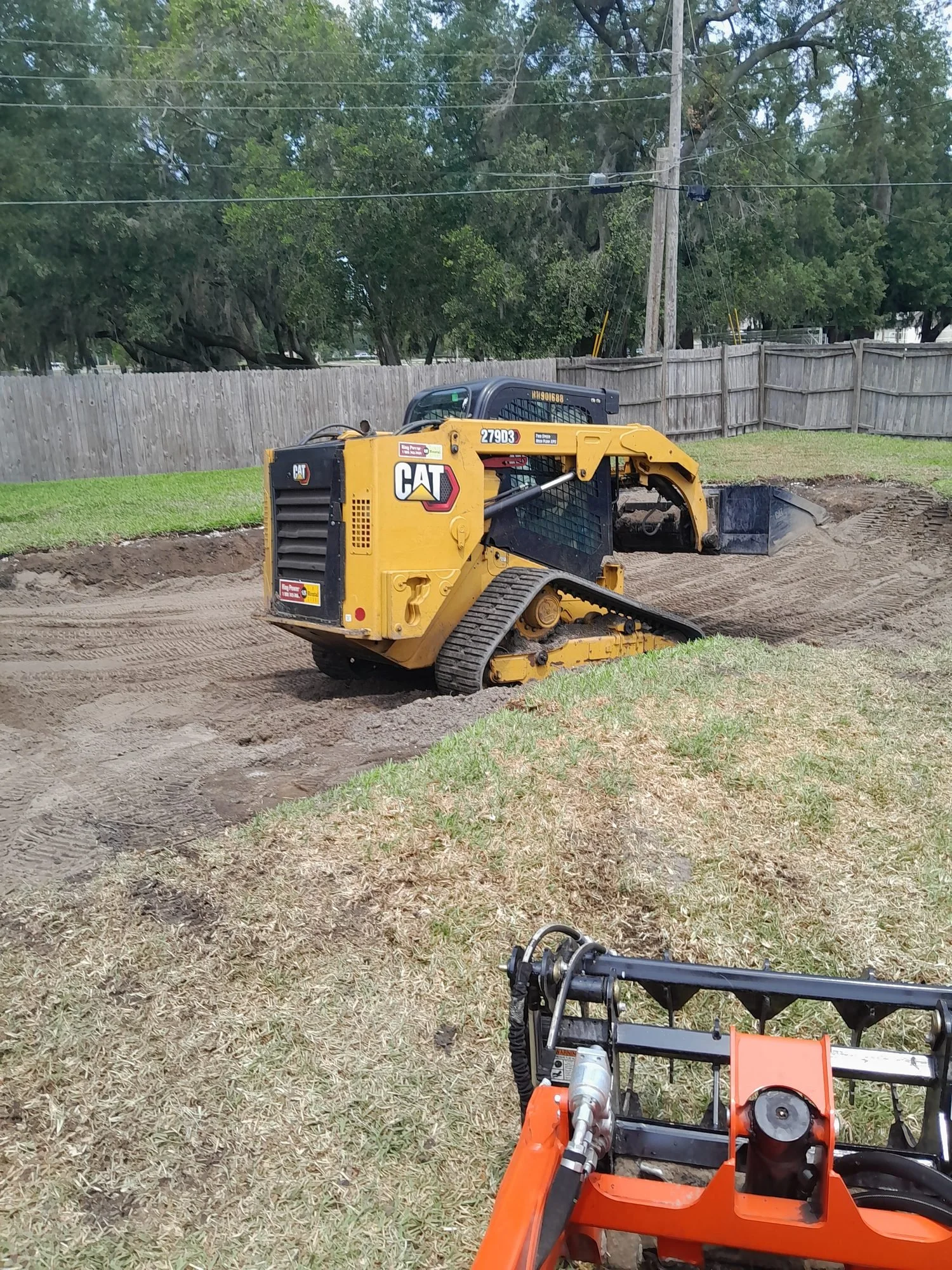
The commonest scheduling mistake on a property bought at auction is booking the crew for the week of the sale. Florida does not hand the property over then, and a crew that turns up early is a crew that turns around.
What Happens Between the Sale and the Keys
Polk County holds its judicial foreclosure sales online, conducted by the Clerk of the Circuit Court. Tax deed sales run on a separate platform on a monthly schedule. Either way, the sale is the beginning of the sequence, not its end.
Stage one: the sale and the deposit
The statute requires a deposit of 5% of the final bid at the time of the bid. The balance and the registry fee follow on the Clerk's own sale terms, which in Polk County means noon the next business day. Missing that deadline forfeits the deposit and voids the sale, and the Clerk reschedules it.
Stage two: the certificate of sale
The Clerk files a certificate of sale promptly after the auction. This is the document the next deadline counts from, and that trips people up, because it is filed after the sale, on its own timetable.
Stage three: ten days for objections
Florida Statutes section 45.031 gives ten days after the filing of the certificate of sale for objections. The ten days run from the filing date, which is a different date from the auction date, and the gap between them is real.
Stage four: the certificate of title
If no objection is filed, the Clerk files the certificate of title. The statute is explicit about what that moment does: when the certificate of title is filed, the sale stands confirmed, and title passes to the purchaser named in it, without any further proceedings or instruments.
So the earliest honest date for work on a newly acquired property is keyed to stage four. Give Donny the expected title date and the crew date gets set from it, and moved with it if the docket moves.
The Questions That Come Up on Distressed Property
How soon after the sale can you get in?
Can you work from photographs and an assignment number?
What if somebody is living there?
Is a tax deed property handled differently?
Do you handle both the inside and the lot?
Nobody Has Been Inside, and the Scope Reflects That
Neither a foreclosure sale nor a tax deed sale comes with a walk-through. The circuit's own sale terms place the burden of research squarely on the bidder, and the Clerk's tax deed material states that the sale is made without warranty as to the condition of any improvements. In practice, that means a buyer commits from the outside, the public record is made, and the first honest look at the interior happens after title.
Interior Contents, Whatever They Are
Furniture, appliances, personal effects, and accumulated contents, cleared room by room. Volume is unknown until the door opens, which is why the first visit is documented before anything moves.
The Exterior That Kept Growing
Overgrowth reaches the point of a code complaint fast in this climate. Lot clearing, brush and limb removal, and the perimeter brought back to a condition where a photograph can be taken.
Structures at End of Life
Collapsed sheds, failing carports, storm-damaged outbuildings, and abandoned above-ground pools come down and go out with the rest. Anything at house scale, or structurally attached to the dwelling, is named at the walk and routed to a licensed demolition contractor.
Debris With a Different Route
Concrete, appliances, mattresses, and scrap metal each have different pricing and routes. They are separated as the property is cleared and itemized on the invoice.
What Gets Named, Not Handled
Suspected hazardous material is identified and reported to you. Polk Services names it, and the appropriate contractor handles it.
Tax Deed Properties Are Their Own Animal
A tax deed conveys differently from a mortgage foreclosure title, and Fla. Stat. 197.552 and 197.573 are where the surviving interests are set out. That is a title question for your closing agent.
One Thing Polk Services Will Not Do, Ever
If a property is occupied, the cleanup does not start. A phone assurance does not change that; a certificate of title does not change it; and neither does someone's word that the occupant has already gone.
Florida treats title and possession as separate. Title passes when the certificate of title is filed. Getting possession of a property somebody is still living in runs through the court: the purchaser moves for a writ of possession, the court orders it, and the Clerk issues it, with the federal notice requirements for a bona fide tenant satisfied first. In the Tenth Judicial Circuit, which covers Polk County, that process is set out in the circuit's own administrative order.
That is the court's and the sheriff's process, and no part of it belongs to a cleanup contractor. Donny does not remove people, does not remove their belongings from an occupied home, and does not decide who has lawful access. Work starts once the owner or the assigning company confirms in writing that the property is lawfully theirs to have cleared. The preservation companies and REO agents Polk Services works with already operate this way. Anyone who wants it done another way needs a different contractor.
Built for the Deadlines the Assignment Already Has
Preservation work runs on somebody else's stopwatch. Assignments carry their own securing deadlines, their own photo standards, and their own pre-sale inspection windows, and the assigning company's matrix governs them. Send the applicable matrix, and the work gets scheduled against it.
So the documentation isn't extra here. Every property is photographed on arrival, through the work, and at completion, and the invoice itemizes labor, disposal, and specialty scope as separate lines. One person did the work and one person signs the paperwork, which is the shortest path to a file nobody has to reopen.
Pricing and terms
Cleanups are quoted per property, because volume is unknown until the door opens. Removal volume pricing is by the load, with a $300 minimum for the first four cubic yards, and heavy material such as concrete is quoted higher based on weight. Net 15 is available on approved preservation, commercial, and general contractor accounts, and larger multi-property scope may take a deposit before the first property.
The Polk Services Standard on every property
Donny walks the job with you before he leaves, rakes the work area clean before he drives off, texts you 30 minutes before arrival, and gives you both a verbal and a written quote up front. No sub-crews, no surprise pricing, and the site left ready for whatever comes next.
Payment methods
Cash, check, card, and electronic payment accepted. No processing fee on cash or check; Donny states the card fee when he quotes. Portfolio and preservation accounts are usually invoiced on terms instead.