

What to Check Before Tearing Out a Fence or Deck
That table below covers the five things that turn a same-day fence or deck removal into a longer job, and each one is worth a few minutes of checking before equipment or crew time gets scheduled. None of these require special tools to check; a probe rod, a flashlight, and a look at a plat map cover most of it, but skipping the check entirely is the single biggest reason a quoted timeline turns out wrong once removal actually starts.
Why Posts and Footings Matter More Than the Fence Itself
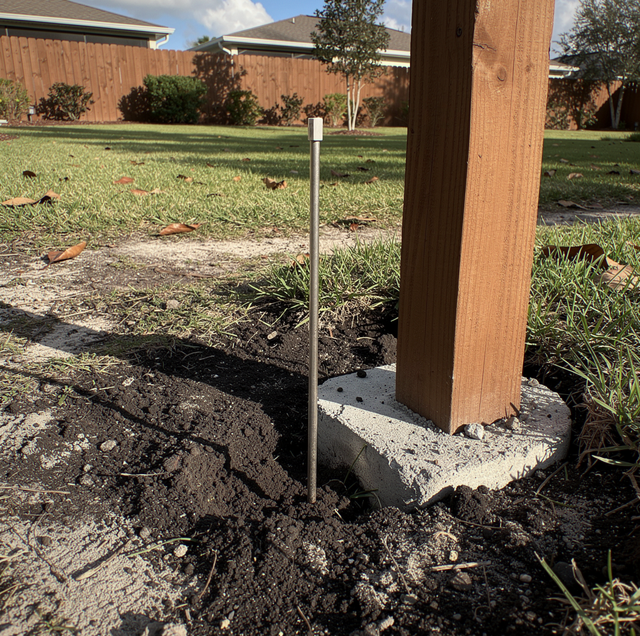
Removing the visible fence panels or deck boards is the easy part. What decides how long the job actually takes is what's below the surface: post footings. Older fences and decks were often set with wood posts buried directly in soil, sometimes with a small amount of concrete poured around the base, sometimes with none at all. Newer construction typically uses a poured concrete footer that extends below the frost or moisture line, anywhere from 18 inches to several feet, depending on the structure's size and local building practices at the time.
A buried footer that size doesn't come out with a shovel. It usually needs to be broken up mechanically or pulled with equipment, and if there are a dozen posts spaced along a fence line, that adds real time to a job that looked like a quick teardown from the yard.
| What you see | What it usually means | What to do before removal |
|---|---|---|
| Fence posts wobble at the base | Wood rot or a failed concrete footing below grade | Probe the soil line before deciding on hand removal vs. equipment |
| Deck boards feel spongy underfoot | Moisture trapped between boards and joists | Check the ledger board attachment, not just the surface decking |
| Deck posts sit in a shallow hole with no visible footing | Older construction that skipped a proper footer | Plan for buried concrete when estimating removal time |
| Fence line sits close to a neighbor's yard | Uncertainty about the actual property line | Confirm the line before demolition, not after |
| Old deck has a gas line or electrical run underneath | Grill hookup or under-deck lighting added after the original build | Locate and cap utilities before cutting into framing |
What Rot and Moisture Damage Actually Tell You
Spongy decking, discoloration around fasteners, or a fence panel that flexes more than the one next to it all point to the same underlying issue: moisture has been getting into the wood fiber faster than it can dry out. That's common at ground contact points, under a deck ledger board where it attaches to the house, and anywhere two pieces of wood meet without a gap for airflow or drainage.
The reason this matters before removal starts is that rotted wood behaves differently under equipment than sound wood does. It can crumble instead of coming apart in manageable sections, which changes how a crew stages the work and how much debris ends up needing to be bagged or screened out versus loaded whole.
Why the Property Line Question Comes Before the Demolition Question
A fence sitting a few inches off where the property line actually runs is common enough that it's worth confirming before any removal work starts, not after. If a fence is shared with, or partially on, a neighbor's side, or if a new fence is going in along the same line, knowing exactly where that boundary lies avoids a second conversation later about who agreed to what. This is a property-line question, not a legal one, and it's usually settled with a plat map or a quick check of existing survey markers rather than any special process.
What's Often Hiding Under an Older Deck
Decks built or modified over time sometimes pick up additions that weren't part of the original plan: a gas line run out for a grill, low-voltage wiring for under-deck lighting, or a drainage pipe tucked beneath the joists to route water away from the house. None of that is visible from a walk around the yard. It shows up once removal starts, and cutting into framing without checking for it first is how a routine teardown turns into an unplanned utility repair.
How a Crew Sequences the Actual Removal
Once the checks above are done, removal itself usually follows a set order rather than starting wherever looks easiest. Fence panels or deck boards come off first, since they're the fastest part to clear and give the crew a look at the framing underneath before anything structural gets touched. Railings and stair sections come next, both because they're often held on with different fasteners than the decking and because a deck missing its railing is a fall hazard the moment it's exposed.
Framing, the joists and beams that carried the deck surface, comes down after that, cut into sections small enough to carry or load rather than dropped as one large piece. Posts and any buried footing are the last step, since that's the part most likely to need equipment rather than hand tools, and it makes sense to save equipment time for last once everything else is already cleared out of the way.
What Changes When a Deck Is Attached to the House vs. Freestanding
A freestanding deck, one that isn't bolted to the house at all, comes apart with fewer surprises since there's no ledger board connection to deal with and no risk of pulling flashing or siding loose during removal. An attached deck adds a step at the very end: once the ledger board's fasteners come out, the wall behind it needs a look. Flashing installed behind the ledger to keep water out of that seam often gets damaged or needs replacing once the deck is gone, and leaving that gap unaddressed is one of the more common ways a removal job turns into a smaller repair job for whatever's left on the house afterward.
Frequently Asked Questions
A hydraulic breaker attachment on a mini skid steer handles most residential footers in a few strikes; a demolition bar and a post puller cover smaller ones. Crews rarely dig a full footer by hand, since a single post's buried concrete can weigh a couple hundred pounds once fully exposed.
A small deck with mostly surface-level rot can often come apart by hand, but once footings are involved or the structure is large enough that a section could shift unexpectedly during removal, mechanical help such as a mini skid steer with a grapple attachment reduces the risk of a partial collapse mid-job.
Treated lumber, hardware, and any concrete footing debris typically get separated during loadout, since treated wood and concrete are handled differently at disposal facilities than untreated wood, and mixing them can complicate where the material can legally go.
Look for a small yellow-coated flexible line or a shutoff valve near where a grill typically sits, and check any framing member for a drilled pass-through hole, both signs a line was routed through rather than around the structure.
Yes. Many older residential fences were installed based on a general agreement between neighbors rather than a formal survey, which is part of why a plat map or an existing survey pin check before removal helps avoid assumptions carried over from whoever built the original fence.
Ledger boards are commonly through-bolted or lag-screwed at 16- to 24-inch intervals along their length. Backing those out randomly instead of working end to end can let the board twist or drop without warning, which is why crews take it down starting at one end and working across systematically rather than pulling fasteners in no particular order.
Footings, moisture damage, a stray utility line, and a fuzzy property boundary rarely announce themselves from a walk around the yard; they show up once the first post comes out. Checking all four before equipment is ever scheduled is the difference between a clean, single-visit removal and a job that requires a mid-project change in plan.
Schedule a free removal estimate — get a walk-through before your fence or deck teardown starts, on fence removal in Bartow and Lithia. Polk Services LLC serves Lakeland, Highland City, and Mulberry. Call (863) 344-5806.
