

Electric vs. Gas Range Removal: The Connection Decides
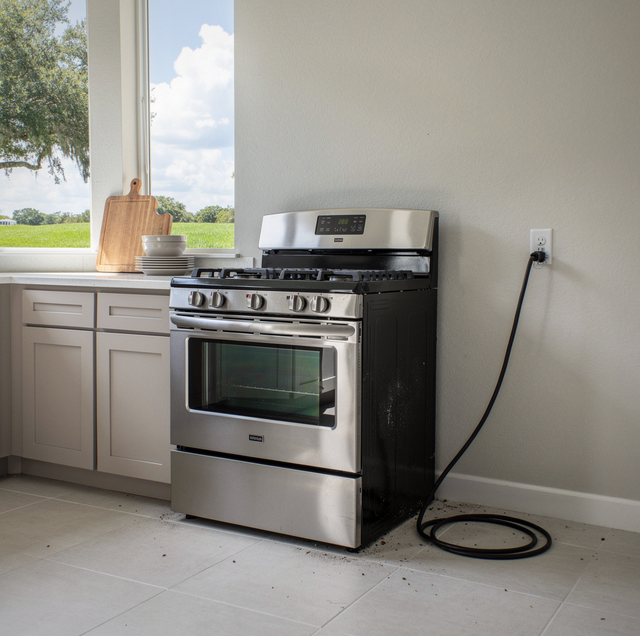
Stand a freestanding electric range next to a freestanding gas range, and the differences barely register. Same width, same door, same handle, same drawer at the bottom, same panel of knobs. Both slide into an identical cabinet cutout. The only difference that matters for getting one out of your kitchen is at the back, out of sight, where the appliance meets the house. That single connection determines who is allowed to touch it and what happens on the day of the appointment.
What Both Ranges Have in Common
Set the back panel question aside, and the two appliances hand you the same removal problem. A freestanding range is built to a standard cutout width, which is exactly why the gas and electric models are interchangeable in the same gap in your cabinet run. Both weigh what a steel box packed with insulation weighs. Both have a door that wants to swing open while it is being carried.
The cutout is the constant: Whatever your kitchen holds now, the slot it sits in was sized to a standard dimension, so the replacement you have picked out will fit within the same footprint the old one occupied.
That shared footprint is also why the two get confused on the phone. You describe a range, you describe a width, you describe a color, and none of it separates one branch from the other. Both are booked the same way, too. You send photos ahead, and the scope is set based on what those photos show. Everything up to that point is shared. The split happens after.
Where the Two Ranges Part Ways
Turn the appliance around in your mind, and the resemblance ends.
An electric range terminates in a heavy cord that lands in a dedicated high-voltage receptacle, a receptacle that looks nothing like the standard wall outlet your toaster uses. A gas range terminates in a flexible connector that runs to a shut-off valve, usually located behind the appliance, where you have never had reason to look. One is joined to your electrical system. The other is joined to a fuel supply. Nothing about the front of either one tells you which.
The tell is the hardware, not the badge: The brand plate and the finish say nothing about which system the appliance is tied into, and the knobs are no help either, since both branches use them.
Two mailboxes bolted to the same post look identical from the street, yet one opens with the key in your pocket and the other only for the carrier authorized to open it.
A dual-fuel badge only confirms a gas cooktop paired with an electric oven; it does not indicate which connection is behind your unit, so the wall still needs to be checked before booking the pickup.
Following the Electric Branch to Pickup Day
For an electric range to leave, one thing must be true: it must be free of its receptacle. That is the whole requirement, and it is a shorter list than the other branch carries.
Most modern electric ranges are cord-and-plug appliances, so whoever preps the kitchen unplugs it before the crew arrives, and the appliance shows up already separated from the house. The receptacle stays with the house. The appliance walks out, and the floor underneath it sees daylight for the first time in years.
A plug is not the same as being hard-wired: Older kitchens sometimes have a range joined directly to the electrical system with no plug involved anywhere, and that is a different situation entirely, one an electrician owns rather than a removal crew. You will not know which kind you have by looking at the front, and neither will anyone taking your call.
So the practical shape of an electric pickup day is short. Once the range is free of its receptacle, it stops being part of the house and becomes furniture, and furniture is the part a removal crew is built for.
Following the Gas Branch to Pickup Day
Gas changes the order of your day, not just its difficulty.
A range joined to a live fuel supply is not really an appliance yet. It is one component of a system that runs back into the walls of your home. Before it can be treated as an object to lift and carry out, the supply has to be closed and the appliance separated from it, a step that happens ahead of the pickup rather than during it.
Order decides the day: The trade visit comes first and the pickup comes after, which makes the gas branch a two-appointment sequence even when nothing goes wrong. Treating it as one appointment is the most common way for a gas range removal to slide into next week.
A gas connection sits outside what a removal crew touches and outside what a homeowner should attempt. Separating a range from a live fuel line is part of the licensed trade, and the pickup waits until that work is finished.
What remains once that trade has finished is an appliance sitting loose in a cutout, at which point it is indistinguishable from the electric one, and the rest of your day looks like the rest of anyone else's.
Electric and Gas Compared at the Cutout
Set side by side, the two branches differ in only a handful of places, and every one of them lives behind the appliance.
| Electric range | Gas range | |
|---|---|---|
| What is behind it | A heavy cord in a dedicated high-voltage receptacle | A flexible connector running to a shut-off valve |
| Who separates it from the house | Usually a simple shut-off, unless the range is hard-wired | A trade visit that closes the supply line ahead of the pickup |
| What the crew does on the day | Lifts the loose appliance and carries it out | The same, once the appliance is already separated |
| What stalls the appointment | A hard-wired connection nobody knew about | A live connection with no trade booked |
| What stays with the home | The receptacle | The valve |
Ranges That Sit on Both Branches
Two kinds of range refuse to pick a side, and both show up in ordinary kitchens.
Two connections mean the stricter branch wins: A dual-fuel range pairs a gas cooktop with an electric oven, so it carries a fuel connection and a high-voltage connection at once, and the gas half sets the schedule for the entire appliance.
Slide-in and built-in ranges add a second kind of attachment. Rather than simply sliding into the cutout under its own weight, this style is fastened to your cabinetry and connected to a supply, so the hardware holds the appliance to the kitchen, in addition to whatever runs to the back of it. Being fastened is not the same as being connected, and one appliance can be both at the same time.
There is a third case worth naming. If your replacement moves you from one branch to the other, the range leaving and the range arriving are tied into different systems, and the trade work that handles the old connection belongs in the plan long before either appliance is on a hand truck.
When the Branch Was Never Identified
The failure mode is quiet, and it always looks the same. A crew arrives for a range, the range turns out to be joined to a live fuel line, and no trade was ever booked. The range does not move that day. Everything else on the load can still go, but the appliance stays in its cutout, and you rebook around a visit that should have come first.
The reverse happens too, less often but just as expensively. A kitchen assumed to be an easy electric pull turns out to have a range wired directly into the electrical system, and the appointment stops at the same wall.
Neither outcome is anyone being careless. It happens because the two appliances are identical from the front, and the front is what you look at, describe, and photograph. Your range has already decided which branch it belongs to, whether or not anyone has checked, and that decision was made at the connection behind it, not at the door in front.
Frequently Asked Questions
Yes. A downdraft range has an integrated vent that ducts away through the cabinetry or below the floor, so it carries a third attachment on top of its power or fuel connection. That third connection should be flagged when you book rather than discovered when the range refuses to slide.
For getting the appliance out, no. Both are fuel connections, and both put the range on the gas branch. The difference matters afterward, since a unit you plan to sell or donate is only useful to someone with the matching supply.
Usually. On an electric range, the cord is typically a separate purchase that belongs to the appliance rather than to your house wiring, so it travels with the range unless you say otherwise. If you want to hold onto it for the replacement, mention that before the appliance goes out, because a cord tucked behind a range is easy to send off with it.
That is not a freestanding range, and it is not one item. A wall oven sits in a cabinet opening at chest height with its own connection, and the cooktop drops into a countertop cutout with a separate one. Two units, two connections, two sets of trim. Say so when booking, since the scope has little in common with a range pull.
No. The old connector is a physical part of the range being removed, so it leaves with the old appliance rather than being reused on the replacement.
The property owner does. Ranges in rentals are frequently the landlord's property rather than the tenant's, so a pickup gets booked by whoever owns the unit, especially on the gas branch, where a trade visit also has to be arranged and paid for by someone.
The cutout is the same; the connection behind it is not — knowing which branch your range sits on before the appointment is what keeps the pickup on the day you booked it. Polk Services LLC serves Lakeland, Highland City, and Mulberry. Call (863) 344-5806.
