

How to Tell If a Filled-In Pool Was Done Right or Not
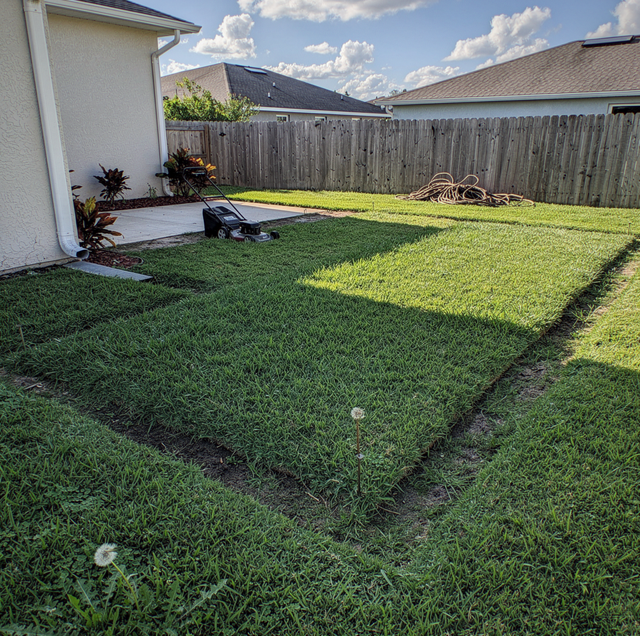
Quick Answer: A correctly filled pool settles slightly and evenly, then stops. A dish that keeps deepening, a patch that stays soggy after rain, or a seam at the old edge means fill that was dumped rather than compacted, or a shell never drained.
The mower catches on it before you consciously register that anything is off. A rectangle near the back fence rides a little lower than the rest of the yard, or the grass across it stays greener and thicker than everywhere around it, even through a dry stretch. Someone mentions it in passing: that used to be the pool, like it's ancient history and nothing to think about twice. Whether you inherited the yard or had a pool taken out yourself a season or two back, that rectangle is telling you something. The question is whether you know how to read it.
What You Can See from the Surface
Start with a slow walk of the whole footprint, not just a glance from the porch. Do it in this order and you'll catch more than a quick look ever will: walk the full rectangle edge to edge first, note anything low or uneven; come back a day or two after a hard rain and see where water is still sitting; press into any soft-looking area with a rod, standing on firm ground beside it rather than on the spot itself; then step back and compare the grass across the whole footprint against the lawn around it.
A shallow dish that keeps deepening season over season is the most common tell. It's rarely dramatic at first, easy to miss unless you're specifically looking for it, and a dish that is still growing usually means the fill was placed in bulk and leveled off the top rather than built up in shallow, compacted layers.
Ground that stays wet or spongy days after the rest of the yard has dried out is a different problem. Walk the footprint after rain, and in those spots the ground gives underfoot in a way the surrounding lawn simply doesn't, more sponge than solid soil, and in the worst cases the whole rectangle stays more marsh than mud for a stretch that never quite matches the weather around it. That pattern points at water with nowhere to go, not just loose dirt.
A hairline step or thin crack right where the fill meets the undisturbed native soil at the edge of the old footprint appears as a faint seam in the grass or a slightly different mow height on either side of the line. It's a sign of uneven settling between old ground and new fill, not a random dip in the middle of nowhere.
Grass that grows differently over the footprint than the rest of the yard, whether thinner, thicker, or a different shade, points to inconsistent soil depth or composition close to the surface rather than uniform native ground underneath.
Symptom, Likely Cause, What It Tells You
| What you see | Likely cause | What it tells you |
|---|---|---|
| Dish or bowl shape that deepens season over season | Fill dumped and leveled off the top instead of built up in layers | Loose fill is still settling into its own voids |
| Rectangle stays wet, spongy, or marshy well after the rest of the yard has dried | Drainage holes were never broken through the shell floor | Water is trapped against the underside of the fill with nowhere to drain |
| Hairline step or thin crack where the footprint meets original ground | Uneven settling between undisturbed soil and the new fill column | Confirms ongoing settlement, not a one-time isolated dip |
| Grass noticeably thicker, thinner, or a different color over the footprint | Inconsistent fill depth or composition near the surface | Fill quality and depth vary across the footprint |
| A spot that gives more than the surrounding lawn when you press into it | Loose or poorly compacted material directly below | A localized void or low-density pocket worth marking and watching |
What to Ask for on Paper
A rectangle in the yard is one kind of evidence. Paperwork, when it still exists, is another, and it's worth asking for before you assume there's none. A previous owner's file or your own contractor's file may still contain the paperwork from the demolition, a written scope describing what was actually done, or photographs taken during the work itself. None of these are guaranteed to exist years later, and nobody owes you a filing cabinet, but it's a simple question to ask, and a written scope in particular will usually say whether the shell was drained, how the fill was placed, and what was used to fill it.
What None of It Can Tell You
Everything above is inference from the surface, and surface signs have real limits. You can't tell from grass and topsoil how many separate layers the fill went in, whether drainage holes were actually broken through the shell floor or just intended to be, or how deep the disturbed material runs before you'd hit anything resembling the original ground. A yard can look completely flat and uniform for years and still be sitting over a shell that was capped rather than opened up, with the low spot or soggy patch simply taking longer to show. Surface signs also can't distinguish a small, contained void from a widespread compaction problem across the whole footprint. Closing that gap takes a look below the grass, whether that's a hand-dug test hole in a suspect spot, called in to 811 first because the old equipment pad's conduit and gas line can still be sitting in that ground, or, for a bigger question mark, opening up a section to see what's actually there.
Push a soil probe down by hand well clear of the old equipment pad, since abandoned conduit and gas line can sit in that footprint. Firm fill resists evenly. Stop at hard resistance rather than forcing through it.
What to Do If the Signs Point to a Problem
If a test probe or a small dug hole turns up loose, disturbed material with a different color and texture than the native soil around it, or chunks of broken concrete mixed in closer to the surface than expected, that confirms a real fill problem rather than an oddly wet week. Mark the area and hold off building anything over it, a shed, a patio slab, a screen enclosure foundation, or planting a large tree near it, until it's dealt with. Fixing a settled area properly means taking out the loose material and rebuilding it the way it should have gone in the first place, compacted in shallow, 6-8 inch lifts rather than dumped in bulk and topped off, with the finished surface sloped so water leaves the repaired area instead of collecting back into the same low spot.
A soft spot can give way suddenly underfoot, and hidden concrete edges under the grass can turn a stumble into an ankle injury. Mark suspect areas and keep foot traffic and children off them until you know what is underneath.
Frequently Asked Questions
Not necessarily. Even a properly compacted fill job settles a small, gradual amount as the soil column finds its final density over time. The distinction lies in the shape: a very slight, even dip spread across the whole footprint is normal settling, while a sharp, localized dip concentrated in one corner points to a void or a poorly filled section rather than an overall expected settling pattern.
That points to the perimeter rather than the fill column. The ring where new fill meets undisturbed soil is the last part compacted and the hardest to reach cleanly with a plate, so settlement confined to the edges of an otherwise sound footprint usually means the perimeter was never worked as thoroughly as the center. It also tends to appear earlier than a central dish, because that ring is where mower wheels and foot traffic concentrate.
Not on its own, provided the floor was opened up. A stable wall section doesn't move once fill is placed around and above it, and it's the loose fill between and over those walls that settles over time, not the wall itself. What makes a buried shell a problem is an unperforated floor that holds water beneath the fill, which is exactly what the wet-rectangle sign above is pointing to.
Depth does more of the work than most people expect. A deep-end cavity holds a much taller column of fill than a uniform-depth pool, and a taller column has more total settlement available to it at the same compaction quality. Two jobs finished to an identical standard can read very differently at the surface, one over an old diving pool and one over a shallow play pool.
Finished-yard photos don't tell you much of anything. What actually helps is a photo taken during the work, specifically the shell with drainage holes visible before backfill started, or the fill going in lift by lift rather than as one finished pile. Those two moments are the ones that would confirm the job was done correctly, and they're also the ones a seller or an old contractor's file is least likely to still have.
Yes. Deck footings for a diving board, ladder anchor bolts, or a buried skimmer or return-jet housing near the old perimeter can remain if they weren't specifically flagged for removal during the work. These tend to show up as small, hard spots or a distinct clink when you press a probe into the ground, a feel entirely different from the broad, gradual soft-spot pattern that loose fill produces.
A yard that looks fine from the porch and a yard that's actually fine underneath are two different things, and the gap between them is exactly what a slow walk after a hard rain and a probe test are for. Most of the time the signs are minor, and the ground is simply doing what disturbed ground does. When the signs line up- a dish, a wet patch, a hairline step, and a spot that gives underfoot in the same corner- that's worth a closer look before anything gets built on top of it.
Get a settling pool footprint put right — the old fill excavated, replaced in compacted lifts, and the surface regraded to drain. Polk Services LLC serves Lakeland, Highland City, and Mulberry. Call (863) 344-5806.
