

How to Prep for a Junk Removal Appointment: 8 Steps
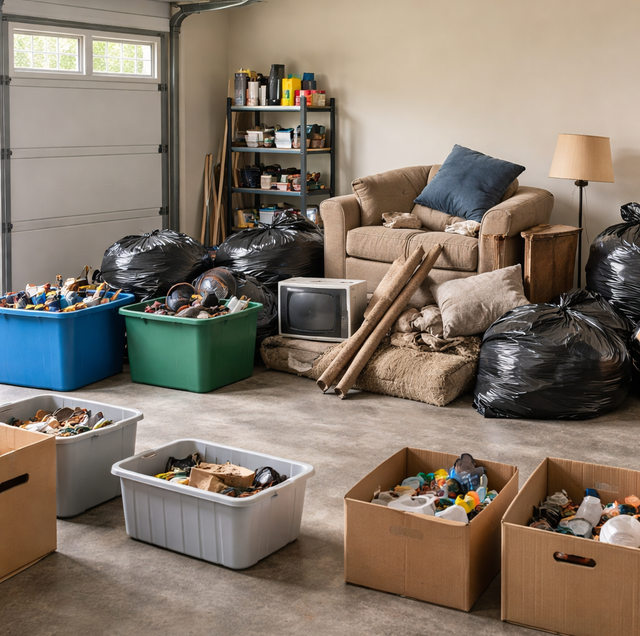
Quick Answer: Before a junk removal or cleanout appointment, sort items into keep, donate, and toss piles; pull out anything valuable or sentimental; group the "toss" items together with a clear path to the driveway; set aside hazardous materials the crew can't take; and confirm access details like gate codes and parking. That prep lets the crew load quickly and prevents anything you meant to keep from leaving on the truck.
You booked the appointment, and now a crew is coming to haul away the pile that has taken over the garage, the spare room, or the back lot. The job will go faster and smoother if you spend an hour getting ready first. Prep is not busywork. It is the difference between a crew that walks straight to the pile and loads it in twenty minutes, and a crew that spends that same twenty minutes waiting while you decide, item by item, what actually goes.
Why a Little Prep Saves So Much Time
A loading crew is fastest when every decision has already been made. Sorting on the spot is the single biggest time sink. Each time a worker has to stop and ask whether the bookshelf stays or goes, the whole line pauses. Multiply that by a hundred items in a full cleanout, and you have added an hour to a job that did not need it.
Prep also protects you. When items are jumbled together, the risk of hauling the wrong thing is real. The tote of holiday decorations gets loaded with the trash bags around it, and it is gone before anyone notices. A clear boundary between "goes" and "stays" removes that risk entirely.
The prep also lets the crew give you an accurate read on volume when they arrive, since most junk removal is scoped by how much space the load takes in the truck. A pile that is grouped and visible is easy to size up. One scattered across three rooms is not.
Step 1: Decide What Goes and What Stays
Walk the space once with three categories in mind: keep, donate, and toss. This is a decision pass, not a moving pass. You are labeling, not lifting.
Sort into three piles: The "toss" pile is what the crew hauls. The "donate" pile is anything still usable that a charity or reuse outlet would take. "Keep" is everything staying with you.
Tag or physically separate what stays: The safest move is to put "keep" items in a different room and shut the door. If that is not possible, mark them clearly. Painter's tape with the word KEEP, a bright sticky note, or a sheet thrown over the whole group all work. Do not rely on the crew to guess. A worker moving fast reads "sitting near the pile" as "part of the pile."
Handle the gray-area items now: The chair you are not sure about is the one that causes a mid-job argument. Make the call before the truck arrives so nobody is standing around waiting on you.
Step 2: Pull Out Anything Valuable or Sentimental First
Before the crew touches anything, do a slow sweep for things you would hate to lose. Cash tucked in a book, jewelry in a drawer, the box of old photos, a title or deed folded into a stack of papers. These have a way of hiding inside furniture and boxes headed for the truck.
Old dressers and desks are the classic trap. Check every drawer and cushion. Once a piece is loaded, retrieving something from it is difficult, and after disposal it is gone for good. Secure these items somewhere the crew will not be working, ideally out of the room entirely.
Step 3: Group the Pile and Clear a Path
A crew loads at the speed of the walk between the pile and the truck. Anything in that walk slows them down.
Bring items to one spot: If you can, consolidate the "toss" items into a single staging area near the exit the truck will use, the garage, a driveway edge, or a spot just inside the front door. Do not overexert yourself doing this; leave the truly heavy pieces where they sit and let the crew handle those.
Clear the route: Move rugs, planters, bikes, and stray boxes out of the hallway and driveway. Open the gates and doors the crew will pass through. If the truck needs the driveway, park your own vehicles on the street ahead of time so it can back in close.
Step 4: Set Aside What the Crew Can't Take
Some items are not standard haul, and a crew will leave them behind because they require special handling. Separate these into their own clearly marked group so nothing gets loaded by accident, and so you know what still needs a plan.
Hazardous materials are the big one. Paint and solvents, pool and lawn chemicals, motor oil, propane tanks, and household or car batteries are not regular trash. They need proper disposal through the appropriate facility, and the exact rules vary by area, so confirm with your local household hazardous waste program before the appointment.
Often restricted, but ask: Tires, some electronics (e-waste), and certain large appliances can carry separate handling requirements or fees. Many crews take these; some cannot, or route them to a specialized processor. A quick call when you book tells you which of your items fall in this bucket.
Keeping these items in their own corner, away from the main pile, is the simplest way to prevent a mix-up.
Step 5: Measure and Clear Access for Big Items
Large pieces get stuck in doorways and stairwells more often than people expect. A sleeper sofa that came in through a since-remodeled entryway may not have an easy way out.
Measure the tight spots: Check the width of doorways, hallway turns, and stair landings against the largest items leaving. If something looks marginal, mention it when you confirm the appointment so the crew brings the right approach.
Clear the stairs and landings: For anything coming down stairs, remove wall art, runners, and anything on the steps. A clear, dry stairway is a safety issue as much as a speed one. Heavy items on stairs are where injuries happen, which is exactly why the crew handles that part rather than you.
Step 6: Remove Personal Data Before the Crew Arrives
Cleanouts move a lot of paper and electronics, and both can carry information you would not want walking out the door.
Set aside documents to shred: Bank statements, tax records, anything with an account number or a signature. Pull these for shredding rather than tossing them loose in the haul pile.
Wipe electronics: Old laptops, phones, external drives, and even some printers store data. Factory-reset and wipe them, or physically remove and keep the drive, before they leave. Deleting files is not the same as wiping a device; a reset returns it closer to empty.
Step 7: Confirm the Appointment and Access
A short confirmation call or text the day before prevents the most common day-of snags.
Lock down access: Share gate codes, building entry instructions, and elevator or loading-dock details if they apply. If you will not be home, arrange how the crew gets in and where they should focus.
Point to parking: Tell the crew where the truck can sit closest to the load. A spot fifteen steps from the pile beats one across a parking lot every trip.
Confirm the scope: Reconfirm what is going so the crew arrives with the right truck and enough hands. If the pile grew since you booked, say so now.
Step 8: Ask About Donation and Recycling
Plenty of what leaves a cleanout is still usable. Furniture, working appliances, building materials, and clothing often have a second life if they are routed to the right place instead of the landfill.
Ask whether the crew diverts usable items to donation or recycling and, if so, what they take. Keeping your "donate" items grouped and in good condition makes that easy for them. A working dresser set aside cleanly is far more likely to reach a reuse outlet than one buried in the middle of the trash pile. Diverting items also trims the volume headed to disposal, which can work in your favor on a load scoped by space.
Keep kids and pets clear of the work area once the crew starts loading. A team carrying a heavy dresser through a doorway cannot watch for a toddler or a curious dog underfoot, and open doors during a load are an easy way for a pet to slip out.
Frequently Asked Questions
For a single room or a modest garage, an hour or two the evening before is usually enough. A full-house or estate-scale cleanout deserves a few days, mostly because the emotional decisions of what to keep take longer than the physical sorting. Spreading a large sort across several short sessions beats one exhausting marathon, and it gives you time to notice a valuable item you would have missed while rushing.
No. Crews are equipped to load loose items, furniture, and bulky pieces as they are, so you do not need to bag anything for their sake. The exception is loose small debris like broken glass, screws, or yard trimmings; containing sharp or scattering material in a box or heavy bag is safer for the crew and keeps it from spilling across the driveway during the carry.
Once an item is on the truck and the truck leaves for the transfer station or landfill, recovery is often impossible, which is exactly why separating "keep" items into a closed room matters so much. If you realize a mistake while the crew is still on site, say so immediately; retrieving something from a partly loaded truck is far easier than chasing it after disposal.
Policies differ, so ask when booking. Many crews will clear an attic or upper floor but need a safe, code-standard stairway or a stable pull-down ladder to do it, not a rickety setup. Confined crawlspaces and roof-level work sometimes fall outside what a standard haul covers, so flag any hard-to-reach items in advance rather than assuming.
It helps for the first few minutes so you can point out exactly what goes and answer any questions, then you are free to step away. If you cannot be there at all, mark the "toss" pile unmistakably, close off every "keep" area, and leave clear written instructions, because a crew working from guesses is where the wrong-item mistakes cluster.
Yes, snap a few phone photos of the pile and of any high-value or antique pieces before loading. It gives you a shared reference if you need to confirm what's left, and a dated photo of a valuable item's condition is useful for your own records. Photographing serial-numbered electronics before they go is also a quick habit for keeping track of what left the house.
Book your cleanout the easy way — a prepped pile means a faster, cleaner haul. Polk Services serves Lakeland, Plant City, and Bartow. Call (863) 344-5806.
