

Refrigerator Removal after a Power Outage: What Comes First
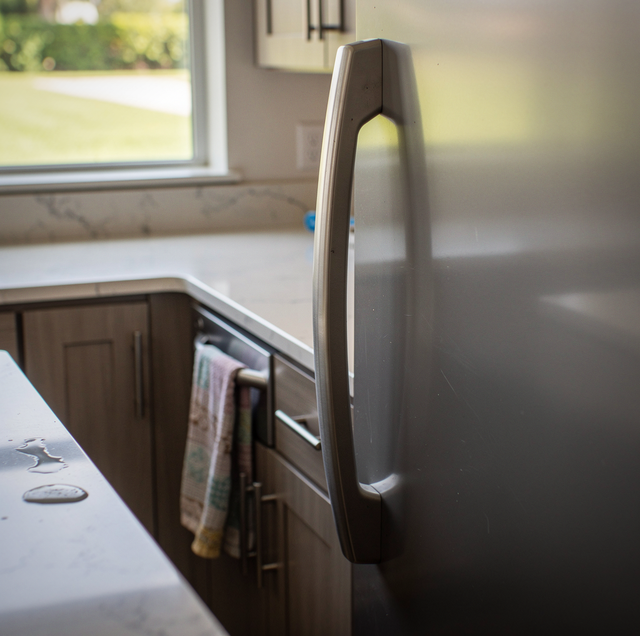
There is a moment right before you open that refrigerator door again after a power outage, before you've confirmed what's actually waiting behind it, when the whole job is still undecided. That handle is the real decision point, not the outage itself. What you find on the other side determines whether this becomes a fridge you empty and haul away, one that still deserves a second chance, or one you don't want to open twice. Everything about the pickup that follows traces back to that first look.
Deciding Whether the Fridge Is Worth Keeping
The two starting points: A fridge that lost power and simply stopped running is not automatically in the same condition as one that sat closed, full, and warm for days. The outage is the same event either way — what decides the outcome is what was happening inside your fridge while the power was off.
If your fridge was mostly empty and got back to temperature quickly, the compressor and the rest of the mechanical side may still be sound, and that's worth a second look rather than an automatic write-off. If it sat full and sealed long enough for the contents to spoil, the interior liner and the insulation behind it can hold onto that once it's set in, and a fridge in that state is generally flagged rather than routed toward resale, and the call on that is yours. Figuring out which of those two you're dealing with is the first real decision, before anything about pickup or disposal even comes up.
What Has to Come Out before It Moves
Whatever is inside has to come out before the fridge can move, and that holds true whether you plan to keep it or have it hauled away. What's inside determines how quickly that step is, not whether it happens at all.
If your fridge was mostly empty when the power went out, you're not dealing with much beyond a shelf or two. If it sat full for the duration of the outage, you're looking at a bigger task before it ever reaches the truck, since everything stored inside spoiled in place and has to be dealt with first. That work happens before pickup, not during it. A fridge that's ready for the truck is one that's already been emptied out, including the doors.
How the Interior Changes the Pickup
What sitting warm actually does: Once your fridge climbs back up to room temperature with the door shut, whatever has spoiled inside has somewhere to go. It collects in the door gasket channel and the crisper wells, and from there it works into the plastic liner and the insulation behind it, which is why a fridge you've already wiped down on the inside can still carry an odor; the source isn't sitting on the surface anymore.
A cold chain that has already broken does not reset itself the moment the door swings shut again or the power comes back on; the interior keeps behaving like something that was never refrigerated once it has spoiled. The same logic applies to a shipment that loses refrigeration in transit: once the cold chain breaks, no receiving dock reaccepts the load, no matter how cold it arrives after the fact.
That's the split this kind of pickup runs on: a fridge that stopped working but stayed cold or stayed empty is one job, and a fridge that sat warm and full long enough for the interior to absorb what spoiled is a different one. Neither one is unusual, but they call for different expectations going into pickup day.
The Ice-Maker Line and Other Connections
If your fridge has an ice maker, there's usually a water line running to it, and that line needs to be shut off before the unit comes out. The shut-off itself is simple, but it is often not behind the fridge, so its location is worth finding before pickup day. Anything past that valve is plumbing work.
Doors Stay On, Odor Stays In
The doors stay on your fridge and get taped shut once it's ready to move. That holds true no matter what's inside; removing a door doesn't solve the problem of a spoiled interior, and a door that swings open partway through the move exposes exactly what taping it shut was meant to hold back.
Once the fridge is unplugged and ready to go, leave the doors on and taped shut. A door that opens during the move lets loose whatever the interior has been holding on to, turning a contained pickup into a bigger cleanup.
Where the Unit Goes after Pickup
After it leaves: Your fridge is a sealed cooling appliance, and once it's picked up, it gets routed to a certified recovery facility. That routing happens the same way regardless of whether the outage left the interior clean or spoiled.
Getting a Photo Estimate and a Pickup Date
Getting it scheduled: Your fridge is heavier than it looks once the doors and whatever's still inside are accounted for, which is part of why photos matter before pickup day. A few photos are usually enough to set the scope, and a written estimate confirms the full scope, including a fridge that needs to be handled differently because of what's inside. Same-day and next-day pickups are both possible when the schedule allows, but the estimate sets expectations before the truck shows up.
Send a few clear photos of your fridge, including the inside if the door is already open, so the estimate reflects its actual condition rather than guessing on pickup day.
Frequently Asked Questions
Not in a way that changes anything about the interior. If your fridge sat closed and warming for days, odor concentrates in that closed space, and the first time you open it, it all releases at once. It can be strong, but it's the buildup being let out, not a sign that something new went wrong while the door was shut.
Not always in the same way. Frozen contents don't leak the way fresh food does, so a freezer that stayed shut usually holds less liquid. A slow thaw during a longer outage can still leave moisture in your freezer's gasket channel and along the drawer tracks, even when the compartment looks dry at a glance, so it's worth checking rather than assuming it came through clean.
If your fridge has a water filter, the housing that holds it can trap standing water once the line is shut off, and that water doesn't drain out on its own. It can carry a musty smell separate from whatever spoiled in the food compartments.
Yes. A fridge that sat warm during a summer outage can spoil and absorb odors faster than one that sat for the same number of hours during cooler weather, since the ambient kitchen temperature affects how quickly the interior warms and how long it stays warm. Two outages of equal length don't always leave a fridge in equal condition.
Not necessarily, and that's not a reliable test on its own. A compressor restarting after sitting warm for days works to pull the whole cabinet back down from room temperature, so it can run longer or louder than one that never lost power in the first place. That difference in sound says nothing about whether the interior liner has already absorbed odor from what spoiled inside.
The drain pan is a shallow tray near the compressor, underneath your fridge rather than inside the food compartments, designed to collect condensation and runoff. During a long outage, spoiled liquid can work its way down into the interior and end up there too, which is part of why your fridge can hold on to odor from a spot you never open or look into directly.
Still not sure what is behind that door? — send a few photos and get a written scope for the whole pickup, spoiled fridge included. Polk Services LLC serves Lakeland, Highland City, and Mulberry. Call (863) 344-5806.
