

EPA-Compliant Refrigerant Disposal: What It Actually Covers
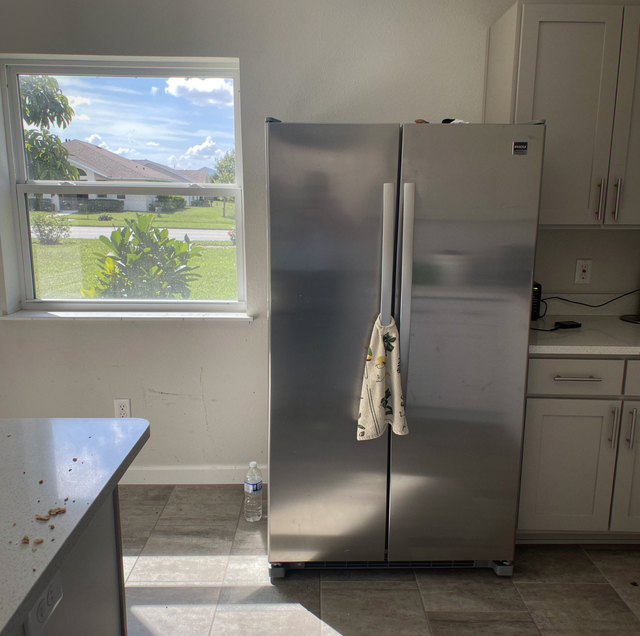
"EPA-compliant refrigerant disposal." It appears on a service page, or as a note beside a refrigerator on a pickup list, and it reads like something already settled. Settled by whom, though? Doing what? Ending where?
Pull the phrase apart, and it is three separate claims stacked into one line: a substance claim, a process claim, and a destination claim. Only one of them describes anything that happens at your house. Once you can see which is which, you can ask a hauler a better question than "are you compliant," and tell from the answer whether the appliance in your kitchen has a real destination or just a truck ride.
What the Compliance Phrase Is Actually Describing
"EPA-compliant" bundles a substance claim, a process claim, and a destination claim, and only the last two happen anywhere you can see. "Compliant" refers to a chain of custody: the appliance leaves your home intact and reaches a certified recovery facility that removes the refrigerant charge before any metal is scrapped. "Disposal" is misleading because the unit is routed there rather than dumped into a standard load. The crew that picks it up is not the party that recovers refrigerant; that happens later, at the facility, by people certified to do it, and any description that blurs those two roles is describing something that does not happen.
Before Anyone Touches the Appliance
The chain starts before the truck arrives, on the written estimate. The estimate confirms the complete scope before work begins, and a refrigerant-bearing appliance should appear on it as its own item rather than buried in a general count. That is not paperwork for its own sake: a unit named on the estimate is a unit assigned a destination.
Which appliances this covers: Refrigerators, standalone freezers, and other sealed cooling appliances all carry a charge. If you are unsure whether something qualifies, say so during the walkthrough rather than guessing from the outside of the cabinet.
Two things sit just outside this chain. Small sealed cooling units, such as wine fridges, beverage centers, and dehumidifiers, operate the same way as a full-size refrigerator or freezer. And whether a working older refrigerator would be better donated than hauled is a decision to make before you book a removal.
On the day itself, the crew comes inside for the pickup. The appliance does not need to be waiting at the curb, and wrestling a top-heavy cabinet out to the street yourself is how people end up with a dented wall and a strained back. A simple shut-off is handled as part of the work. Anything requiring a licensed trade gets referred out rather than improvised.
Getting It Out of the House Intact
"Intact" is the operative word for this stage, where the physical reality of the appliance starts to matter.
A fire extinguisher parked in a hallway for years is doing nothing visible, but it is holding pressure the entire time, and the only question that ever matters about it is whether the release happens deliberately, by someone equipped for it, or by accident. A sealed cooling circuit sits in the same category. The charge does nothing while the fridge stands in your kitchen and nothing on the truck. It becomes a question only when something opens the loop.
So the goal for the carry-out is unremarkable and specific: get the cabinet through the doorway, down the step, around the turn, and onto the truck without impacting the tubing or the compressor mount. Clearances and pathways matter more than speed. Tight hallway turns, a threshold with a lip, a narrow side gate, a stair run with a low ceiling: these decide how a heavy sealed appliance comes out, and they are worth flagging during the estimate rather than discovering mid-carry.
Never puncture, tap, cut into, or otherwise open the sealed cooling loop on a refrigerator or freezer, and never pull the compressor. Opening a charged system is certified-technician work, not a homeowner task or a crew task.
Why It Cannot Ride in a Mixed Load
A standard junk load is a mixed load headed somewhere built to sort and process mixed material. That destination is not equipped to pull a refrigerant charge, and the handling a mixed load receives is exactly what a sealed circuit cannot survive: material gets consolidated, compressed, and moved by machines that do not know which piece of steel has a loop of charged tubing welded to its back.
Once a sealed system is breached within a mixed load, there is no way to recover the charge and no record of what happened to it. The compliance claim collapses at that point, regardless of what anyone wrote on the estimate.
This is why the appliance stays separate rather than being treated as one more heavy item. It is loaded to stay upright and stable, kept clear of anything that could shift into it, and left at a different destination than the rest of the load. If a hauler cannot tell you that the appliance goes somewhere other than where the couch goes, the compliance phrase on their page does not describe their process.
The Handoff at the Certified Recovery Facility
The certified recovery facility is where the phrase finally earns itself, and where the hauler's involvement ends and someone else's begins.
A certified recovery facility is a site staffed by technicians who hold the certification to remove a refrigerant charge, using equipment built for it, before the appliance shell is scrapped. That is the whole description, deliberately.
What that means for you is simple: the unit goes to a facility set up for recovery rather than into a general load.
What Comes Back as Proof
A compliance claim with no supporting record is just a sentence on a website, so it is fair to ask what actually comes back from the facility.
Some recovery facilities issue a receipt or intake record for what they received; whether one exists for a given job and whether your hauler can get a copy vary by facility. What does not exist, and what you should be suspicious of if someone offers it, is a formal certificate in your name attesting that your particular refrigerator was handled correctly. That is not a standard product of this process.
It is fair to ask your hauler whether a facility record is available for your job. Do not expect a promise that it exists or that it will be provided; a reasonable hauler will tell you honestly either way.
Where All of This Shows Up on Your Estimate
Everything above compresses into a couple of lines on paper, the only part of the chain you get to inspect before committing.
The appliance is named: It appears as its own line rather than being counted as generic bulk.
The scope is confirmed before work starts: What is being taken, what is coming inside, and what falls to a licensed trade instead. That last one matters, because a job stalling halfway over a connection nobody flagged is the most common way an appliance removal goes sideways.
The destination is stated, not assumed: The refrigerant-bearing unit goes to a certified recovery facility rather than into the general load.
When the appliance is listed as its own line, check that the line also names its destination, a certified recovery facility, not just the unit. A line with no destination listed is still a guess.
Read that way, the compliance phrase stops being a badge and turns into something checkable. It is a claim about where an object goes and who receives it, and about every stage of it, whether it happened or not.
Frequently Asked Questions
Yes, and this is the most common wrong assumption about dead units. A failed compressor or a fridge that hasn't cooled in years tells you nothing about whether the charge is still in the loop. Plenty of appliances stop working for reasons that never breached the sealed circuit. A non-working unit routes to the same certified facility as a working one, and belongs on the estimate as a refrigerator or freezer rather than as scrap metal.
Leave it assembled. Removing doors makes the cabinet harder to control on a carry because the crew loses the clean grip points, and it leaves you with loose glass shelving and door bins to deal with separately. If the unit is going to sit for a day or two waiting on the pickup, tape the doors shut rather than removing them, which handles the child-entrapment concern that door removal is usually meant to address.
Emptying it the day before is fine, especially with a freezer, but tape the doors shut rather than propping them open. A unit that still holds frost can drip as it thaws, and meltwater on tile or hardwood beneath a heavy appliance is a real slip hazard for anyone walking backward. Emptying it also drops weight off a cabinet that is already awkward on stairs.
No. Homeowners are sometimes told to look up the data plate and identify the charge type before booking, and it is not necessary. Older and newer classes of household refrigerant both go to a facility equipped for recovery, so the answer changes nothing about the routing or the destination. If a hauler asks you to determine it as a condition of taking the unit, their process is not sorted out.
Not by serial number. A facility record identifies the unit by type, a refrigerator or a freezer, rather than by an individual serial number, so if more than one appliance went out on the same drop, the record won't single out yours specifically.
Placement does not change the routing. A chest or upright freezer in a garage, carport, or outbuilding is a sealed cooling appliance and is sent to the same certified facility. What placement does change is access, worth flagging early: gravel or grass between the door and the truck, a gate too narrow for the cabinet, a step down into the garage, or a unit boxed in by years of stored items all shape how long the removal takes.
Confirm the scope and destination in writing before the unit leaves — no guesswork about where a sealed appliance ends up. Polk Services LLC serves Lakeland, Highland City, and Mulberry. Call (863) 344-5806.
