

Gravel Driveway Sinking Under an RV or Trailer? Fix That Spot
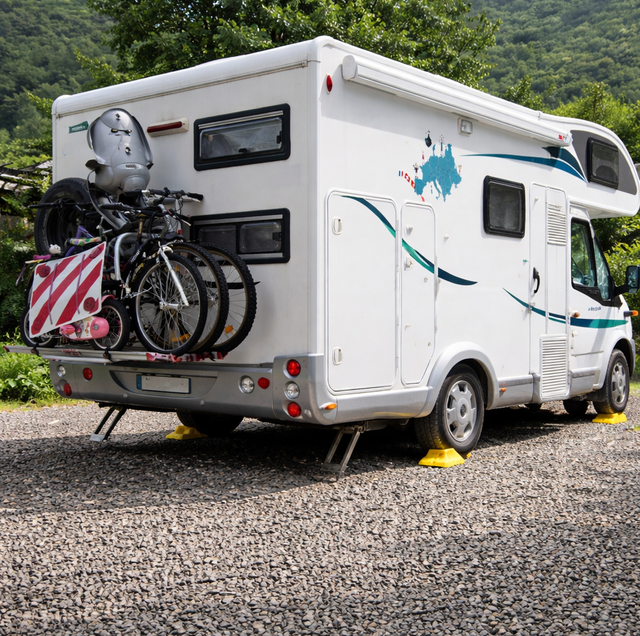
Most gravel driveways were built to handle cars and the occasional delivery van rolling across them, not a travel trailer or a boat parked in the same twelve feet of gravel for a season at a time. When that happens, a driveway that never showed a problem for years can start developing a sunken ring right where the stabilizer jack sits, or a depression under the wheel chocks that wasn't there before the RV moved in. That usually means one specific footprint is carrying a kind of load the rest of the surface never has to deal with, not that the whole driveway is failing, and the repair for that is narrower than most people assume.
How Point-Load Damage Looks Different Than Wear
A parked RV, camper, or boat trailer concentrates weight on the tires, tongue jack, and any stabilizer legs rather than spreading it along a rolling path, as a moving vehicle does; that mechanism is covered in full elsewhere. What matters for a repair is the pattern that mechanism leaves behind once it's had weeks or months to work on the same few spots: a shallow, roughly circular depression right under where a jack foot has been sitting, a similar dish under each stabilizer leg, and a flattened or slightly sunken patch under wheel chocks that have stayed in the same position through multiple trips. It's a different signature than the grooves left by tires rolling back and forth in the same wheel path, which is what heavier, moving vehicle traffic tends to leave behind. Here, the ground is being pressed down in a few fixed spots, rather than carved by repeated passes, because nothing has moved off of them in a long time.
Isolated Spot or Wider Base Problem? How to Check
Before deciding how big a repair this needs, it's worth figuring out whether the damage is contained to those few contact points or whether the base under the whole parking area has softened. Walk the full footprint where the vehicle sits, not just the visibly sunken spots, and pay attention to how the ground feels underfoot in each area.
Confined to the contact points: If the depressions are limited to roughly the size of the jack pad, the stabilizer foot, or the chock itself, and the gravel a foot or two away in any direction still feels firm and doesn't flex underfoot, the problem is localized. That's the more common pattern, since a jack or chock only concentrates load directly beneath it.
Spread beyond the contact points: If the ground feels soft or springy well past the edge of where the jack or chocks sit, or if the depressions under separate contact points have started to run together into one continuous low area, that points toward a base that was already marginal before the vehicle ever parked there, and the concentrated load just exposed it faster than normal wear would have.
A simple comparison helps confirm which one you're looking at: press a heel or a short length of pipe into the depressed spot and then into an undamaged section of the same driveway a few feet away. A noticeable difference in how far it sinks, confined to the footprint itself, supports a localized read. Softness that extends well outside that footprint is the signal that more than a spot repair is needed.
Why This Doesn't Mean Redoing the Whole Driveway
Once the damage is confirmed to be limited to the contact points, the repair only needs to address that footprint, not the rest of the corridor the vehicle drives in on or the section that still only ever sees car traffic. That's a meaningfully smaller job than pulling up and rebuilding an entire driveway. It's also different from converting the whole parking area into a purpose-built pad from the ground up, which is its own project with its own base and edge requirements when someone's planning that from scratch.
The repaired footprint is typically built a bit heavier than the surrounding driveway, since it's now known to carry a stationary point load rather than rolling traffic. In practice, that often means matching something closer to what a dedicated RV or trailer pad would use under its jack points, rather than the lighter base that's fine everywhere else on the property.
What a Point-Load Spot Repair Involves
The repair itself follows a smaller version of a base rebuild rather than a simple top-dressing, because a depression this specific usually means the material directly under it has compressed, not just the surface gravel wearing thin.
Excavate down to firm ground: The sunken area gets dug out past the depressed material until what's left underneath feels solid and consistent, rather than stopping at the first firm-looking layer.
Add separation if the base has been contaminated: If soil or fines have started mixing into the base material at that spot, a fabric layer goes down between the native ground and the new base so the two stay separated going forward, rather than blending again under the same load.
Rebuild in compacted layers: Fresh base material goes back in thin lifts, each one compacted before the next is added, rather than dumped in all at once and tamped only on top.
Match the surrounding surface: The top layer is blended into the existing gravel around it, so the repaired footprint doesn't appear as a visibly different patch or a slight high spot once it's compacted.
Done this way, the fix stays contained to the few square feet that failed, and the rest of the driveway, including the path the vehicle drives in on to reach that spot, is left alone.
Changing How You Park to Keep It from Coming Back
A spot repair holds up better long-term if the same jack foot or chock doesn't land in the same compacted footprint every single time. A few habits make that easier without requiring anything permanent.
Shift the parking position slightly each time: Even moving the vehicle a foot or two off its usual spot when it's re-parked spreads the load across a wider patch of ground, rather than always concentrating it on the same few inches that already took the hit once.
Give chocks a wider base: A block with more surface area in contact with the ground spreads the same restraining force over more square inches than a narrow wedge chock does, which matters most where the vehicle sits nose-down or tail-down on any slope.
Rotate storage orientation where the layout allows it: If there's room to back the trailer in a slightly different way from one stay to the next, even a small change in where the axles and tongue land keeps any one point from becoming the permanent low spot on the property.
Rebuilding anything ahead of time isn't required. It's mostly a matter of not letting the same few inches of ground do all the work every time the vehicle comes back.
When the Damage Has Spread Beyond the Footprint
Occasionally what looks like a jack-point problem turns out to be something bigger once it's checked. If the soft ground extends well past the contact points, if several separate depressions from different parking positions over the years have started merging into one long low area, or if the surrounding driveway shows signs of drainage trouble unrelated to the parked vehicle, that's no longer a simple spot fix. At that point, it's worth having the wider section evaluated before committing to another round of localized patching, since repeatedly repairing the same small footprint without addressing the underlying weakness just delays the problem.
Frequently Asked Questions
It depends heavily on the vehicle's weight class and the ground underneath it. A loaded fifth-wheel or a heavier travel trailer can start pressing a visible ring into softer ground within a matter of weeks, while a lighter boat or utility trailer on firmer ground might sit for several months before any depression shows. Sandy or previously disturbed soil under the driveway speeds this up regardless of the vehicle's weight.
Yes, particularly when the vehicle is parked on a slope. Chocks on an incline exert a constant restraining force pushing down and forward into the ground, not just the vehicle's static weight, so a chock left in the same spot for an extended stay can dig in, similar to a jack foot, even though it's a smaller, differently shaped point of contact.
Generally not. The damage described here comes from dwell time measured in weeks or months, not days. A vehicle that's parked, used for a trip, and moved again within a short window rarely gives the ground enough sustained pressure to compress in one spot the way long-term storage does.
It helps prevent the depression from getting deeper going forward, but it doesn't undo the compaction that already happened underneath it. A board or paver laid over an existing sunken spot just sits at an angle in the low point rather than distributing weight into solid ground, so the excavation and rebuild is still the step that actually corrects it.
Often, yes. A standard driveway base is 4 to 6 inches, but a repaired point-load footprint is commonly built closer to the 8-inch depth used for a purpose-built RV or trailer pad, since it's now a known stationary load point rather than a rolling-traffic surface. That deeper section only has to cover the actual contact area, though, not the driveway corridor leading up to it.
When that happens, an evaluation of the whole zone typically checks more than just the visible low spots: it maps how far the softened ground extends around each old depression and whether the zone's overall grade still sheds water toward the edges or has flattened enough in the middle to start holding it. That wider read determines whether the fix remains a series of connected spot repairs or becomes a full rebuild of that parking footprint.
Schedule a spot repair assessment — get a diagnosis of whether your sunken jack or chock marks need a localized rebuild or a wider base repair. Polk Services LLC serves Lakeland, Highland City, and Mulberry. Call (863) 344-5806.
