

Refresh Old Asphalt Millings Instead of a Full Rebuild
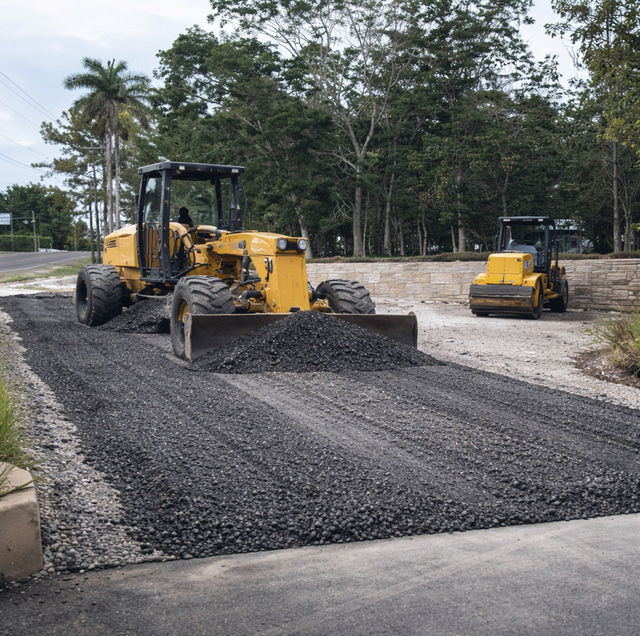
A millings driveway that's four, six, or ten years old rarely fails all at once. It thins in the tire tracks first, the surface starts shedding loose grit and dust that wasn't there the first year or two, and the edges near the road or the garage apron round off and lose their crisp line. That doesn't mean the driveway has to be torn out and rebuilt from the base up. In many cases, what's underneath is still doing its job, and only the top layer is worn thin. Telling the two situations apart is the whole question, and it's worth answering before you assume a full rebuild is the only option.
Signs Your Driveway Is a Refresh Candidate
Start by looking at what's happening on top versus what's happening underneath. A driveway that's a refresh candidate usually shows wear that's cosmetic in the top inch or two: the millings have faded from dark charcoal to a dull gray, the surface feels looser underfoot than it did when it was new, and you can see more loose fines and small aggregate sitting on top after a dry spell. Walk it right after a hard rain. If water sheets off and drains the way it always has, and you don't see puddles sitting in low spots that weren't there before, the base is probably still intact.
The base is a different question, and it's the one that really decides whether a refresh will hold. Press a screwdriver or a garden stake into a few spots along the wheel paths and near the edges. If it meets firm resistance a couple of inches down, the compacted base underneath is still doing its job, and a refresh has something solid to bond to. If it sinks in easily, or if you find soft, spongy give under your feet in the same spots every time it rains, that's the base telling you it has failed, not just the surface.
When It's Gone Past a Refresh
A few signs point the other way. If you've got potholes that go all the way down to bare soil or clay, not just a dip in the millings, that's a base problem, not a surface problem. Ruts that come back within a season or two of grading, even after you've compacted them, mean the material underneath isn't holding weight anymore. And if the same low spots hold water for a day or more after every rain, no matter how many times you've topped them off, water has gotten into the base and broken it down from underneath. Loading more millings on top of a base like that just buys a few months before the same failures reopen in the same places, because the problem was never the top layer.
What the Refresh Process Involves
A refresh starts by breaking up and loosening the existing surface, not just dumping new material on top of it. We scarify or rework the top layer with a grading attachment so the old, compacted millings are broken back into loose aggregate instead of a hard, faded crust. That step matters because a thin layer of new millings laid directly over an intact old surface won't bond to it. It'll sit there as a separate layer that migrates and separates the first time a vehicle turns sharply on it.
Once the old surface is broken up, we bring in a thin layer of fresh crushed asphalt millings, blend it into the reworked material, and re-grade the whole surface to restore the crown and pitch that moves water off to the sides. The last step is recompaction with a plate compactor or a roller, working the blended material until it locks together into a firm, even mat again. Low spots and worn tire tracks get extra material and extra passes with the compactor so the finished grade sits level, not built up unevenly around the thinnest areas.
Why Millings Rework Differently Than Loose Stone
This is the part that makes a millings refresh possible in the first place, and it's material-specific. Crushed asphalt millings still carry a residual asphalt binder even years after installation. That binder oxidizes and stiffens over time rather than disappearing, so it grips the aggregate more loosely than it did right after installation, but it's still there and still workable. When you scarify that material and recompact it, especially on a warm day when the residual binder softens slightly, the aggregate has a real chance to reknit into a semi-bound surface again, rather than just get pushed around into a new pile.
Loose, rounded gravel or crushed limestone doesn't have that property, so reworking it just relocates the same stones into a flatter pattern, with nothing binding them back together. A millings refresh, done at the right point before the base underneath is compromised, buys the surface real structural life, not just a smoother-looking top coat for a few weeks.
Timing a Refresh Right
The best window for a refresh is before the base ever gets tested by standing water. A surface that's thinning but still draining well is an easy call. Warmer weather helps the process along a little, since the residual binder in the old millings softens slightly and recompacts more readily, but a refresh isn't a warm-weather-only job. In cooler conditions, the same result is reachable with a bit more compaction effort and a couple of extra passes with the plate compactor or roller. Most millings driveways can go through more than one refresh cycle over their life before the base itself needs attention, but each cycle only works if the base was sound going in. If you're not sure which category yours falls into, it's worth having someone check the base before assuming either direction.
Frequently Asked Questions
It depends on traffic and drainage more than age alone, but many owners find their surface benefits from a refresh somewhere in the five-to-eight-year range, sooner in a heavily used tire path or an entry apron that gets turned on sharply, longer in sections that see light, straight-through traffic.
Yes, if the base is sound in the worn area and intact elsewhere. A partial refresh sacrifices and rebuilds only the affected section, then the edges are feathered into the surrounding surface with a grading attachment, so there isn't an abrupt ridge or a visible seam where old and new material meet.
Digging a small test pit about four to six inches deep with a hand shovel shows whether a compacted base layer is present or the millings are sitting directly on native soil. A quick load test also helps: park a vehicle on the suspect spot and watch for visible flex or sinking as it settles.
It can raise the grade slightly, especially in low spots, by adding extra material to bring them level with the rest of the surface. That's worth checking against a garage door threshold or any nearby edging or planted borders, since a buildup of even an inch can change clearance or create a small lip where there wasn't one before.
Repeated grading without adding material thins the millings layer a little more each time, since grading redistributes what's there rather than replacing what's lost to wear. Eventually, that can expose the base or a geotextile fabric layer, if one was installed under the millings, at which point regrading just moves the same shrinking volume of material around instead of restoring the surface.
The new material remains visibly loose and kicks up more dust and loose stone than usual for weeks after the work, instead of settling within the first few days of light traffic. Ruts reappearing in the same tire paths within the first month of normal use are the clearest sign, and they usually mean the surface needs a few additional passes with a plate compactor or roller to re-knit properly.
Get your millings driveway checked out — we'll tell you plainly whether it needs a refresh or a full rebuild. Polk Services LLC serves Lakeland, Highland City, and Mulberry. Call (863) 344-5806.
