

Topdressing or Regrading: How to Tell Which One You Need
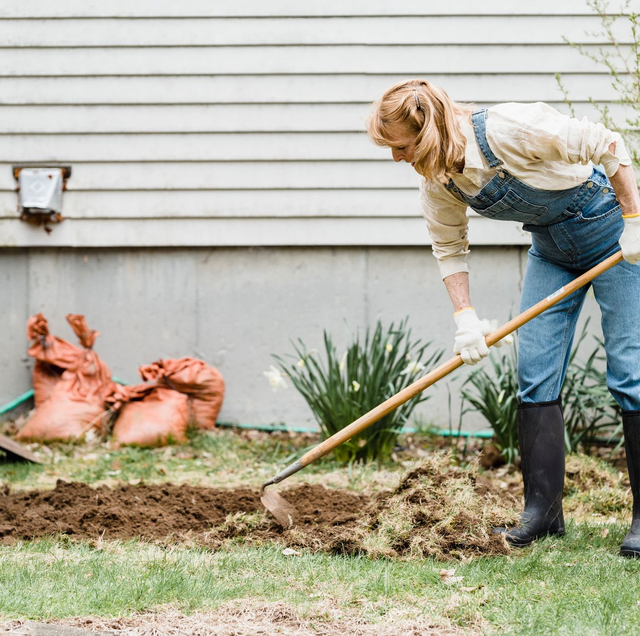
Quick Answer: Topdressing spreads a thin layer of compost or soil blend over turf to smooth minor bumps and feed the roots; it doesn't change the slope. Regrading reshapes the contour underneath. A spot that just looks uneven but drains fine gets topdressed instead.
What Topdressing Actually Changes
Topdressing is a maintenance step, not a construction step. You spread a thin layer of material, usually screened compost or a sand and soil blend, over an established lawn and work it into the grass canopy with the back of a rake or a drag mat. The layer stays thin on purpose: under a quarter inch on the low end, up to around a half inch per pass, building toward roughly an inch total over a couple of seasons. Go thicker than that in one application, and you smother the blades instead of feeding them.
What that layer actually does is improve the top inch or two of soil where the roots live: it adds organic matter, evens out minor surface texture (the kind that makes a mower deck scalp in one spot and skip in another), and can slightly firm a soft patch. What it doesn't do is move dirt. The material settles into the existing surface profile rather than adding volume the way a wheelbarrow of fill soil, dumped and graded, would. Topdressing rides on top of whatever slope and shape is already there.
What Regrading Actually Changes
Regrading works at a different layer entirely. Instead of adding a skin of material on top of the turf, it reshapes the ground itself, the soil contour beneath where the grass sits. That usually means stripping or cutting into the existing sod in the affected area, cutting down high ground or bringing in fill soil to build up low ground, compacting it in stages so it doesn't settle unevenly later, and re-establishing the correct fall (the slope that carries water away from a structure or toward where you want it to go) before turf goes back down as sod or seed.
Where it actually operates: Topdressing works on the top inch or so of existing soil; regrading works on the shape of the ground beneath that soil, sometimes six inches down or more, depending on how deep the low spot or bad slope runs.
That distinction is why you pick one over the other. A problem living in the top inch of soil texture gets fixed by topdressing. A problem living in the shape of the ground gets fixed only by regrading, because you're correcting what's underneath, not the surface.
Why Topdressing a Real Low Spot Fails
This is where lawns end up worse off, and the mechanism explains why the "just add some dirt" instinct backfires on a genuine depression. If a spot is a true low point, meaning water actually collects there, or the grade pushes toward it from higher ground, a thin topdressing layer does not fill that depression the way it looks like it should.
Two things happen. First, a quarter to a half inch of loose material spread across a dip that's two or three inches deep barely changes the depth of the dip at all. Second, that loose organic material sits in the wettest, most saturated part of the yard, which is exactly where it compresses fastest: repeated foot and mower traffic, plus its own weight settling under standing water, presses the layer flat within a season or two. The low spot is back, sometimes deeper than before, because a layer of compressed, waterlogged organic matter now sits on top of the same bad grade, holding even more moisture against the root zone than bare soil did.
If your low spot or slope problem calls for cutting into the yard to regrade, call 811 before any digging starts. The utility locate marks buried gas, power, water, and communication lines so you don't hit one with a shovel or equipment.
That doesn't mean compost or soil blends are bad material; they're the right tool for the job they're built for. Filling an actual depression and correcting a slope are different jobs from smoothing a rough surface, and a thin cosmetic layer can't do the work of a contour correction.
How to Tell Which One Your Spot Needs
A few checks separate a topdressing candidate from a regrading candidate.
Depth of the low spot: Lay a straight board (an 8-foot 2x4 works) or the flat edge of a level across the suspected dip. Daylight of more than an inch or two under the middle of the board means it's deeper than a topdressing layer can reasonably close; a board that rests nearly flush is closer to a texture issue than a depth issue.
Does it hold water, or look uneven: A patch that drains within a normal window after rain and just feels bumpy underfoot is a surface issue. Water still standing well after the rest of the yard has drained is telling you the ground itself is shaped wrong, not just textured wrong.
Direction of flow, not just presence of water: Walk the area during or right after a rain and watch where water actually moves. Sheeting toward a foundation, a patio slab, or a shed instead of away from it is a slope problem underneath, and no surface material changes which way a slope tilts.
Size and location: A handful of small bumps scattered across an otherwise healthy lawn, from settled aeration plugs or minor mower scalping, are classic topdressing territory. One area that's consistently soft, spongy, or sunken every time it rains is a localized grading problem, even if the rest of the yard is fine.
If you check those boxes and land on "bumpy but drains fine," topdress it. If you land on "holds water," "pushes water somewhere it shouldn't go," or "deeper than a board and level can hide," that section needs its grade corrected before anything gets spread on top of it.
Materials and Depth for a Topdressing Job
Screened compost is the most common material for surface smoothing because it's fine, uniform, and free of the clumps or debris that would sit as lumps on the surface. A sand and soil blend, sometimes sold as a topdressing mix, is the other common choice and tends to firm a soft area a bit more than straight compost while still working down into the canopy.
Apply topdressing in thin passes, roughly a quarter inch at a time, then work it down into the soil with a rake or drag mat after spreading. A pass thick enough to bury the grass blades smothers them instead of feeding the roots.
Straight topsoil with no organic matter mixed in: It tends to crust on the surface rather than working down into the canopy, which is why a blend or a compost is usually the better call for topdressing specifically, even though straight topsoil is the right material for filling in a regraded low spot before sod goes back down.
Technique matters more than timing for this step: apply it thin, repeat the pass if the surface needs more correction than one application provides, and water it in so it settles into the canopy instead of sitting on top as a loose layer a hard rain washes into clumps.
What Regrading Involves Beneath the Turf
A proper regrade starts by identifying the actual high and low points with a string and stakes, not by eyeballing it, since a slope that looks fine standing up can still be pushing water the wrong way by an inch or two over a short run. Existing sod in the affected area gets cut and stripped, the soil underneath gets reshaped (cut down where it's too high, built up with clean fill soil, meaning soil free of construction debris, trash, or other contaminants, where it's too low), and compacted in layers rather than dumped and graded in one pass, since uncompacted fill settles unevenly over the following months and can reopen the same low spot it was meant to fix.
Once the contour and fall are correct, finish soil goes down, often a topsoil or blended layer, and new sod or seed is laid over it. That finish layer looks similar to topdressing but does a different job: it's the final cap over a corrected contour, not a cosmetic layer over an uncorrected one.
Combining Both When a Yard Needs It
Plenty of yards aren't purely one or the other: a genuine low spot that needs regrading in one area, and a handful of minor surface bumps elsewhere that only need topdressing. The order matters. Correct the contour problem first, since spreading topdressing across a yard that still has a bad low spot in it just repeats the failure mode above in miniature. Once the regraded area has settled and new sod or seed has established, topdressing the entire yard, including the repaired section, is a reasonable next step to even out the texture. Reversing that order leaves you back at the same low spot, with an added layer of decomposed material on top.
Frequently Asked Questions
Wait until the new sod has rooted or the seeded area has been mowed two or three times, usually four to six weeks depending on grass type and season. Topdressing a freshly regraded, not-yet-rooted section can shift the new soil before roots anchor it, undoing some of the contour work.
A quarter-inch pass worked in with a rake or drag mat and watered in typically settles into the canopy within one to two mowings, roughly one to two weeks in an actively growing lawn. Material still visibly sitting on top of the blades after that means the pass was too thick or wasn't worked down enough.
Treat them as two separate jobs, and pay attention to where they overlap: if the bumpy area sits right at the edge of the regraded footprint, feather the regrade a foot or two past the visible low spot rather than stopping exactly at its edge, so there isn't a sharp seam between corrected and uncorrected ground for the topdressing pass to straddle later. Topdress the bumpy areas (and optionally the whole yard) once the repaired section catches up growth-wise with the rest of the lawn.
It works fine for filling a regraded depression before sod goes down, but bagged topsoil is often heavier in clay than a purpose-made topdressing mix, and clay-heavy soil crusts hard once it dries. If topsoil is what you have on hand for a surface pass, screen it through quarter-inch hardware cloth first or cut it with an equal part of coarse sand to keep it from caking on top of the blades.
The turf directly in the regraded footprint gets stripped away as part of reshaping the soil, so that specific section needs new sod or seed afterward. It doesn't require redoing the whole yard, only the footprint of ground actually reshaped. The stripped sod itself is sometimes set aside and relaid over the finish soil once the contour is corrected, rather than replaced with new sod, if it came up in workable pieces and the delay between stripping and relaying stays short enough that it doesn't dry out.
Watch it during an actual rain rather than judging by eye on a dry day. Set two stakes with a string and a line level between the suspected high point and the structure: a string that stays level or dips toward the structure, instead of rising away from it, means the ground has a backward or flat grade in that stretch, which is a regrading fix, not a surface one.
A bump and a depression can look almost identical from a standing height. The only real way to know is to get down and check the depth and the drainage directly, the same way pressing a palm flat across a patched drywall seam finds the ridge a paint job hides from across the room. Spend the ten minutes on the board-and-level test, and the rain-day walk before deciding which job you're signing up for.
Get a grading assessment before you spread anything — Polk Services LLC will tell you straight whether your yard needs a topdressing pass or a real regrade. Polk Services LLC serves Lakeland, Highland City, and Mulberry. Call (863) 344-5806.
