

What Disqualifies Furniture from Charity Donation Before Pickup
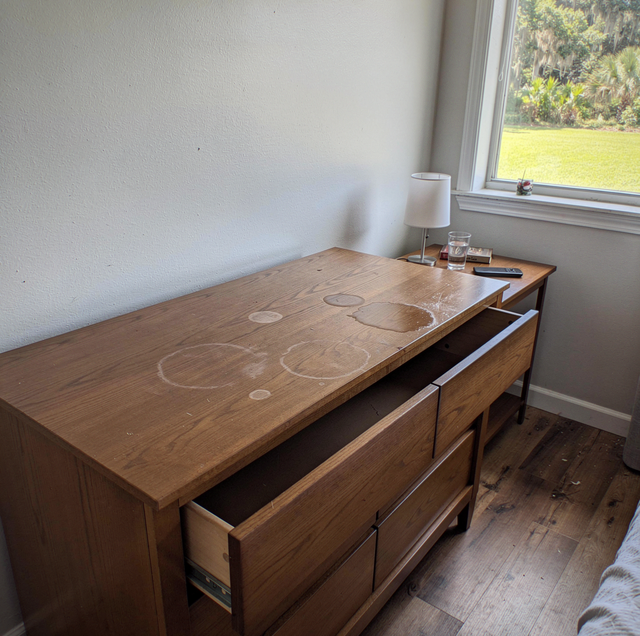
The dresser goes back on the truck. Or it never comes off in the first place: A driver takes one look at the water rings across the top, opens a drawer that sticks halfway, and shakes his head before it's even carried to the door. A resale donor has a narrower bar than "still usable," and knowing where that bar sits before pickup day is the difference between a donation and a piece that rides back to where it started.
A resale or consignment intake counter runs on one question, and it isn't "Does this still work?" It's "can this be put on a floor and sold to someone who's never seen it before?" Those aren't the same test. A chair with a wobbly leg or a cabinet with a deep gouge across the top might be perfectly fine for another year of use at home, and still get turned away at that counter, because a buyer walking a showroom judges on sight and on trust, not on context. Below are the specific conditions that trip that wire, and the mechanism behind each one. Four of them are what gets flagged directly during a walk-through here; the rest come up often enough at general resale intake to be worth knowing too.
Frame and Structural Damage
A wobble in a dresser, table, or cabinet frame is a different problem depending on what the piece is built from. Solid wood joints separate with age (a loosened mortise, a cracked corner block), and that kind of looseness shows up the moment someone racks the piece side to side during a walk-through.
Particleboard and engineered-wood carcasses fail in ways that are harder to spot and harder to reverse. Once moisture reaches the core, whether from a leaking planter left on top or a spill that soaked into a shelf, the material swells and loses the density that held its screws and fasteners in place. The surface can still look intact while the structure underneath has already given out. A drawer box built this way might slide fine at first glance and split the first time it's loaded with weight.
Verdict: A resale donor won't put a piece on the floor that might fail under normal weight or use. That risk doesn't disappear once the piece is sold; it just moves to someone who had no way to see it coming. Pieces with frame damage go to standard disposal instead.
Surface Staining and Discoloration
Not every mark on a piece of furniture works against it. Light surface wear, a faded arm on a sofa, a worn patch on a wood tabletop, reads as normal use and doesn't disqualify anything on its own. Significant staining is a different category, because it isn't sitting on the surface. On upholstery, a stain that's worked into the fibers has usually gone through the fabric and into the padding underneath. On finished wood, a dark blotch or heavy discoloration means the same thing: it's not just resting on the surface anymore.
Both cases leave a resale donor with an identical problem: the mark is visible at normal viewing distance, and a buyer forms a judgment about the whole piece from that one spot in the first few seconds of looking. A showroom floor runs on first impressions, and a resale donor isn't in a position to explain a stain away to every person who walks past a table or a couch.
Verdict: Significant staining fails the eligibility bar on sight, regardless of how the rest of the piece holds up structurally. It gets flagged for standard disposal rather than donation.
Pet Damage to Wood and Upholstery
Pet damage isn't one of the conditions this walk-through flags on its own, but it comes up often enough at general resale intake to be worth explaining. Unlike a stain, it isn't discoloration; it's physical loss of material. Claw marks that have gone past the surface of a fabric leave punctures, not just wear, and a punctured cushion cover exposes the foam underneath. Chewed table legs and chair rails lose actual wood at the corner, not just finish. Scratched wood surfaces near a door or a crate area often go deep enough to catch a fingernail.
The upholstery version of this compounds a second problem. Foam padding is open-cell, meaning it's full of tiny interconnected pockets rather than sealed bubbles, so once a puncture opens a path into it, the foam holds on to whatever gets in, whether that's moisture, dander, or odor. A torn cushion isn't just a cosmetic flaw at that point; it's an entry point.
Most resale programs treat visible pet damage, whether it's a chewed corner or a clawed cushion face, the way they treat a deep stain: the material loss underneath can't be presented as sale-ready.
Persistent Odor
Odor gets tested at the door, not from a description over the phone. The crew doing the walk-through will get close enough to a piece to smell it and flag it, the same way a customer on a showroom floor will before they'll consider buying it; deciding whether that's ultimately disqualifying is the donor's call.
The upholstery mechanism is the same open-cell foam issue that applies to pet damage: it holds odor rather than letting it pass through, which is why a couch that spent a season in a damp garage can carry a mildew smell long after it's been moved somewhere dry. Pet urine soaked into cushions or wood joints behaves the same way, sitting in the material rather than on it.
A persistent odor disqualifies a piece, regardless of how it looks; nothing sells if a customer smells it before they see it.
Pest History
Pest history is judged differently than the other categories on this list, because it isn't about the condition of one piece in isolation. A resale donor who takes in a piece with any history of infestation, active or past, assumes the risk of spreading that problem to every other item stored or displayed near it. There's no practical way to verify that a past problem is fully resolved, so the walk-through here flags any sign of pest history and routes the piece straight to standard disposal rather than trying to judge severity on the spot.
Verdict: Pest history disqualifies a piece outright, regardless of how clean or sound it otherwise looks.
Isolate or bag a suspect piece before it's carried back through the rest of the house. Keeping it separate limits how far a pest problem can spread before pickup day.
Missing or Non-Original Hardware
Furniture hardware isn't a generic part. This isn't one of the core conditions the walk-through here flags on its own, but it's a common reason resale intake in general turns a piece away. Drawer glides, cam locks, bed rail bolts, and decorative pulls are often designed to fit a specific piece from a specific manufacturer, sometimes for a single production run. When that hardware goes missing, whether it was lost during a move or removed and never replaced, there's no catalog to order a replacement from. A drawer that won't close because its track is gone, or a bed frame missing the hardware that connects rail to headboard, isn't a piece anyone can put back into working order at intake.
This is a different problem from cosmetic wear on hardware that still functions. A tarnished pull or a scuffed hinge doesn't disqualify anything; a missing or broken piece of hardware that the item needs to function does. Unsellable without a sourceable replacement means the piece doesn't qualify for most donation channels, and it typically goes to standard disposal instead.
Broken Mechanisms and Moving Parts
Some furniture is only furniture when its mechanism works. A recliner has to recline. A sofa bed has to fold out. A height-adjustable desk has to hold its position once it's raised. This isn't one of the conditions flagged at the walk-through here, but resale intake broadly treats a disconnected, seized, or broken mechanism the way it treats frame damage: the piece stops being what it's supposed to be, even if every other part of it, the frame, the fabric, the finish, is in good condition.
This category is sometimes missed because the failure isn't always visible at a glance. A recliner can look correct sitting still and only reveal a broken mechanism when someone tries to use it. That's why a real intake process includes actually operating anything with a moving part rather than just inspecting it visually.
A broken mechanism disqualifies a piece on its own, separate from how the rest of it looks or holds together, because a donor needs the piece to work as advertised, not just sit still and look the part.
Most of what disqualifies a piece gets caught early, during the walk-through before anything gets carried out. That's also where donation-eligible pieces get flagged so the donor can route them toward channels like a Habitat for Humanity ReStore, while pieces that don't clear the bar go to standard disposal instead.
Frequently Asked Questions
Usually, yes. A repair that's visible at the joint, such as glue squeeze-out along the seam, clamp marks in the wood, or a patch of filler that doesn't match the surrounding grain, signals that the joint has already failed once. A resale intake reads that as a stress point that's already proven weak, not as a fixed problem, since a glued repair rarely restores a joint's original strength.
It can. A water ring means the finish's seal has already broken in that spot, even if the mark itself looks faint. Once the seal is broken, the underlying wood is exposed to the next spill in a way sealed wood isn't, so the ring is treated as a functional failure of the finish, not just a cosmetic mark.
It's a related but separate failure. Veneer bubbles or lifts when the adhesive bond holding the thin wood layer to its substrate breaks down, usually from heat or moisture, and that exposes the substrate underneath. It fails intake for a different mechanical reason than a swollen particleboard core, even though both start with moisture exposure.
Signs like frass, which are small pest droppings, or shed casings tucked into seams, corners, or crevices count as evidence on their own, even with nothing currently moving. Intake treats that kind of physical evidence as seriously as an active sighting, since both point to the same underlying history.
Yes, though the specifics are different from a drawer pull. A stripped socket that no longer grips a caster stem, or a wheel assembly that's missing its mount, still counts as hardware the piece needs to function. A substitute caster has to match both the stem diameter and the load rating the original was built for, which is why grabbing "any caster" from a hardware store rarely solves it.
It can, even without visible damage. Cam locks and dowel joints seat into holes drilled in particleboard, and each time a piece is taken apart, that bore gets fractionally larger. Rebuild it enough times and the joint stops holding tension the way it did new, so a piece that's been broken down and reassembled repeatedly can fail a stability check at intake even though nothing looks broken to the eye.
Two piles, sorted before the truck loads — what a donor will take, and what was never going to clear intake. Polk Services LLC serves Lakeland, Highland City, and Mulberry. Call (863) 344-5806.
