

Why Peeling Bonded Leather Furniture Can't Be Fixed
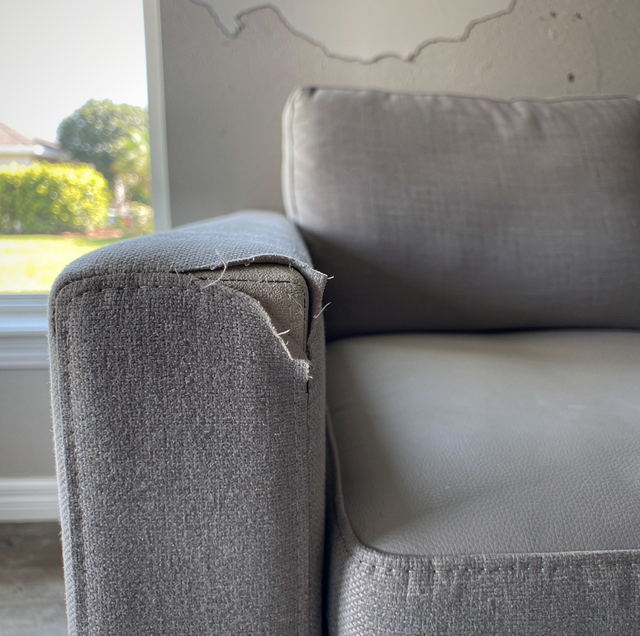
Bonded leather is not a hide with a scratch or a worn spot. It is a manufactured sheet built in layers: a fabric backing, a layer of shredded leather fiber and binder pressed onto it, and a polyurethane skin embossed with a grain pattern on top. Genuine leather ages as one material. Bonded leather is three different materials held together by adhesion, and adhesion is the only thing keeping the top layer attached to the layers underneath.
How Bonded Leather Is Built, Layer by Layer
Every piece of bonded leather furniture starts as a manufactured composite, not a cut and tanned hide. The sheet is produced in one continuous run, cut to pattern pieces the same way a fabric bolt would be, then sewn and stretched over the frame like any other upholstery material. Knowing what's actually stacked under your hand explains why peeling behaves so differently from ordinary wear and why there's no surface-level fix waiting on the other side.
The backing you never see: The base layer is a fabric backing, similar to the material that sits under many upholstery materials. Ground and shredded leather fiber, held together with a binder, gets pressed onto that fabric to give the sheet some of the density and feel associated with real hide. You never touch either of these two layers directly.
The surface you touch: On top of that base sits a polyurethane skin, embossed with a grain pattern that mimics the texture of a full hide. This layer does all the visual work: the color, the sheen, the grain lines that make a sofa or chair read as leather from across a room. It is also the layer with the shortest working life of the three, and it's the one that flakes.
Once a piece is actively peeling, bag or sheet it before it leaves the room. Loose polyurethane flakes shed easily during a carry, and containing the piece at the doorway keeps them off the floors leading out of the house.
What Breaks Down the Bond Between the Layers
The polyurethane skin isn't glued on once and left alone. It's held to the fiber-and-binder layer by an adhesive bond that has to survive years of contact, and several ordinary conditions work against it at the same time. Body heat and skin oils where you sit and rest your arms soften that bond over time. Sunlight through a window does the same from above. Humidity in the room works on it from the inside. None of these are unusual conditions for a living room; they're just conditions bonded leather's adhesive layer wasn't built to outlast. No single one of them causes the failure on its own. It's the combination, applied continuously for as long as the piece sits in a lived-in room, that eventually overwhelms the bond.
The result is the same kind of failure you'd see in a non-stick coating that starts curling up at the edge of a pan, not because the metal underneath wore through, but because the bond between the coating and what's under it gave way first.
How the Failure Spreads from Wear Points First
Peeling doesn't appear evenly across a piece. It shows up first at seat fronts, arm tops, and headrests, the spots that take the most direct and repeated contact. Once the bond fails at one of those points, the polyurethane skin around it starts carrying more mechanical stress than it did before, since the material next to a lifted edge flexes differently than a fully bonded surface does. That stress pulls the failure outward into the surrounding area rather than letting it stay contained.
This is also why a piece can look almost new one season and visibly compromised the next. The breakdown was happening beneath the surface before it ever became visible, and once it reached the surface, it didn't slow down on its own.
Why the Surface Cannot Be Bonded Back into Place
A topical repair product goes on top of the same polyurethane layer that's already separating from what's under it. Whatever gets applied bonds to an unstable surface, not to the stable fiber-and-fabric base underneath, so it inherits the same adhesion problem that caused the original failure. That's the mechanical reason a patch tends to lift again at the same spot: it never had a sound layer to hold onto in the first place.
Once delamination has started, there isn't a fix that restores the original bond between the polyurethane skin and its backing. The adhesion that held those two materials together was a manufacturing step, not something that can be recreated on a finished piece of furniture sitting in a living room.
Why It Gets Mistaken for Real Leather until It Fails
Bonded leather is usually sold and described as leather, sometimes with the word "bonded" in small print and sometimes without it. At the point of purchase, the frame feels solid, the cushions feel right, and the surface looks like a hide from arm's length. There's nothing about the piece that signals it's a composite material with a limited working life, and nothing in how you use it changes that. Most owners find out which material they actually own only once the surface starts lifting, which is exactly the moment it's too late to matter for how carefully the piece was treated up to that point.
What a Peeling Surface Means for Resale and Donation
The same intake bar that screens general furniture donations for staining, frame damage, and pest history never gets the chance to apply, because a delaminating surface fails on its own terms before any of that gets weighed. Peeling bonded leather isn't a stain sitting on top of sound material. It's the material itself coming apart, and the fabric backing exposed underneath has no finish at all, so it starts taking on soiling the moment it's uncovered.
Donation eligibility is determined during an in-person walk-through, not guessed over the phone. A delaminating surface takes that option off the table before the piece is ever loaded for disposal.
A Sound Frame Does Not Change the Outcome
It's common for the frame and cushions beneath a peeling piece to remain structurally sound, and that's exactly what makes the failure so frustrating. A hardwood frame, good springs, and solid cushion foam don't fail on the same timeline as a polyurethane skin, so it's entirely normal for everything holding the piece together to still be in working order while the surface has already given out. Nothing about that soundness changes what's happened to the surface material, and the surface is what determined that both the repair and donation options were closed. What's left, once those two paths are ruled out, is standard disposal for the piece as a whole, frame and all.
Frequently Asked Questions
Only in one narrow case: when a protective topcoat on genuine leather gets damaged, and even then the grain and texture underneath stay intact because it's still leather. Bonded leather doesn't have that fallback. Underneath its polyurethane skin sits a fabric layer, not leather, so once the surface lifts, there's no leather grain left to fall back on.
No. Pulling a cover on and off repeatedly flexes the same lifted edges that are already separating, working the bond loose faster rather than protecting it. Where the polyurethane skin is already gone, the exposed fabric backing has no finish of its own, so a cover pressed against it traps moisture directly against material that was never meant to be exposed. A cover can temporarily hide flaking; it doesn't slow what's happening underneath.
Often just the visible parts. Manufacturers commonly use bonded leather only on the seat, arms, and other surfaces buyers touch and see, then finish the back, sides, and underside in vinyl or plain fabric. That's why peeling often appears only on the front-facing panels, while the hidden surfaces look untouched.
In theory, but bonded leather is manufactured and cut from a single continuous sheet, and matching a replacement panel to the original color, grain, and batch is difficult since production runs vary. In practice, this usually means reupholstering the whole piece in a new material rather than patching one panel to match what's already there.
Ottomans, headboards, dining chairs, and office chairs are common candidates, since bonded leather is a manufactured composite rather than a cut hide and covers a similar surface area. Any piece built for a leather look without a hide is a reasonable place to expect it, and each one fails the same way once the coating starts lifting.
Yes. Loose polyurethane flakes transfer easily to hands and clothing during lifting and carrying, and a piece that's actively peeling tends to leave a trail of small flakes along its path from the seating area to the door. That's worth planning around before moving day, not something to discover mid-carry.
Sofa shedding flakes every time someone sits down? — Skip another failed repair attempt and get it hauled out for good. Polk Services LLC serves Lakeland, Highland City, and Mulberry. Call (863) 344-5806.
