

Why Crushed Concrete Wins on a Long Rural Driveway
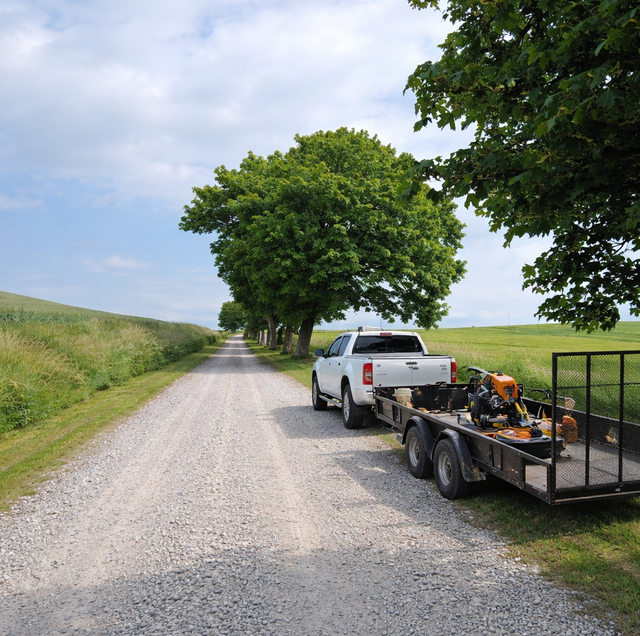
A short driveway that sees an occasional drip from one car is a different problem than a quarter-mile rural run that doubles as a parking spot for a work truck, a trailer, or a generator on a job site. On a long driveway, the total material volume is bigger, the sun exposure runs longer without a canopy break, and the odds that something with a fuel tank or an oil pan sits on the same stretch of surface for hours at a time go up, simply because there's more surface for it to sit on. Recycled concrete aggregate (RCA), the angular rubble left over from demolished slabs, sidewalks, and foundations, has one property that matters more the longer a driveway runs: it carries no asphalt binder at all, unlike millings. That difference, and what it means at the larger scale a long rural driveway represents, is what this article works through, separate from the general side-by-side material comparison covered elsewhere, and separate from material selection for sandy subgrade, which weighs a different set of criteria entirely.
More Surface Means More Chances for a Fuel or Oil Drip
RCA carries no petroleum-based binder, so a fuel or oil drip has nothing to soften the way it can on an asphalt-bound surface. On a short driveway, that's rarely a deciding factor; one or two likely parking spots don't add up to much exposure either way. A long rural run changes the math, since it usually has several separate places a fuel tank or oil pan could sit for hours: a spot near a barn or shop, a gate where a truck idles, a stretch used to stage a trailer or generator for a job. Each one is its own potential exposure point spread across more total surface than a short driveway has to begin with. More potential drip zones is a scale problem specific to a long run, and it's the reason the binder question carries more weight here than it would on a driveway a fraction of the length.
More Unshaded Surface Means More Total Heat Exposure
RCA has no asphalt binder to soften or turn tacky as it heats up, unlike a bound surface that can develop that tackiness in sustained peak heat. A long rural driveway is usually the least-shaded stretch of ground on the whole property, running past open fields or pasture rather than under a tree canopy the way a short approach near the house typically does, so more of the total surface spends the day in direct sun. RCA also runs lighter in color than dark millings, reflecting more solar heat rather than absorbing it, an effect that matters more over a long, fully exposed run than on a short, shaded approach where the surface barely warms up either way.
A dark, unshaded millings surface can get hot enough under a full Central Florida summer sun to burn bare feet or a dog's paws within seconds. Press the back of your hand to an exposed stretch before letting kids or pets cross it barefoot during peak afternoon heat.
Buying at Scale Is Manageable With the Right Supplier Checks
Building a long driveway takes far more total material than a standard residential approach, often several times the volume, which usually means multiple deliveries rather than one truck. That's a bigger logistics question than a short driveway ever raises, and it's a manageable one once a few supplier questions get settled up front, which is the last piece of why RCA fits a long rural run well.
Screening quality: RCA comes from demolished concrete, and that concrete often contained rebar, wire mesh, or embedded anchors. A supplier that screens loads well removes those fragments, along with stray drywall, wood, or brick, before the material gets crushed to size. A few missed fragments in a small load are a minor annoyance; across the much larger total volume your driveway requires, even a small, consistent miss rate in screening adds up to more actual debris spread across the finished surface.
Staging space: a rural property usually has the room a job like this needs, somewhere to stockpile a multi-load delivery before it's spread, which a tighter suburban lot often doesn't. Staging the material in one place and spreading it in sections, rather than coordinating several trucks to dump and spread the same day, is often the more practical approach on acreage, and it's worth planning that staging area and how it will be regraded or cleared afterward before the first load shows up.
Matching future top-offs: a long driveway built from RCA will likely need a top-off at some point down the line, and sourcing a comparable gradation and color years later is easier when the original supplier and general source are on record, which is worth noting at the time of your original order rather than trying to reconstruct later.
A little supplier vetting at the start, confirming screening practices and settling on one source for the whole run, is what keeps a large RCA order from becoming a headache partway through the job.
Frequently Asked Questions
Not meaningfully. Both a fast spill and a slow, repeated drip land on the same surface; RCA has no binder to soften in either case, while an asphalt-bound surface's vulnerability stems from the same softening mechanism, whether the fuel arrives all at once or a little at a time. The bigger practical difference is how far a fast spill spreads before it's noticed, since it immediately covers more surface area than a drip does, regardless of the material it lands on.
It shows up most clearly in surface temperature if you check with a bare hand or bare feet in peak summer sun, where a dark, unshaded surface runs noticeably hotter to the touch than a lighter one nearby. Over the life of the driveway, the practical effect is less about a single hot day and more about avoiding the tackiness an asphalt-bound surface can develop under sustained peak heat, which doesn't apply to RCA at all since there's no binder to respond to temperature.
Not differently in method, just in scale. Spot-checking one or two handfuls from a small residential load is usually enough, but a load large enough to cover a long driveway is worth spreading that same visual check across several points in the pile rather than one corner, since a supplier's screening consistency can vary within a single delivery, not just between separate deliveries.
Yes, and it's a common way to handle a long rural driveway that has both an open, unshaded stretch and a shorter, shaded section near the house. Running RCA through the open, higher-exposure length and reserving a millings finish for a shaded approach near the house, where heat and fuel exposure matter less, lets each stretch use the material better suited to its own conditions rather than picking one material to compromise across the whole run.
It doesn't have to, but it holds up better visually if it does, or if the loads get blended at the point of spreading rather than laid one after another as separate sections. Concrete from different demolition jobs can vary slightly in tone and particle mix, and that variation shows up as a visible line across a long, open driveway more than it would on a short one where the whole surface is seen at once.
Mainly ground compaction and vegetation damage under the stockpile itself if it sits in one spot for more than a few days, since the weight of a large pile compacts whatever it's sitting on and blocks sunlight to anything growing underneath. Choosing a staging spot that's already bare ground or part of your future driveway footprint, rather than an active lawn area, avoids a second cleanup after the main material is spread.
Get RCA sourced and staged right for a long rural driveway — talk to Polk Services about material volume, screening, and delivery planning for acreage-scale jobs. Polk Services LLC serves Lakeland, Highland City, and Mulberry. Call (863) 344-5806.
