

Do Termites Eat Pressure-Treated Wood? What the Shell Misses
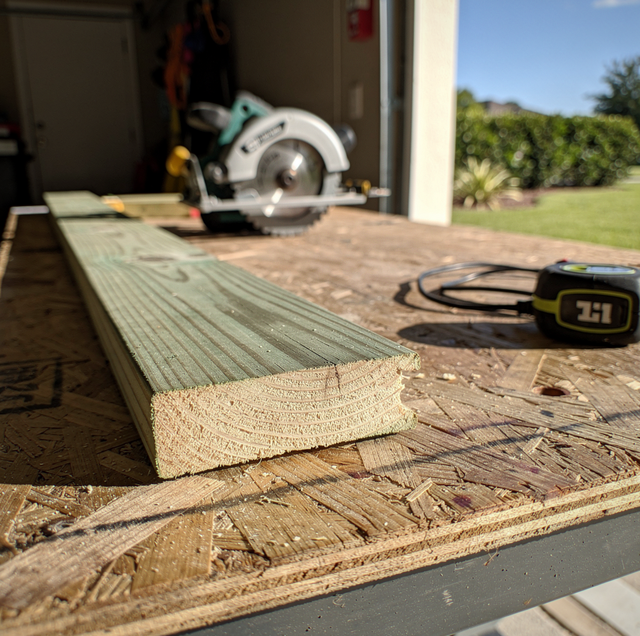
Quick Answer: Pressure-treated wood is not immune to termites or decay. The preservative in the outer shell makes wood less appealing as food and harder for fungi to break down, but it does not treat cuts, drilled holes, or the untreated core beneath it.
A pressure-treated deck board is ordinary lumber carrying a shell of preservative driven in at the mill, over a core the chemistry may never fully reach. What decides whether that shell holds up is less its thickness than what the preservative was formulated to do, because it is aimed at two organisms with two different reasons for being in the wood. One eats wood as food. The other breaks wood down chemically in order to live in it. Pressure treatment does not answer those two the same way, and the places where it answers neither are not the same places either.
Preservative Chemistry and What It Targets
Today's residential pressure-treated lumber uses copper-based preservatives. Copper compounds work as both a fungicide and an insecticide: they interfere with the biological processes fungi need to break the wood down, and they make the wood chemically unappealing to insects that would otherwise feed on it. That second point matters more than it sounds like it should. Making a food source unpalatable is not the same as making it inedible. An organism with no better option, or one that only needs to pass through wood rather than consume it as food, is not stopped by unpalatability the way decay is stopped by a fungicide. The preservative changes the calculation these organisms make. It does not remove wood from the environment or make a board immune to either process; it makes both slower and less likely under normal conditions.
Subterranean Termites and Treated Lumber
Subterranean termites live in colonies below ground and depend on soil moisture to survive; a worker that dries out for more than a short period doesn't make it back to the colony. That dependency also drives their behavior: to reach a wood source that isn't directly in contact with soil, subterranean termites will build outward from the ground, using saliva and soil to form a protected path to the wood. A copper-treated shell does not stop that behavior. What it changes is what happens once a termite reaches the board: the treated surface is a poorer food source, and a colony under no pressure to feed will often move on to something easier. A colony with fewer options, or one that reaches the board through a spot where the shell isn't intact, has less reason to move on. Treatment shifts the odds in the homeowner's favor. It does not remove the pathway that brought the termites to the wood in the first place.
Fungal Decay and What It Needs to Take Hold
Wood-decay fungi need three things to establish: sustained moisture inside the wood, oxygen, and a temperature range that ordinary outdoor conditions satisfy for most of the year. Take any one of those away and decay stalls. A board that dries out between rains, even if it gets wet often, isn't hosting the same process as a board that stays saturated because water has nowhere to drain. The copper-based fungicide in a treated shell works against this by interfering with the fungus's ability to use the wood as it tries to establish, which is why a properly treated, well-drained board resists decay for years longer than untreated wood in the same spot. That resistance is concentrated where the preservative penetrated. Fungal spores don't need much of an opening: a small pocket of exposed, untreated fiber that stays wet long enough is enough for decay to start locally, even inside a board whose outer faces are still sound.
Where Treatment Never Reached
Every board leaves the mill with its outer shell treated and its interior essentially untouched. Anything that happens to the wood after that point, on site rather than at the mill, can expose the untreated interior. A board cut to length, a notch cut for a post, a hole drilled for a bolt, or a screw driven in for a fastener all expose wood from below the treated shell, wood that never received preservative, and a cut face stays that way. Framing hardware carries the same issue from a different direction: every joist hanger, ledger bolt, and structural screw creates a penetration into the core, and the metal fastener itself doesn't treat the wood around it. None of this means the wood is compromised the moment it's cut. It means the shell that was doing the protecting has a gap at that specific point, and that gap behaves like untreated wood because, chemically, it is untreated wood.
Ground Contact and Why It Changes the Odds
Lumber rated for ground contact carries a heavier dose of preservative than lumber rated for above-ground use, because direct contact with soil changes the odds for both organisms discussed above. Soil holds moisture against the wood far more consistently than open air does, satisfying the sustained-moisture condition fungal decay needs for longer stretches at a time. Soil is also where subterranean termite colonies already live, so a post or board touching the ground is a shorter path for termites than a board that only gets wet from rain and has to be reached from several feet away. A deck built with above-ground-rated material set into or against the soil, whether at a post base or a low stringer, is carrying less preservative than the exposure calls for. The rating on the lumber and the way it was installed don't always match, and when they don't, the mismatch occurs exactly at the points where moisture and colony access are both working against the wood at once.
Damage found in a deck post, beam, or joist is a structural finding. Keep people and furniture off the platform until someone qualified has inspected it, rather than probing the wood or loading the deck to test how it holds up.
What a Finding Means for an Aging Structure
Termite activity and fungal decay both compound a structure's age in the same direction: neither heals, and both continue working as long as the conditions that support them are present. A deck that has already stood through years of rain and humidity has had more opportunities for a shell gap, an untreated cut end, or a ground-contact mismatch to let one of these processes start, and once started, neither reverses on its own. This is different information than water staining or a soft spot noticed by touch. It speaks to what has been happening inside the wood, not just on its surface, and it changes what a removal crew deals with once the material starts coming apart. Framing, ledger connections, and post bases carry the structural load of a deck, and either process reaching those members changes what a demolition looks like: more material that won't hold together as a unit, and more that has to be handled as debris rather than dismantled as lumber. Identifying which of these is present and treating it is separate work from what happens after removal begins, and it's handled by a different trade.
Frequently Asked Questions
Under the right conditions, yes. If a piece of wood stays wet enough for long enough on its own, a colony can establish what's sometimes called an aerial or secondary colony entirely above ground, cut off from the original soil colony, as long as that wood keeps supplying moisture the colony would otherwise get from soil.
Not on the insect side. A stain or sealant is a surface coating designed to resist moisture and UV, applied over a shell that already carries the preservative; it doesn't add a fungicide or insecticide of its own, so it changes how the wood weathers without altering what termites or decay fungi encounter chemically.
Not in the direction people tend to assume. The preservative is driven in under pressure at the mill and fixed in the wood it entered, so a board leaves the yard carrying the whole of the protection it will ever have; nothing about weathering, age, or upkeep adds to that or moves it into wood that never received it. What changes over a deck's life is how much unprotected wood has been exposed around it.
Yes, and one can make the other more likely rather than less. Wood that fungi have already softened holds moisture more readily than sound wood, and that retained moisture is also what draws subterranean termites toward a spot, so a section already affected by one process is not protected from the other.
No. Ground-contact ratings account for species that need soil moisture to survive, which applies to subterranean termites but not to drywood termites, a separate species that can establish in dry wood above ground without any soil connection at all, so a ground-contact rating isn't protective against that type.
It can. Chromated copper arsenate, an older preservative formulation, was phased out of residential use at the end of 2003, so lumber installed before then may carry a different chemical treatment than the copper-based preservatives used in new pressure-treated lumber today.
When the framing is past saving, we take it out — book a free removal estimate. Polk Services LLC serves Lakeland, Highland City, and Mulberry. Call (863) 344-5806.
