

Washer and Dryer Removal Details That Stop a Pickup Cold
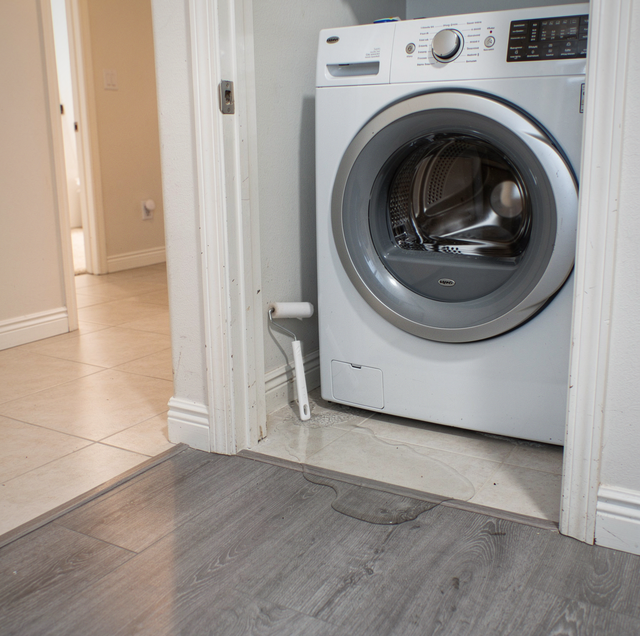
A washer and dryer pickup fails less often due to size than due to what nobody checked in advance. The truck arrives, the crew steps inside, and one detail stops the job cold — water still sitting in the drum, a gas line still connected, an opening that measures wrong once the door frame is accounted for. None of it is obvious from a phone call. Each one is easy to confirm ahead of time, and each one, left unchecked, is the difference between a machine that leaves and one that doesn't.
Water Still Sitting in the Washer's Drum
A washer holds water after its last cycle whether anyone notices or not. The drum, the pump, and the hoses running to it keep whatever didn't make it down the drain, and none of that shows itself until the machine tips. A front-loader adds a second pocket, too: a filter or drain access near the base that traps its own share separate from the drum. Tilt either machine toward a dolly or angle it through a doorway, and that water goes wherever gravity takes it, onto the floor it's leaving, the hallway it's crossing, or the stairs in between.
This is the detail that stops more pickups than any other, because it's invisible from outside the machine and easy to assume is someone else's problem. It isn't part of what the crew handles on site. Confirming a washer is actually empty falls to whoever ran it last, and it needs to be settled before the truck is on its way, not discovered once the machine is already tilted.
A washer that hasn't fully drained can release water the moment it's tilted, soaking the floor underneath and turning a dry hallway into a slip risk for the crew and anyone walking through it.
An Opening Measured for the Room, Not the Machine
A laundry closet gets measured by the room, and the room usually isn't the problem. The opening leading into it is. A bifold door frame carries hardware, hinges, and a center guide that eat into the clear width, so a doorway that looks wide enough by eye can end up narrower than the machine once that hardware is factored in. The same goes for any opening where trim, a jamb, or a folded door panel sits inside the number someone estimated from across the room.
This measurement has to be taken before pickup day, not on it. Whoever schedules the removal needs the actual clear width of the opening the machine has to pass through, not the width of the closet, not the width of the door itself, but what's left once everything mounted to that frame is out of the way. Get that number wrong, and the crew finds out at the doorway, with nowhere to go but back out.
Measure the narrowest point in the path, including any door hardware or trim, rather than the widest part of the room — that's the number that decides whether the machine clears.
The Gas Supply That Hasn't Been Shut Off
What the crew manages on site stops at pulling a plug or switching off a valve that's already within reach. Once a job calls for opening a gas line, running new wiring, or working on supply plumbing, that work belongs to a licensed trade and is arranged separately from the pickup itself.
That distinction matters most with a gas dryer because a unit still tied to its gas line won't leave that day, no matter how clear the path to the door is. Settling it means the gas connection has to be already closed before the pickup gets scheduled, not something to work out after the truck has already arrived.
Vent Ductwork Left Fastened to the Wall
A dryer's vent duct connects in two places, not one: at the back of the machine, and again where it meets the wall or the floor. Freeing the machine end doesn't affect the far end. If that second connection is still fastened when the truck arrives, the dryer is still tied to the wall it's supposed to be leaving.
This one gets missed because it looks finished from the front. The duct hangs loose off the back of the machine, and it's easy to assume the whole run is clear. Whoever preps the space for pickup needs to check both ends, not just the one that's easy to see, and have the duct fully detached ahead of time.
A Carry That Nobody Flagged in Advance
Not every laundry setup sits at ground level with a straight shot to the door. A second-floor laundry room, or one built over a garage, turns the job into a stair carry instead of a simple roll to the truck. A machine set up higher than the standard floor height adds to the same problem: there's more distance to bring it down, and more of that distance occurs before the crew ever reaches level ground.
None of that makes a pickup impossible, but it changes what the visit actually requires, and a crew that shows up expecting a simple ground-floor room is working from the wrong picture. Whoever books the pickup needs to describe the actual layout, stairs, a raised floor level, an over-garage room, so what shows up at the door matches the job that's waiting behind it.
One Machine Clears, the Other Does Not
A washer and dryer sold as a matched pair aren't always built to the same depth. One can be a few inches shallower than the other even though they were bought together and sit side by side in the same laundry room, and that difference stays invisible until both machines are lined up against the same doorway. The one that clears goes. The one that doesn't stays exactly where it was.
Assuming a set behaves like a single unit is the mistake that causes this one. Each machine needs to be checked against the opening on its own, not judged by whichever one happens to be standing in front when someone eyeballs the doorway, because the pair can split into a finished job and an unfinished one by a few inches.
Line up all six of these and the pattern underneath them is the same: nothing here is complicated on its own, but each one is a fact that has to be confirmed before the truck moves, not discovered after it's already there. A pickup like this runs the way a pre-flight check does: one unresolved item on the list holds up the entire departure rather than just slowing down the parts around it. Settle each detail ahead of time, and the visit is exactly as simple as it should be.
Frequently Asked Questions
Yes, if they're still on hand. Refitting the transit bolts locks the drum against the frame, as it was for the trip from the store, which prevents the drum from swinging while the machine is carried and loaded. A washer without them can still be picked up, but the bolts are cheap insurance against a jolt doing damage a braced drum wouldn't take.
Yes. Flexible foil compresses and kinks more easily than rigid metal, so a run that looks intact can still be pinched enough to strain the fastening at the wall. A long run with more than a couple of bends sometimes adds a booster fan partway through, and that fan is its own connection to account for, not just the two ends of the duct.
Usually, if the shutoff valves are within reach and turn freely. A valve that's corroded, stuck, or hidden behind the machine can turn a two-minute step into the reason a pickup runs long, so it's worth testing both valves before the truck is booked rather than during the visit.
Yes. The rubber boot around a front-loading door can hold a surprising amount of water in its folds even after the tub and pump have been confirmed empty, and it's easy to miss because nobody thinks to check it. Wiping it out before the truck arrives takes a minute and rules out one more surprise.
The drain hose is typically secured into a wall standpipe with a strap or clip, separate from the hot and cold supply lines that feed water into the machine. It only carries wastewater out, and it's the piece most likely to still hold a little standing water even after everything else looks empty.
Not necessarily. A machine that's sat unused can still hold water in the pump or trap from its last cycle, since that water doesn't evaporate just because the machine hasn't been turned on since then. Time sitting idle isn't the same as being confirmed empty, and only checking settles which one is true.
If water is still in the drum or a doorway nobody's measured, that could be the thing that stops the truck — a quick check now keeps the crew that shows up matched to the job they're waiting for. Polk Services LLC serves Lakeland, Highland City, and Mulberry. Call (863) 344-5806.
