

What Heat and Humidity Do to Upholstery Foam and Frames
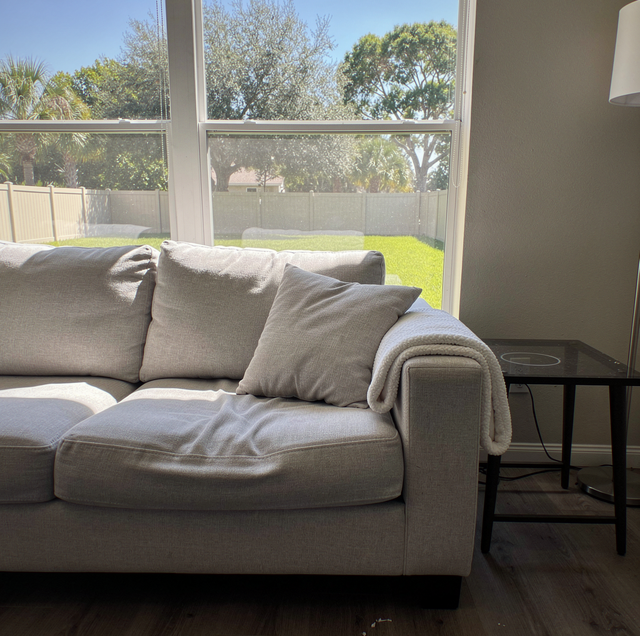
Two sofas can leave the same showroom built from the same foam, the same frame, and the same thread, and still age at completely different speeds. One sits in a house with steady airflow and moderate humidity and holds up for years without much complaint. The other spends its life in a warm, humid environment and starts breaking down well before you would expect wear like that. The furniture never changed. The environment around it did, and that gap is what this article walks through.
Foam Breaks Down First
Upholstery foam is open-cell, which means the air surrounding it moves through it, carrying any moisture it holds deep into the material. In a warm, humid environment, water molecules can react with the polymer chains inside foam through a process called hydrolysis, a breakdown that shows up more in polyester-based polyurethane foam than in the polyether foam used in most cushions, and warmth speeds the reaction along wherever it takes hold. The foam does not wear from the outside the way fabric abrades; it breaks down from the inside, losing its rebound and turning crumbly in parts you never see until a cushion goes flat and stays flat.
Every material in a house runs on a rough sense of how long it should last, but warmth and moisture do not respect that sense — they run the clock faster than the one on the label. The breakdown usually shows first where a cushion has taken the most weight over time: seat cushions before back cushions, the center of a seat before its edges, because compression pushes moisture-laden air through the same spots in the foam structure again and again. By the time a cushion feels soft in a way that has nothing to do with comfort, the foam underneath has usually been losing structure for a while.
Why Fabric and Thread Lose Strength
Fabric and thread fail next, and the mechanism differs from that of the foam sitting underneath them. Natural fibers swell slightly when they take on moisture from humid air and shrink back down as the air dries. That repeated swelling and shrinking can gradually reduce the fibers' tensile strength over time, so seams under tension are usually the first place it shows. Some threads used in upholstery are more moisture-sensitive than others, and a seam that was sewn tight starts to give slightly, then more, as the fibers holding it weaken from repeated cycling rather than from any single event. This is a separate case from what happens when upholstery is actually soaked, since flooding and standing water bring their own set of problems, but ambient humidity alone, given enough time, can loosen seam threads and leave fabric with less structural integrity than its appearance suggests. A cushion cover can look intact and still be one stress point away from a seam letting go, because the damage sits inside the fiber, not on the surface where it would show first.
A cushion cover that still looks new is not proof of what is happening underneath it; cover fabric often outlasts the foam or fill inside it by a wide margin.
What Happens to Glued Joints and Adhesives
Glued joints depend on an adhesive holding its grip under load, and humidity works directly against that grip. Hide glue, still found in older and antique upholstered frames, along with many water-based adhesives used in newer case pieces, softens as humidity rises, and a joint carrying weight does not simply sit still while its adhesive softens; it creeps, meaning the parts shift slightly under the load they are carrying, and that shift becomes permanent even after humidity drops back down.
Arms that flex when you lean on them, corners of a frame that were once square and are no longer quite square, and joints that develop a faint give that was not there before are usually adhesive failures rather than wood failures, though the two are connected. A joint that has crept once has less surface contact than it had at the start, so it has less grip for the next humid stretch, and the failure compounds rather than resetting each time conditions improve.
How Wood Frames and Panels Move
Solid wood expands and contracts across the grain as it absorbs and releases moisture, and it does this whether or not anyone is using the furniture. A glue line does not expand and contract at the same rate as the surrounding wood, so even a joint with adhesive that is otherwise holding up well can still work loose because the wood is moving while the glue line is not. Engineered panels- the plywood backs, particleboard supports, and fiberboard components used throughout most upholstered and case furniture- respond to the same moisture differently than solid wood does.
Their edges and the holes drilled for screws are the most exposed points, and repeated humidity swings work the fastener loose at those points even while the surrounding panel still looks fine. A frame built from a mix of solid wood and engineered panels is really two materials aging on two different timelines inside the same piece, and a warm, humid environment shortens both timelines at once.
Why Springs and Fasteners Corrode
Metal components fail due to corrosion rather than to the mechanical stress affecting foam, fabric, and glue. Coil springs, sinuous wire, and the staples holding fabric and webbing to the frame all sit in humid air for as long as the furniture does, and humid air corrodes metal faster than dry air does. A corroding staple loses its grip on the wood fibers around it the same way any corroded fastener loses grip: the metal pits, the surrounding material can no longer hold it as tightly, and the staple works free under normal use instead of staying put. Springs that corrode lose some temper along with their finish, so a seat that once had consistent support starts to feel uneven, softer in some spots than others, well before any spring actually breaks. Because this happens slowly inside upholstery, where it cannot be seen, springs and fasteners are usually still doing their job right up until the point when a section of a piece is suddenly no longer supported the way it used to be.
What Changes When a House Sits Closed Up
Everything described so far moves faster in a house that is closed up for an extended stretch, whether that is a vacant property between owners, a seasonal home standing empty for months, or a house on the market with utilities scaled back. A house with no one moving through it and no air exchange running holds onto whatever heat and moisture are already inside it, and both tend to climb rather than level off, because nothing is venting them back out. This is not only a warm-weather problem. A house shut up during a cooler stretch, with heat left low or off, can still trap enough ambient moisture from the ground, the plumbing, and the building itself to keep indoor humidity high even while it is cold outside, and any upholstery sitting in that environment ages on the same accelerated clock described above.
Mold needs three things to take hold: moisture, a surface, and time, and a closed-up house with furniture standing in it supplies all three at once. Mold remediation is its own trade, handled separately from a furniture haul, so a piece showing active growth gets referred out rather than picked up as-is. A sofa that would show gradual wear over years in a lived-in, ventilated house can show that same wear in a fraction of the time once it is sitting in a closed-up one, because every mechanism above- the foam, the fabric, the glue, the wood, the metal- is working on the same shortened timeline at once, with nothing interrupting any of them.
A closed-up house with no air exchange can let mold take hold on upholstery well before anyone notices a visible sign, since moisture, a surface, and time are all it needs.
Frequently Asked Questions
It can. Air conditioning controls temperature directly, but a system that short-cycles, running just long enough to cool the air before shutting off, often leaves relative humidity higher than the thermostat number suggests. Foam and fiber respond to relative humidity, not to how cool a room feels, so a comfortable-feeling room can still hold enough moisture to keep the same breakdown moving.
Yes. Kiln-dried hardwood generally starts with a lower moisture content than green or partially dried lumber, so it takes longer in a humid environment for the wood to absorb enough moisture to move significantly. It does not stop the process, only delays it, and a frame built from lumber that was not properly dried can start loosening joints well before a kiln-dried frame would.
No. Feather and down-blend inserts do not hydrolyze as foam does, but they respond to humidity by matting and losing loft as the fill repeatedly absorbs and releases moisture, similar to what happens to fabric fibers. A cushion that feels flat may have foam loss, a matted insert, or both, and the two problems look almost identical from the outside.
Yes, often faster. Hinges, tracks, and other concealed steel hardware inside a piece are typically bare or lightly coated, which corrodes faster than the finished springs elsewhere, so hidden hardware can start to bind or lose grip while the rest of the frame is still sound.
Plastic wrap sealed tightly can trap any moisture already inside the fabric and foam against the material, rather than letting it escape, which speeds up the same breakdown described throughout this article rather than slowing it down. Furniture stored for months inside sealed plastic in a warm space is often in worse condition than furniture left uncovered in the same room.
Yes. A piece pushed tight against an exterior wall sits against a surface that runs cooler than the interior air, and warm, moist air condensing against that cooler surface can leave the back of the frame and cushion damper than the room's air alone would suggest, so backs and lower rails against exterior walls sometimes show wear before the rest of the piece does.
Opening a closed-up house to furniture that did not survive the season? — clear out what is already beyond saving rather than guessing at what to keep. Polk Services LLC serves Lakeland, Highland City, and Mulberry. Call (863) 344-5806.
