

What Is "Clean Fill," Really? What's Actually in the Dirt
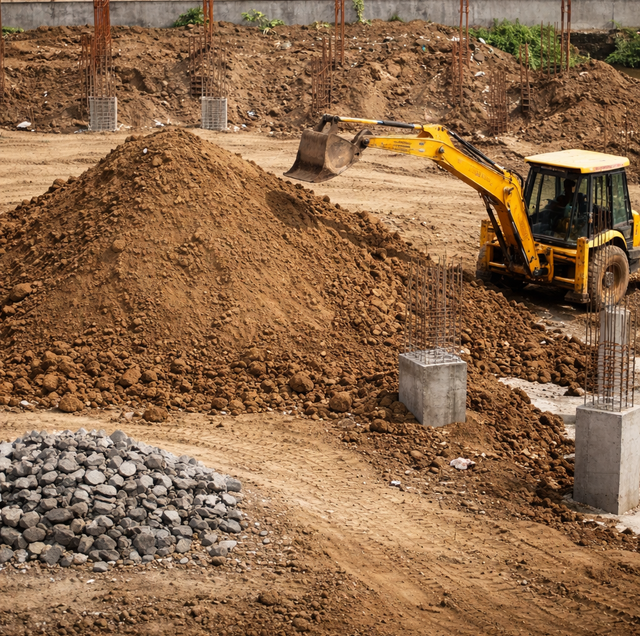
Quick Answer: Clean fill means soil, sand, or rock free of construction debris, trash, and contaminants, with little to no organic material, such as roots or stumps. It's an industry standard, not whatever dirt was available, and the only way to know is its source.
Every truckload of fill dirt looks about the same once it hits the ground: brown, damp, and unremarkable. That's exactly the problem. You can't tell what's buried in a pile of soil by looking at the surface, and the difference between a load that will hold your new grade for years and one that will sink, shift, or leach something unpleasant into the yard comes down to what's mixed into it below the top few inches.
"Clean fill" is the term the industry uses for material that meets a specific bar: soil, sand, or rock free of construction debris, household trash, and chemical contaminants, with organic matter (roots, leaves, mulch) kept to a small percentage rather than absent entirely — a trace of natural soil organics is normal and expected. It is a trade practice, not just "any dirt somebody was willing to haul away for free," built on knowing the material's origin, and it separates fill you can build on from fill that just moves a problem from one property to another.
Enough clean material to compact evenly: that's the whole point of the standard. Fill only performs as it's supposed to when it packs down to a uniform, predictable density. Anything foreign mixed into the load throws that off.
What "Clean" Actually Means in Practice
In the trade, clean fill is judged less by a chemical test and more by a simple question: does this material contain anything that isn't soil, sand, or rock, and if so, how much? A load with a small percentage of fine root hair or a few blades of grass from the original topsoil strip is normal and not a problem. A load containing fist-sized root balls, broken concrete, or scraps of drywall does not meet the standard, no matter how it's labeled on the delivery ticket.
The material itself can be sandy, clayey, or a mix, and composition alone doesn't make fill "clean" or "dirty." What matters is what's absent from it. Reputable fill is sourced from a known excavation, a land-clearing job, or a quarry byproduct pile, places where the operator knows exactly what came out of the ground and can vouch for it. Fill of unknown origin, especially anything pulled from a demolition site, a mixed construction dumpster, or an unmanaged, unmarked spoil pile, carries a real chance of hidden material that never gets screened out before it's loaded onto a truck.
The Debris That Actually Shows Up in Bad Fill
This isn't a hypothetical list. These are the specific things that turn up in fill loads that weren't properly sourced or screened:
- Broken concrete and asphalt chunks: Leftover from demolished driveways, slabs, or road work, sometimes crushed small enough to hide beneath the surface of a load until a shovel or auger hits them.
- Treated lumber and construction scrap: Pressure-treated wood, shingles, and drywall fragments swept up from a job site and mixed into spoil piles instead of hauled to a landfill separately.
- Root balls and stumps: Whole or partial tree root masses left in clearing spoil, which decompose slowly underground and leave a void behind them.
- Buried trash: Bottles, plastic sheeting, wire, and general litter that ends up in fill pulled from an unmanaged pile or an old dump site.
- Petroleum-stained or ash-contaminated soil: Material from a site where fuel, oil, or burn debris was present, which can carry a chemical or biological risk depending on what was on that property before.
None of this is visible from the truck bed at a glance. A tarp-covered load, or fill, delivered at dusk from an unmarked truck is exactly the scenario in which none of it gets caught until it's already spread and compacted.
Before digging below the original ground surface to key fill in or dig out a bad load, call 811. Buried gas, power, water, or communication lines can sit just beneath the original grade, and a hand tool can strike one without warning.
Why Hidden Debris and Organic Matter Cause Problems Later, Not Right Away
Bad fill rarely fails on delivery day. It fails months or a season later, and the mechanism is easy to follow once you see it. Organic material like root balls, stumps, and heavy leaf litter breaks down over time. As it decomposes, the space it used to occupy becomes a void, and the soil above settles into that void unevenly, because decomposition doesn't happen at the same rate throughout a pile. The result is a low spot, a soft patch, or a shallow depression that shows up long after the crew that spread the fill is gone.
Solid debris behaves differently but causes a related problem. A chunk of concrete or a wad of compacted drywall doesn't compress the way soil does. It sits as a rigid pocket inside material that's supposed to settle uniformly under compaction. Around that pocket, the surrounding soil keeps settling while the debris doesn't, which creates the same kind of uneven surface, just from the opposite mechanism: too little settlement in one spot instead of too much.
Contaminated fill is the highest-stakes version of this same idea. If the soil came from a site where fuel, solvents, treated materials, or unknown chemical residue were present, whatever's in that soil doesn't announce itself. It sits under the new grade, and depending on what it is and how it migrates through the soil, it can affect what will grow in that area or what ends up in runoff. This is the exact scenario where sourcing matters most: fill pulled from a torn-down structure or an unknown industrial lot is a materially different risk than fill excavated from a residential yard or a clean quarry stockpile.
How a Reputable Contractor Verifies Fill Before It's Delivered
The verification isn't a lab process for most residential and light commercial jobs. It's a set of practical habits that a contractor who cares about the result actually follows:
Knowing the source before ordering: A contractor who buys fill regularly knows which pits, quarries, and land-clearing operations produce consistently clean material and which ones have a history of mixed loads. That relationship, built over repeated deliveries, is the single biggest factor in whether a load is trustworthy.
A visual check at the pile and again as it's spread: Before a load gets used, a quick look at the stockpile for chunks of concrete, wood scrap, or root mass sticking out of the surface catches the obvious problems. As the fill is being placed and graded, a second look during spreading catches what a first glance at the pile might have missed, since debris can be buried mid-pile.
Avoiding fill of unknown origin, especially from demolition sites or unmarked spoil piles: A load pulled from a torn-down structure or an unmarked spoil pile with no traceable source is the single highest-risk category, because there's no way to know what was on that site before the material was scraped up. A contractor who won't say where a load is coming from is a reason to ask more questions, not fewer.
Screening for organic content proportionally: A small amount of fine root hair or grass in a load of topsoil-adjacent fill is normal. A visible mat of roots, a section of stump, or heavy leaf and mulch content is not, and gets rejected or set aside rather than spread.
Ask where a fill load is sourced before it's delivered, not after. A contractor who can name the pit, quarry, or clearing job it came from is giving you a real answer; "it's just dirt" is not one.
None of this requires special equipment. It requires someone who's handled enough fill to know what a clean load looks like versus a questionable one, and who treats sourcing as part of the job rather than an afterthought once the truck shows up.
What This Means for Your Property
If fill is going under a driveway pad, a low spot in the yard, or anywhere you plan to build, plant, or walk regularly, the material beneath the surface matters as much as the surface finish. A driveway that looks level the week it's poured can develop a dip over a stump that was buried and left to rot. A planting bed that won't hold anything but weeds might be sitting over a pocket of construction scrap instead of soil. The fix in both cases usually means digging the area back out and starting over, a far bigger job than getting the fill right the first time would have been.
This is also a case where fast and easy upfront doesn't mean simple overall. A load of unknown-origin fill delivered quickly is easy to accept without asking questions. The debris and voids inside it don't show up until well after the truck has left, at which point tracing the problem back to its source is far harder than it would have been to just ask where the material came from before it was spread.
Frequently Asked Questions
Not reliably, and a heaped pile hides more than a spread one. A tall, conical stockpile buries debris toward its center where it's never visible from any angle; the same load spread thin in a windrow, the shape a grading crew actually works from, lays that same debris out flat where a bucket pass or a rake catches it. That's part of why the spreading step itself, not just the delivery, is when a bad load usually gets caught.
No, and mixing the two up is a common error. Topsoil is the nutrient-rich upper layer meant to support plant growth; clean fill is structural material, often sandier or clay-heavy subsoil, sand, or crushed rock, chosen for compaction and stability rather than fertility. Using fill in place of topsoil for a planting bed usually results in poor growing conditions, even if the fill itself is perfectly clean.
The affected material generally has to be excavated and hauled off rather than left in place, since simply covering it over doesn't remove the real problem. Soil suspected of chemical contamination is a job for an environmental or remediation specialist, not a standard grading crew, so this is why the verification step matters before delivery: removing and replacing fill after it's compacted and graded is a far bigger job than confirming the source of a load in advance.
No, and the rough dividing line is proportion, not presence. Fill running a few percent organic content by volume, scattered fine root hair from the original topsoil strip, settles evenly enough that it rarely shows. A single stump section, by contrast, can leave a void nearly its own size once it rots out, concentrated in one spot rather than spread through the pile, which is why one buried stump does more visible damage than the same volume of organic matter distributed evenly through a load.
Very little. Color mostly reflects mineral content and moisture, not contamination, and texture (sandy versus clayey) is a separate question from whether debris or chemical residue is mixed in. A rich, dark load can still hide construction scrap, and a pale sandy load can still be perfectly clean; neither trait substitutes for knowing the source.
A demolition site combines several risk factors at once: broken building materials (concrete, block, drywall, treated wood) mixed directly into the spoil, and a higher chance that the property had fuel, solvents, or other chemicals used somewhere on it before the structure came down. A simple excavation, like digging a foundation or pool in an area with no prior industrial or commercial use, carries a narrower set of things that could plausibly be mixed into the soil.
If you're planning any project that involves bringing in fill, whether that's leveling a low spot, prepping for a pad, or building up a section of yard, the material going in the ground matters more than most people think to ask about. A quick conversation about where the fill is sourced before it's delivered is a small step that avoids a much bigger one later.
Ask about our fill sourcing before your next grading or leveling project — material from a source we can name, checked before it's spread, means a grade that holds instead of one you'll be redoing next year. Polk Services LLC serves Lakeland, Highland City, and Mulberry. Call (863) 344-5806.
