

Furniture Removal at a Seasonal Home You Can't Walk Through
The living room you picture is the one you left: the armchair angled toward the window, the side table with nothing on it. The room sitting there right now hasn't changed on its own, but months of not walking through it means your memory and the actual space have drifted apart. You're not being asked to recall a floor plan. You're being asked to make sure somebody else's eyes catch the difference before the truck backs in.
Why a Snowbird Schedule Makes the Date the First Thing to Settle
A pickup date at a property you occupy only part of the year has to work around more than one schedule: yours, and whoever else touches the place while you're away. Closing a house up before a stretch away and opening it back up after months apart produce the same gap. A date that suits a crew doesn't automatically suit the person who holds the keys, waters the plants, or checks on the place between your visits. Nobody notices the conflict until it's too late to move the appointment easily.
Settle the date first, before you spend any time on what's actually being removed. It's easy to work backward from an item list and think about scheduling last, but a date that falls apart at the last minute undoes all of that planning at once. Same-day or next-day scheduling can absorb a change of plans when the schedule allows, which helps if a key holder's availability shifts or a flight gets moved, but it works around a confirmed date rather than replacing one. A seasonal property doesn't get a second look if the first date falls through.
Getting into a Property You Aren't Standing In
The door is only one piece of getting in. A neighbor, a property manager, or a cleaner holding a key is a common arrangement, but a gate code, an alarm system, or a community entry point can sit on top of that key as a separate dependency, arranged with one person, known to another, and confirmed with neither until somebody is standing outside unable to get past it. None of these pieces are hard to sort out on their own. They tend to live in different heads, and whoever knows the alarm code isn't always the one who has the key.
So work through every access point before the date gets set, rather than assuming a key covers it. Name who holds each piece, and confirm that person is reachable on the day. If a lockbox is the arrangement, use a code issued for that pickup alone, change it afterward, and put in writing who confirms that the door, gate, and alarm are all set again once the crew pulls out. An empty house that nobody re-secured, because that job was never assigned to anyone, is a worse outcome than a delayed appointment.
List every path into the property, not just the front door. A gate code or alarm system can stop a crew even after a key has been arranged, if no one thought to mention it.
Naming What Actually Leaves the Room
Once a date is set and the crew can get in, the next question is what's actually going on. Photos texted ahead set the initial scope, and a written estimate confirms the complete scope before work starts, so nothing gets removed or left behind based on a guess about what was meant. That estimate turns a general idea, everything in the back bedroom, into a specific list both sides are working from instead of two different mental pictures of the same room.
Naming pieces clearly matters more when you're not there to point at them. A description written from memory is a map drawn from memory: close enough to steer by until one landmark has moved. Describe furniture by where it sits, what surrounds it, and how big it is, rather than by category alone. The recliner in the far corner by the window, measured across its widest face, is something a crew can find and size up. A recliner is not.
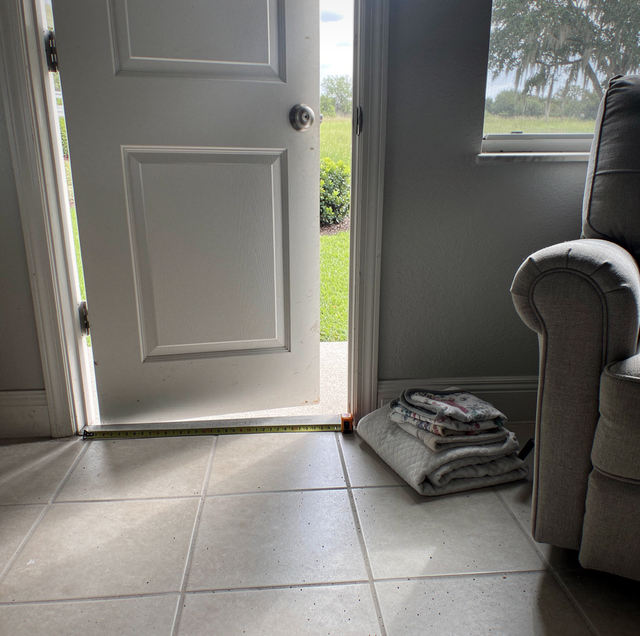
Measurements carry more weight here than they seem to, because the exit route decides as much as the piece does. Standard interior door leaves run roughly 24 to 36 inches wide, and the 28- and 30-inch doors common in bedrooms and bathrooms are the ones that create a tight fit. The clear opening, meaning what's left once the frame, the stop molding, and the swung-open leaf take their share, runs an inch or two narrower than that nominal number. A piece leaving through one of those doors needs a real measurement across its widest face, not a guess made from a photo shot from the doorway.
Measure the narrowest doorway on the exit route and the widest face of every piece leaving through it, then send both numbers along with your photos. A 28- or 30-inch bedroom door is the usual pinch point.
An Unattended Pickup Works When the Scope Is Fixed in Writing
You don't have to be on site for a pickup to happen, and at a property nobody visits for months at a stretch, an unattended pickup is often the only workable arrangement. It also carries more risk than one you attend, not less. With nobody in the room to say "not that one," a wrong-item pull is more likely, and once a load leaves for the transfer station, getting something back off it is usually impossible. That's the trade you're making. Make it deliberately.
A walk-through with the crew is what normally catches a mismatch on the spot, and that's exactly the step an absent owner gives up. What replaces it is a scope fixed in writing before the day, not a running conversation during it. Every room you want left alone gets closed off, door shut and marked if it can't be locked, so that "sitting near the pile" never gets read as "part of the pile." Anything valuable or sentimental comes out of the pieces that are leaving, because drawers, cushion decks, and the backs of old dressers hide more than people expect.
Then name one person as the contact who can answer a question on the spot, whether that's you by phone or someone standing in the house. Say in advance what you want done if the answer doesn't come through: hold the piece, or leave it. Ambiguity is what gets loaded by mistake.
Knowing the Work Got Done without Seeing It
When nobody's standing in the room to watch furniture go out the door, confirmation has to travel back to you some other way, and that's something to arrange when you book rather than hope for afterward. Ask for a photo of the cleared room before you agree to the date, and say plainly that you want one. A request made in advance is easy to accommodate. The same request made after a truck has pulled away is a different conversation.
Say which rooms you want pictured, too. A shot of the back bedroom taken from the doorway shows the space the dresser used to occupy; a shot from the opposite corner also shows the closet you asked to have left alone. Two angles settle more than one wide frame does.
Then keep the written scope somewhere you can find it. If something later looks wrong, the useful comparison isn't your memory against the photo. It's the written scope against the photo, because that list is the thing both sides agreed to before anyone touched the room.
When the Room Doesn't Match What You Described
Sometimes the room a crew finds isn't the room you described. A piece turns out smaller than remembered, already gone, or in worse condition than the last time anyone looked closely at it. None of that means your description was wrong. A property that sits closed up for stretches changes in ways a memory formed months earlier can't account for, and the dresser you remember clearing the bedroom door easily may be the one that doesn't.
Decide in advance how to handle a mismatch, because the middle of a pickup is a bad time to invent a process. A gap bigger than a single piece is worth pausing on: send a current photo, confirm the revised scope in writing, and let the list catch up before anything else goes on the truck. A crew guessing at what you would have wanted is the outcome all of this planning exists to prevent.
Donation belongs to the same conversation. If a piece still has life in it, you're the donor, and the choice between a donation program and disposal is yours to make, not something that gets settled while you're unreachable. A piece flagged as donation-eligible isn't a decision anyone made for you; it's information handed back for your answer, and it only helps if you're reachable to give one. Whether the receiving program actually takes the piece is a separate question, decided at their intake against their own condition standards.
Frequently Asked Questions
Identify a second way in before the date gets set. When access depends on one person's schedule, a single delay in their day turns into a missed appointment. A second key holder works, and so does a lockbox with a code issued for that pickup alone. Whichever you choose, name the person who confirms the property is locked, gated, and rearmed once the crew leaves.
Weight, frame construction, and whatever is hidden inside it. A sofa photographed from across the room doesn't reveal a fold-out bed frame, a soaked cushion deck, or a particleboard carcass that won't survive being tipped over. A photo also says nothing about the exit path, which is why pictures of the doorway, the hallway, and the stairs matter as much as pictures of the piece.
Treat those as a starting point, not the final picture. A room photographed by someone else shows what they thought worth capturing, not necessarily what matters for a pickup: a closet door left shut, a shadowed corner, an angle that skips part of the wall. Current photos taken for this specific job fill in what the earlier ones missed.
They stay put unless you say otherwise. A written scope covers what's listed, so a box in the closet or a chair somebody moved in since the photos went out isn't automatically part of the load. Expect a question rather than a judgment call, and expect the written scope to be updated before those extras leave, since that update is what protects you from a pull you can't reverse.
Say ahead of time what you'd want. A piece that won't clear intact can sometimes come apart at removable legs or arms, go through a different opening, such as a slider or a garage entry, or be cut down on site when it isn't being kept. Cutting down is irreversible, so it's a call worth making before the day rather than over the phone with the piece halfway through the frame.
Yes, and changing it in writing beats mentioning it on the day. Send the new photo, update the list, and keep the revised version where you can pull it up. Verbal add-ons at the door are the ones that turn into disagreements about what was supposed to leave, especially when the person relaying them isn't the one who owns the furniture.
A room you can't walk through still has to be described accurately — so the scope matches the room, not just the memory of it. Polk Services LLC serves Lakeland, Highland City, and Mulberry. Call (863) 344-5806.
