

Same Low Spot Again? Why Your Yard Fill Didn't Hold
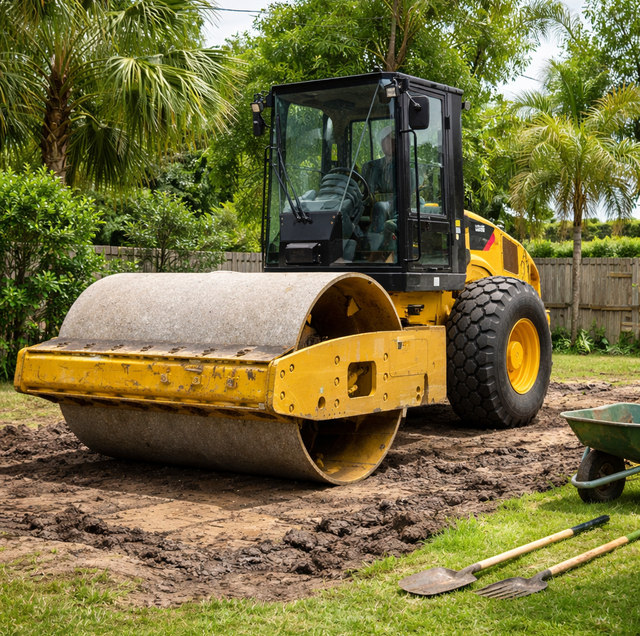
Quick Answer: A low spot that comes back rarely means the first fix was wrong on the surface. Something below kept moving: fill dumped instead of compacted, buried organic material that rotted through, dying roots, or a water source the fix never addressed.
You had this spot fixed before. Someone brought in fill, graded it, maybe laid new sod, and for a while it held. Then a season or two later, in the exact same place, the ground gave a little underfoot again, and now there's a shallow dish where flat ground used to be. That's a different problem from a yard that's never been graded at all, and it deserves a different kind of answer than "add more dirt and hope."
A repeat sink in the same footprint: That detail matters more than most homeowners realize. A brand-new low spot somewhere else in the yard is usually a fresh grading or drainage issue. A low spot that reopens in the exact same location almost always means the first repair did not address whatever was happening underneath, and that same cause is still active.
When "Fixed" Only Meant "Filled"
Most first-round fixes for a soft or sunken spot look the same: a few wheelbarrows or a small load of fill dirt gets dumped in, raked level, and topped with sod or seed. Done well, with the right material and real compaction, that holds for years. Done as a quick patch, it buys a season, maybe two, before the same spot reopens. The difference isn't visible from the surface on day one. It only shows up after the ground has had time to work through whatever is happening beneath the new grade, which is exactly why a repeat failure needs to be diagnosed rather than just re-filled again.
There are four causes that account for nearly every repeat low spot: fill that was never properly compacted; organic debris buried in the original fill that has since decomposed; a decaying root system still collapsing below grade; or a water problem the original fix never addressed. They look identical from a lawn chair. They don't look identical once you open the ground up.
Fill That Was Dumped, Not Compacted in Lifts
Loose soil dumped into a depression and raked smooth looks finished on the surface, which is exactly the problem: a smooth top doesn't tell you anything about what's still loose a foot down. Fill only holds its shape long-term when it's placed and compacted in layers, called lifts, of roughly four to six inches at a time, with each layer run over with a plate compactor or a jumping jack tamper before the next layer goes on. Skip that step and dump a foot of loose material in one pass, and you get a surface that can be tamped firm on top while the material several inches down stays loose and full of air pockets.
That loose lower material doesn't stay put. Rain works down through it, the soil particles settle and pack tighter under their own weight over time, and the surface above gradually drops to match. A fix built this way often looks great for the first few months because the top few inches have compacted from foot traffic and rain alone. The failure shows up later, once the deeper material finishes settling on its own schedule rather than the one a compactor would have forced it onto.
Buried Organic Material That Finally Rotted Through
If the crew that did the first fix used fill that wasn't properly screened, or if the low spot itself started over a spot where roots, a stump section, or a pile of mulch got buried instead of removed, that organic material doesn't just sit there. It breaks down. Push a screwdriver into a chunk of buried mulch that's been under a foot of soil for a year, and it slides in with almost no resistance; the wood has gone soft and spongy instead of solid. As that material loses volume, the space it used to fill becomes a void, and the soil above eventually settles into it, often unevenly, because decomposition never happens at the same rate all the way through a buried mass.
This is the slowest of the four causes to show up. A stump section or heavy root mass can take one to two growing seasons to break down enough to leave a noticeable dip, which is part of why it gets missed: by the time the low spot reappears, nobody's thinking back to what was buried under the original fix.
A Root System That Kept Dying and Collapsing Underneath
Related to the above but distinct enough to name separately: if the low spot sits near where a tree was removed, or a stump was ground down, the visible stump being gone doesn't mean the root system is gone. Large structural roots can extend well past the trunk and several feet down, and they keep decaying below grade for years after the tree itself is history. As each root loses mass, the soil around and above it settles a little, and because roots don't all decay on the same timeline, that settling can happen in stages, showing up as a repeat sink well after a first fix that never touched the root mass at all.
A Fix That Covered the Symptom, Not the Water
The fourth cause has nothing to do with the fill material itself. If the original low spot existed because water was pooling or saturating that exact area, whether from a downspout, a flat stretch with no fall, or naturally slow-draining soil underneath, then simply adding dirt on top doesn't change any of that. The new fill sits directly on the same wet, unstable base the old ground did. It gets saturated on the same schedule, softens the same way, and settles right back toward the same low point, sometimes faster than the original spot did, because fresh fill hasn't had years to consolidate the way the surrounding undisturbed soil has.
This cause is the easiest to mistake for one of the other three, because the end result, a returning dip, looks the same. The tell is timing relative to rain rather than what's in the ground, covered in the diagnostic checklist below.
How a Contractor Tells These Four Apart
None of these four causes requires guesswork to identify. They require getting into the ground and paying attention to a few specific things, in order.
A test hole dug through the repaired area: A hole roughly 18 to 24 inches deep, centered on the low spot, shows a cross-section of what's actually down there. Loose, crumbly soil with visible air gaps points to a compaction failure. Dark, spongy material, root fragments, or a distinct void points to buried organics. A clean layer of fill sitting directly on saturated, mucky subsoil points to a water problem instead of a fill problem.
How fast the spot re-floods after a real rain: A spot that holds standing water within an hour or two of a storm, and stays wet longer than the surrounding lawn, is telling you the water source was never resolved. A spot that stays dry after rain but has simply lost elevation over months points to settling due to compaction or decay rather than an active water problem. A spot that's soft or wet even during a dry stretch with no recent rain is a separate flag worth checking against a buried irrigation line or sewer line before anything else, since a slow leak at a fitting can mimic a drainage problem without any rain involved at all.
Never dig a test hole or probe deep into a repaired area without calling 811 first. Buried gas, power, water, and communication lines can run just beneath a previously graded section of yard, and a probe can strike one without warning.
A compaction check on the previous fill: Push a probe rod or penetrometer into the repaired area and compare resistance to an undisturbed part of the yard to get a rough but useful read on whether the earlier fill was properly compacted in the first place, or just dumped and left.
Put those three checks together, and the cause is rarely ambiguous. A test hole that turns up decayed root material and a spot that dries out well after rain point squarely to organic decay. A test hole showing uniformly loose fill with no debris, in a spot that also drains well, points to a compaction failure. A spot that refloods fast regardless of what the test hole shows points to water that still needs a real outlet, not more dirt.
Getting this diagnosis right before the second fix matters more than it did the first time, because a second patch that repeats the same mistake- wrong material, no compaction, or fill over an unresolved water source- tends to fail faster than the original one did. The ground beneath has already been disturbed once, and disturbed soil settles less predictably than undisturbed soil.
Frequently Asked Questions
It depends on the cause. A compaction failure from dumped, unlifted fill can show its first signs within weeks, often after the first heavy rain compacts the loose material on its own. Organic decay from buried roots, stumps, or mulch is the slowest to show, consistent with the timeline described above. A water-source problem that was never addressed can reappear within days of the very next significant storm.
A thin skim coat, an inch or two of fill raked over a shallow settle, can mask the surface for a season, but it doesn't address whatever caused the settling, and the same spot typically reopens, often faster the second time. If a spot has already sunk back more than once, skip the skim coat and go straight to a test hole; repeated topping without diagnosis just adds layers over an unresolved cause.
For a spot near a removed tree, one hole often isn't enough: opening a second hole a few feet away from the first, roughly through the repaired layer and into the original subgrade, catches root fragments a single hole can miss, since large structural roots decay unevenly across their length and a void from one root section can sit a few feet from where the trunk actually stood.
Not by itself. Sod in particular can root into and bridge over a developing void for a full season or more before the surface actually gives way, because the turf's own root mat holds some shape even as the soil beneath it thins out. A slight give or soft spring underfoot when you walk across it, before any visible dip appears, is often the earliest real sign that something below is still settling.
Ordinary settling from buried organic decay or compaction failure tends to form a smooth, shallow, saucer-shaped dip with no sharp edge. In areas with limestone bedrock, a spot that drops more abruptly, with a defined edge or a sudden change in depth rather than a gradual dish, can indicate a small void in the rock layer itself rather than a fill problem, and that calls for a different kind of assessment than regrading, since more fill won't address a void below the soil.
Not automatically a reason to switch. A contractor who did the first fix and is willing to dig a test hole, show you what's actually in the ground, and explain in plain terms whether it's loose fill, decayed debris, or standing water, is doing the diagnosis right the second time even if they missed something the first. Ask specifically what compaction method and lift thickness they'll use on the redo; a vague answer or an unwillingness to dig before refilling is a better reason for concern than the repeat failure itself.
A low spot that comes back isn't a sign the ground is simply stubborn. Whatever caused the first sink is very likely still there, just waiting for enough time or rain to show itself again. Finding out which of the four causes is actually at work before the next truckload of dirt goes in is the only way the second fix outlasts the first.
Get a test hole dug and the actual cause diagnosed before we refill your low spot again — a fix built on what's really under the surface, not a guess. Polk Services LLC serves Lakeland, Highland City, and Mulberry. Call (863) 344-5806.
