

Add New Gravel or Recompact? A Quick Field Test to Tell
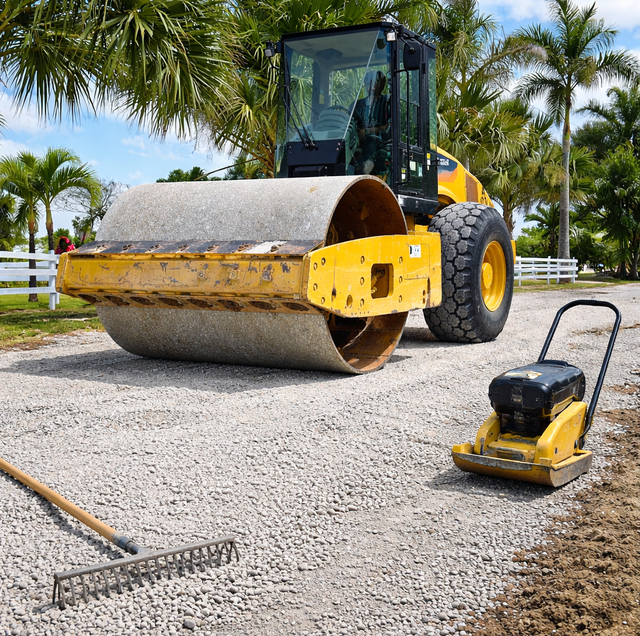
A driveway surfaced in limerock, crushed concrete, angular stone, pea gravel, or river rock gets thin and rough for one of two very different reasons, and the fix depends on which one you're dealing with. Sometimes the material that was originally installed is still on the property, just spread unevenly or loosened by traffic, and running it back through with a compactor is all it takes. Other times the material itself is gone: it migrated off the edges, washed downhill, or wore down to dust and was rinsed away, and no amount of compaction will make a driveway that's short a couple of inches of stone behave like one with full depth. Crushed asphalt millings are a separate case worth mentioning once and setting aside: because of the residual binder in that material, an old millings surface can sometimes be reworked and recompacted into a semi-bound mat again, which isn't true of the loose materials covered here. Telling these two situations apart before you call someone out is a five-minute job if you know what to check.
Why Recompacting and Adding Material Solve Different Problems
Compaction's job is to squeeze the air voids out of loose material so the particles lock together tighter and stop shifting under weight. That works when the total volume of stone on the driveway hasn't changed much; it's just been kicked around, rutted, or loosened by traffic and rain until it feels soft and uneven again. Running a plate compactor over displaced-but-present material redistributes it and drives it back down into a firm, even surface.
Adding new material solves a different problem: there simply isn't enough stone left in that spot to reach an adequate depth, no matter how well compacted it is. A driveway base built to a typical depth in the 4 to 6 inch range, more where the lot carries heavy vehicles or sits over a high water table, needs that volume of material present before compaction can do anything useful. Compacting 2 inches of stone doesn't turn it into 4 inches. It just packs those 2 inches down harder.
The Rake Test: A Rough Way to Check What You've Got
Pick the worst low spot on the driveway and rake loose material toward it from thicker patches within the travel lanes nearby, the way you'd pull dirt into a bare patch of lawn, rather than stripping it from the crowned centerline, which is holding the driveway's shape, or from the shoulders, which are usually the thinnest part of the surface already. If you can gather enough loose stone from within a few feet to bring that low spot back up to grade, the material is present, just distributed wrong. Treat this as a diagnostic pass rather than the finished repair: once you know the volume is there, regrade the full width so the surface sheds water evenly again, then recompact, instead of packing the borrowed stone flat into the low spot and leaving the donor area thinner than it should be. If raking leaves the donor areas thin too, or the low spot still sits noticeably below grade even after you've pulled material in from a wide radius, the volume isn't there to begin with. That's the plainest field test for the difference, and it takes longer to describe than to do.
Signs You Can Recompact What's Already There
Material piled at the low end of a slope or near the street: traffic and rain both push loose stone downhill or toward the road over time, so a driveway that's thin at the top and thick at the bottom often just needs that material worked back uphill and recompacted, not replaced.
A washboard or wavy surface rather than a bare patch: ridges and dips without any exposed soil or fabric underneath usually means the stone has shifted around under tire pressure but hasn't left the driveway.
Depth near an undisturbed reference point still matches the original install: check along a planting bed border, a fence line, or wherever grass hasn't been driven on, and compare that depth to the worn area. If they're close, the worn spot has simply lost position, and the volume is still there somewhere on the driveway.
Signs the Material Itself Is Gone
A visible apron of stone sitting in the lawn, ditch, or swale: this shows up most where cars swing wide near the street or where a slope drains toward a low corner of the yard, and it means material has left the driveway rather than just moved within it.
Fine dust and silt where coarser stone used to be: limerock and crushed concrete both grind down under repeated tire pressure and rain, breaking coarser pieces into fines that wash off in the next hard runoff rather than staying put the way sharper, harder crushed stone tends to.
A spot that fails again within weeks of every regrading: grading only moves what's already on the driveway, so a low spot that reopens right after each pass, even with careful compaction, is telling you there isn't enough material there for grading to fix.
Why Recompacting a Thin Spot Doesn't Add Depth
Compacting a thin spot catches a lot of people off guard: the measured depth goes down instead of up. Loose material holds air in the gaps between individual pieces; compaction presses those gaps closed. That's useful when there's enough material to begin with, but on a thin spot it means you're squeezing out the air that was propping the surface up slightly. A worn area that reads a little over an inch deep before you run a compactor over it can read closer to three-quarters of an inch afterward. Running more passes on a spot that's already short on material concentrates the shortage instead of correcting it, and the low spot comes right back the first time it takes traffic or rain again.
Material Differences That Affect How Fast You Lose Volume
Angular, sharp-faced crushed stone interlocks and holds its compacted position better than rounded material, so a driveway surfaced in that stone tends to lose volume slower and mostly through grinding rather than migration. Pea gravel and river rock are rounded, and rounded stone shifts and rolls more under tire weight, particularly on a slope or through a curve where tires push sideways as much as forward. That's why gravel driveways in those materials often need a top-up sooner even without any single heavy rain event to blame. Limerock and limestone screenings compact into a tight, workable surface, but the fine particles within that material can wash out during heavy runoff, thinning the surface even when nothing looks obviously displaced. Recycled concrete aggregate compacts and holds position closer to angular stone once it's placed, though the softer edges on some recycled material round off with traffic over time and generate fines that behave more like limerock's.
Frequently Asked Questions
Look for a fixed point that hasn't moved since installation, such as a drain grate, a sprinkler head, or a utility box lid, and compare how far the surrounding gravel surface sits below its rim now versus what you remember at install. A rim that used to sit flush with the gravel and now stands proud by half an inch or more is a rough but useful sign that surface depth has dropped in that area.
Yes, and it's often the more efficient approach on a driveway with mixed problems. Recompact the areas where material is present but displaced first, then add a thin topping layer only to the spots that still sit low afterward, rather than dumping new material across the whole surface before you know how much of it needs replacing.
Turning points lose material faster than straight travel lanes. A garage apron, a mailbox turnaround, or any spot where tires pivot rather than roll straight through pushes loose stone sideways with every turn, so those areas typically need attention well before the rest of the driveway shows any thinning.
That pattern points toward fines working down into the subgrade rather than leaving the driveway across the top. Probe the low spot: if it feels soft or spongy rather than just shallow, the issue may be happening at the base level, and it's worth having someone check that layer before assuming a simple top-up of surface material will hold.
Rounded, more uniform material like pea gravel or river rock has less room to compact down, since there's less of a size range for particles to nest into, so it takes slightly less overspread margin to reach a target depth than a well-graded angular stone does. What rounded material lacks is durability once it's there: it keeps a higher void ratio permanently and stays more mobile under traffic, so a bare spot patched in pea gravel is more likely to need a repeat top-up sooner, since the material keeps working loose even after a correctly sized fill.
No. Grading redistributes whatever stone is currently on the surface; it can't create more of it. A grading pass can still look convincing right afterward, especially on a driveway that's a little damp: wet material smears and packs into a low spot temporarily, and that temporary fix reopens as soon as the spot dries out and takes traffic again. A grading pass that keeps "holding" for a few days and then failing usually means the wet-smear effect is wearing off, and the volume was never there to begin with.
Get your driveway checked before you guess — we'll tell you whether it needs a recompact or fresh material. Polk Services LLC serves Lakeland, Highland City, and Mulberry. Call (863) 344-5806.
