

Can You Pour Concrete Over Concrete? When Overlays Fail
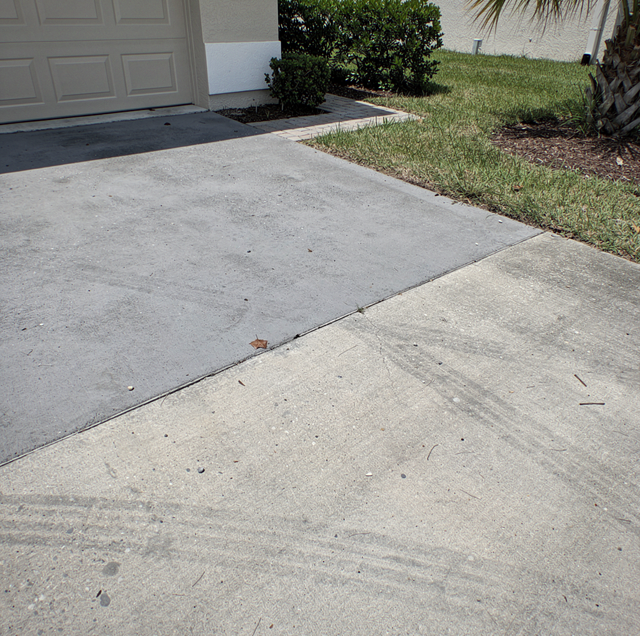
The moment fresh concrete is placed against a slab that has cured for years, a plane of separation forms where the two meet. The new material sets against the old surface rather than into it, and from that moment everything the old slab does underneath has a route to the top.
Everything above that plane answers to it. Load crosses it, water finds it, and the movement of the old slab underneath passes straight up through it into whatever is sitting on top. A new layer does not stiffen the old slab, hold up a settled corner, or close a crack that is still active. It inherits every one of those and shows them on its own surface.
So: can you pour concrete over concrete? Yes, under a fairly narrow set of conditions, and no under a much more common set. Overlay and resurfacing work belongs to a concrete contractor, not a demolition crew, so none of what follows is a pitch for a pour. It is a way to tell which slab you have, because every condition that decides the answer is something you can walk out and look at this afternoon.
The Bond Decides Whether You Have One Slab or Two
An old slab and a fresh layer never become one piece the way two lifts of a single continuous pour do. What forms between them is a cold joint: a flat plane of separation running under your entire new surface.
Without deliberate work by a concrete contractor to open up the old surface and create a real bond, the new layer is simply a separate slab resting on the old one. It carries the load and takes on the weather on its own, with nothing tying it to the concrete below.
Even where a genuine bond is attempted, it can only be as good as what it grabs. A surface that is flaking, dusting, or letting go in thin sheets has nothing solid for new concrete to hold, which makes it a poor bonding candidate no matter who does the work. Sealer, paint, soaked-in oil and ground-in dirt sit between the two layers as well.
Meanwhile, the slab underneath keeps living its own life. Control joints, the grooves cut into the surface when the slab was poured, and any existing cracks are exactly where the old concrete moves as it warms, cools, and takes on moisture. Those edges shift slightly and independently. A new layer bridging over them has nothing to stop that movement, so it splits along the same lines. That is reflective cracking, the most common way this goes wrong. The crack you covered comes back on top, along the line it always followed.
Photograph the slab from a fixed spot and trace every joint and crack onto the print. If a line appears on a new surface later, that record indicates whether it failed on its own or copied the old one.
What Sits under the Old Slab
A slab is only as steady as the ground holding it up. Sandy subgrade shifts when water moves through it, and heavy seasonal rain pulls fine material out from under slab edges, along downspouts, and wherever runoff concentrates. What is left is a void the slab bridges over until it cannot.
You can usually spot it without tools. A slab that ticks or rocks under a car tire is not fully supported. A corner sitting lower than the rest has already dropped. Soil pulled back from the edge, or a gap you can slide a finger into, means water has been running under there for a while.
If that is your slab, an overlay won't fix any of it. The new layer sits on concrete that is still unsupported, adds weight over the same hollow spot, and settles with it. Over an unstable base, an overlay buys time at best, and that time ends with two layers to remove instead of one.
Whether the Slab Is Still Moving
Not all cracks are active. Some are old, tight, and level across, and the two sides have not moved in years. Others are working, and the signs are easy to feel with the side of your foot: one edge sitting higher than the other, a gap that has widened, or a piece that shifts when you step across it.
A moving slab takes whatever sits on it along for the trip, including a new layer, however well it was placed. Slab lifting and leveling are separate trades with their own limits, and they work on the ground underneath. What matters for your decision is simpler: if the old slab is still moving, an overlay only postpones the repair.
Added Height and Where the Water Goes
Any overlay raises the surface, and that changes two things at once.
The first is drainage. A driveway or patio was sloped to send water somewhere, and adding height across the middle does not automatically preserve that slope. Water that used to run off the far edge can sit in a low spot instead, or turn back toward the house.
The second is everything the surface currently meets. A patio that was a comfortable step down from a back door now has less of a step, or none. A driveway that runs up to the garage slab and stops can rise to meet it or pass it, giving runoff an easy path under the door. A slab poured tight against a wall buries the bottom edge of siding or stucco that was meant to sit clear of standing water. And where the driveway meets the street or a sidewalk, the added height becomes a lip that catches tires, mower wheels and shovels.
None of that rules out an overlay on its own. It is a reason to walk the perimeter first and list every threshold, sill, and edge the surface ties into, because that list is often where the decision gets made.
Thickness and Reinforcement in the Old Slab
Two slabs of the same size are not the same slab. Pour era gives you a rough starting point: an older pour tends to be thinner than one placed in the last few decades. A thinner, older slab that already carries vehicle loads has less in reserve for an added layer on top of it.
Reinforcement matters too. A slab with rebar through it behaves differently from one with light wire mesh or nothing at all. Reinforced concrete tends to hold its pieces together as it cracks rather than separating cleanly, which changes how the failure looks and how the slab comes apart when it is time for it to go.
You do not need exact figures here. You need to know whether you are working over a thin, lightly reinforced slab or a thicker one, because that largely determines whether a new layer is being supported or quietly asked to do the structural work itself.
When an Overlay Holds and When the Slab Comes Out
Side by side, the conditions sort themselves cleanly.
| Condition | An overlay has a real chance when | The slab should come out when |
|---|---|---|
| Surface | Sound and clean, free of sealer, paint, and soaked-in oil | Flaking or dusting, with nothing solid to bond to |
| Subgrade | Firm and supporting the slab across its whole footprint | Washed out, voided, or holding water under the edges |
| Movement | Cracks are old, tight, and level across, with no shifting | Edges are offset, gaps are widening, or pieces move underfoot |
| Cracking | Minor and limited to a few isolated lines | Widespread map cracking, or a slab already broken into sections |
| Height | There is room to gain height without meeting a sill, door or garage slab | The surface already sits close to a threshold or an entry point |
| Drainage | The existing slope can be kept or improved | Water already sits on the slab or runs toward a structure |
| Structure | The old slab is sound enough to carry the new layer | The old slab is thin, unreinforced and already at its limit |
Read down the right-hand column. If more than one or two of those lines describe your slab, an overlay is not a shortcut past removal. It is removal with an extra step and a longer wait.
What Breaking the Old Slab Out Involves on the Day
Taking a slab out is demolition and hauling work. A machine breaks the slab into pieces; they get loaded and hauled off, and what you are left with is open ground.
A slab overlaid once is thicker than it looks from the edge. The layers separate as it is broken, and the top sheet can slide off the lower one as a piece is lifted, so nobody stands in the load path.
That open ground matters more than it sounds. With the old concrete gone, the subgrade that caused the problem is finally reachable, and it can be shaped and compacted before anything new goes down. A slab poured over corrected ground starts from a different place than one poured over the soft spot that broke the last one. The new pour itself is a concrete contractor's work.
If your replacement plan is gravel rather than concrete, that is a different decision with its own drainage consequences. Pavers over an existing slab are their own question as well.
Frequently Asked Questions
The added height has to be given somewhere to go, and there are only three places it can go: a taper run back from the opening, a lowered strip at the threshold, or a hard stop at a joint set back from it. Which one is available depends on the fall the existing surface has left to give. On a driveway that already drains toward the garage, there is usually none, and that is where the old slab comes out instead.
Then you are not looking at a slab; you are looking at a stack, and the weakest plane in that stack governs everything above it. A new layer bonded well to a layer that is itself unbonded from the original will not fail at the joint you just made. It will fail at the lower one, which nobody touched and nobody can reach. Adding a third layer does nothing about a separation that is already two layers down, so the whole stack has to come off rather than grow.
It happens on properties added onto over several decades, where an old walk or patio was covered instead of removed. The tell is usually at a doorway or a step riser, where the slab reads thicker at the edge than its era suggests, or a joint line that runs out and stops with no matching joint on the far side. If it only turns up once the breaker is in it, what you thought was one slab is two, and the layers come off in sequence rather than as a single lift.
Load is the difference. A patio carries foot traffic and furniture, while a driveway takes vehicle wheels tracking over the same two paths every day, which is a much harder ask of a layer sitting on a cold joint. The set of conditions that lets an overlay hold is wider on a patio and narrower on a driveway. What does not change is the ground and the joints underneath: a patio over a washed-out subgrade cracks and settles just as a driveway does.
Only where the surface underneath has been prepared to hold one. A bonding agent does not create grip on its own. It needs a surface the concrete contractor has mechanically roughened first, so the pores are open and there is something for it to key into. Brushed over concrete that is sealed, smooth, or already failing, it has nothing to grab. Preparation determines whether the layer stays put.
Yes, on any overlay meant to last. The concrete contractor placing it puts the new joints directly over the joints and cracks in the slab below, so the movement that is coming anyway has a clean place to show up. Joints placed anywhere else give the old ones somewhere else to break through.
Book the breakout instead of the cover-up — you end up with open ground and a reachable subgrade instead of the old crack coming back through the top. Polk Services LLC serves Lakeland, Highland City, and Mulberry. Call (863) 344-5806.
