

Crushed Asphalt Millings vs. Paved Asphalt: What Lasts Longer
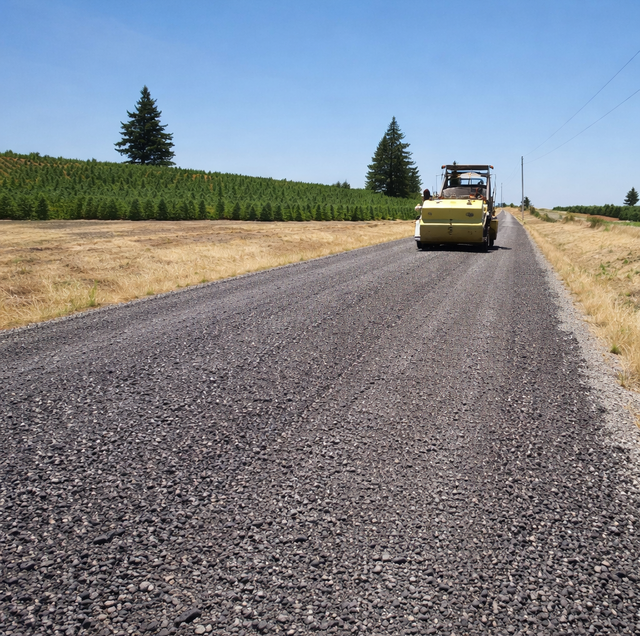
Drive down almost any back road, and you'll spot two different driveways sitting side by side. One has a rough, pebbled surface you can feel through your tires and hear under your shoes. The other is a smooth black ribbon that looks as if it were poured in a single continuous piece. People assume these are the same material with a different price tag. They're not. One is crushed asphalt millings, a recycled granular material that compacts into a semi-solid surface. The other is traditional hot-mix asphalt, a poured-and-rolled slab. They come from related sources but behave like two different products once they're down.
What Each Material Is
Crushed asphalt millings, sometimes called RAP (reclaimed asphalt pavement), are old asphalt roads and lots ground up into fragments ranging from fine grit to small chunks. When those fragments are spread and compacted, the leftover asphalt binder on each piece softens under heat and pressure and lets the particles knit together at the surface. That binding process is its own topic, and we won't rehash it here, but the short version is: it starts loose like gravel and firms up as it settles. It's installed the way you'd install any compacted aggregate driveway, in lifts, with a base layer underneath.
Traditional hot-mix asphalt starts as fresh aggregate (crushed stone and sand) coated in liquid asphalt cement, heated at a batch plant, then trucked to the site and laid while it's still hot with a paving machine. A roller compacts it immediately, while the mix is workable, and it cools into one continuous slab with no visible seams between particles. It's a manufactured surface, not a compacted one.
Worth saying plainly: paving or repairing traditional hot-mix asphalt is a separate specialized trade from what we do. We install crushed asphalt millings, which behave and get maintained like a premium gravel driveway. If your goal is a poured, continuous black-top surface, that's a paving contractor's job, not ours, and we won't pretend otherwise.
How Each One Wears Out
The two materials don't just look different when they're new. They fail in different ways, which matters more once you're a few years in.
Millings: because the surface is compacted particles rather than a bonded slab, it wears by gradually thinning in high-traffic paths, the same way gravel does. Fines can work loose at the surface over time, and low spots or ruts can form where tires travel most. The fix is local: add fresh material to the worn section and re-compact it. There's no slab to crack because there's no continuous slab to begin with.
Paved asphalt: because it's one bonded sheet, it fails as a sheet. Water gets under the surface through small surface cracks, temperature cycling widens those cracks over time, and eventually you get alligator cracking (a webbed pattern that signals base failure) or potholes where a weak spot finally gives way. A paved surface can look fine for a long stretch and then fail in a visible patch all at once, because the damage happening underneath isn't visible until the top layer breaks through.
The Look: Texture Versus a Continuous Slab
Up close, millings has visible texture: individual crushed fragments, some color variation between darker and lighter pieces, and faint lines where compaction passes overlapped. It reads as a finished, intentional surface, but it's clearly granular, closer in character to a fine gravel than to pavement. Edges are loose and can be reshaped with a rake or box blade.
Paved asphalt is smooth and monolithic. There's no texture to see or feel beyond the fine aggregate in the mix itself, and the surface is one uniform black (until UV exposure grays it, which is why paving contractors recommend periodic sealcoating). The edge of a paved driveway is a defined, cut line, often against a curb, rather than a loose margin.
Repairing Each Surface
Millings repair is a maintenance task, not a specialty job: haul in more crushed material, spread it over the worn or thin section, and compact it. It blends into the existing surface because it's the same material in the same state. There's rarely a visible "patch."
Paved asphalt repair usually means one of a few things: crack sealing to keep water out before it spreads, a cold-patch or hot-patch fill over a pothole, or, once enough of the surface has failed, a full mill-and-overlay where the top layer gets ground off and replaced. Patches on asphalt are often visibly a different shade or texture than the surrounding surface, at least until it weathers in. None of that work is something we perform. If a client's existing paved driveway is cracking and they want it patched or resurfaced, we'll say so and point them toward a paving contractor rather than take on work outside our trade.
Getting Either One Installed
Paving traditional asphalt is a scheduling-heavy job. Hot-mix has to be batched at a plant, trucked to the site while it's still hot, and laid and rolled before it cools past workable temperature, which usually means a tight delivery window and a specialized paving crew with a paver and roller on-site. Weather and ambient temperature matter too, since the mix needs to stay warm enough to compact properly.
Installing a millings driveway is closer to installing gravel: material comes in by dump truck, gets spread with a skid steer or box blade over a prepared base, graded to shed water instead of ponding it, and compacted in stages. There's no batch-plant clock running, which makes scheduling around weather, other site work, or a phased project a lot easier.
Frequently Asked Questions
It varies a lot with traffic weight and drainage, but a well-compacted, properly crowned millings driveway commonly goes several years to a decade or more before it needs a topping layer, and even then it's usually just the wheel paths that need attention, not the whole surface.
Sometimes, but only after the failing surface is graded, leveled, and any large cracked or heaved sections are broken down first. Millings laid directly over an uneven, cracking slab without prep will telegraph those same low spots and cracks up through the new surface within a season or two.
Most paving contractors recommend it every couple of years. Sealcoating protects the asphalt binder at the surface from UV oxidation and moisture, which helps keep the top layer flexible rather than brittle. Millings driveways don't have that same continuous exposed binder layer, so sealcoating isn't part of their maintenance.
If the base and crown were built correctly, water sheets off to the sides the way it would on gravel. If the crown is flat or the base wasn't compacted deep enough, fines can migrate downhill in wheel paths and create small channels, which is one of the more common issues that calls for a regrade.
It comes down to the base underneath more than the surface material. A paved slab spreads point loads across the bonded sheet, while a millings driveway relies on compacted depth to do that same job. A millings driveway built with a properly compacted aggregate base and enough depth handles regular heavy vehicle traffic without issue; a thin base under either surface is what actually causes rutting or sinking.
Scrape or press a fingernail into an edge or a low-traffic corner. Millings will show individual loose granules that rub off and a texture you can separate with light pressure. Paved asphalt holds together as one continuous piece at the edge, with a defined cut line rather than loose material, and won't crumble under light pressure the way millings will.
Get a driveway assessment — we'll look at your gravel or millings driveway and tell you honestly what condition it's in and what it needs. Polk Services LLC serves Lakeland, Highland City, and Mulberry. Call (863) 344-5806.
