

Dock Demolition That Keeps Every Board Out of the Lake
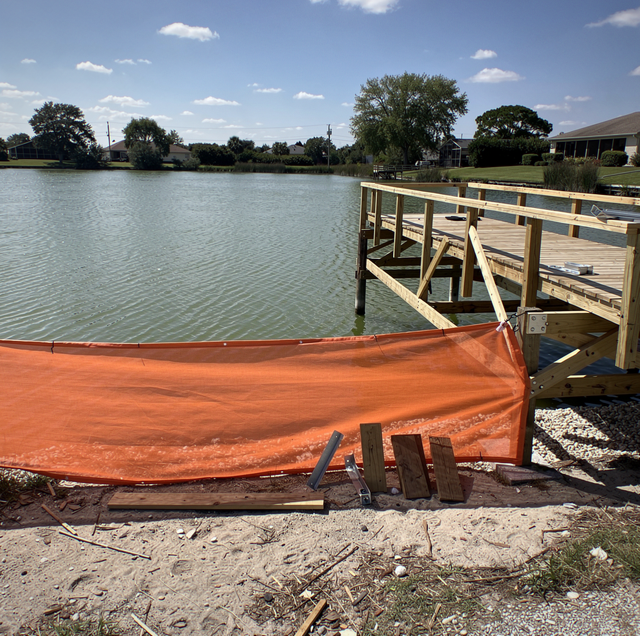
A board comes free from a dock frame, catches an edge wrong, and drops instead of swinging clear the way it is supposed to. Over a driveway or a yard, that mistake means walking over and picking the board back up. Over a lake, the same mistake means a plank, a rusted fastener, or a chunk of treated wood is now on the bottom, out of reach the moment it lands, with no clean way to go get it back.
Sediment clouds the water the instant anything breaks the surface, and a lake bottom near an old dock is already carrying decades of hardware nobody has ever come back for. A dropped fastener disappears into silt that already looks like it, and nothing on the surface tells anyone where it went. Retrieving what falls in after the fact is not a realistic plan for keeping a lakefront demolition clean, no matter how carefully someone looks. Keeping almost nothing in the water in the first place is the only version of that plan that holds up. That is a sequencing problem and a containment problem, not a search-and-recovery problem, and both get solved before the first board comes off, not after the crew is already standing in the middle of a half-torn-apart structure.
The Barrier Goes in Before Anything Is Touched
Before a pry bar touches the first board, a barrier goes up along the water's edge: silt fencing along the bank, or tarps laid out and weighted along the length of the work area. Its job is not to stop debris that is already airborne and past the point of being caught. It is to give every piece of demolition a landing zone on land, not in the lake, so nothing that comes loose has a clear path to open water. Anything that skips, rolls, or bounces off the structure lands on the barrier instead of past it, and stays there, on land, until someone picks it up by hand and hauls it off with the rest of the material.
The barrier is a landing surface rather than a wall. It runs the full length of the work area and past both ends of the frame, because material travels sideways along a shoreline as readily as it drops straight off.
Sequencing the Demolition Toward Land
The order pieces come down matters as much as the barrier does. A dock gets broken down while working from the water side back toward land, so each board that comes free falls onto the ground and the barrier that has already been cleared, not toward the open water it just left. Framing comes apart in the same direction, section by section, rather than getting pulled apart wherever it happens to be easiest to reach first. A section demolished with gravity working against the lake, instead of toward it, beats any barrier trying to catch what a careless sequence sends straight at it.
Even with a barrier up and the sequence held to, something occasionally gets to the water anyway: a fragment that skips the line, a splinter light enough to float off, a piece nobody catches in time. It comes back out from the shoreline or from the equipment already staged there, using the reach the job already has rather than improvising a new one. That list is short by the time a job wraps, and keeping it short is the whole purpose of the barrier and the sequence sitting ahead of it. A crew that treats retrieval as the plan rather than the exception has already lost most of what it dropped.
Where the Fasteners and Splinters End Up
Boards and framing are one thing to track. Fasteners are another matter. A dock that has stood for years sheds screws, bolts, brackets, and corroded nails the moment it is disturbed, and it keeps shedding them while material is carried across the barrier to a stack or a trailer. Once the larger material is down and cleared, the disturbed ground gets swept by hand for hardware and splinters before the job is called finished, working the barrier line first, since that is where anything small enough to skip past a board tends to collect and settle.
Fasteners pulled after years in wet wood are often rusted through and can shear or spring loose without warning under hand pressure, which is why this cleanup step happens with the demolition tools still on site, not saved for later.
Why Floating Docks Are the Hardest to Contain
A floating dock carries its buoyancy underneath it, in a frame below the walking surface: sealed foam billets, or drums, doing the work that pilings do on a fixed structure. That flotation is the reason the dock sits on the water at all. It is also the one material in the whole structure that behaves nothing like the rest of what comes off it.
Everything else in a dock stays roughly where the work puts it. A board, a length of framing, a bracket, a section of railing, all of it travels about as far as its own momentum carries it and then stops, which is exactly what makes a barrier at the bank a useful thing to have. A barrier catches what comes to it. Foam does not come to it. Once a billet is cracked open or torn, it ceases to be a single object and becomes dozens of small, buoyant fragments riding on a surface that is itself moving. Wind pushes across open water, and anything floating on it goes where the wind and the surface drift carry it, which, on most lakefront lots, is out and away from the bank rather than back into it. A barrier that holds against every other material on the job ends up standing behind the material it was meant to catch.
So the approach changes for that one material. The flotation comes off intact and under control rather than being broken free with the rest of the structure. Billets and drums get unstrapped, unbolted, or cut away from their brackets as whole units and brought onto land whole, before the deck above them is taken apart. A billet that reaches the stack in one piece was never a containment problem. The same billet cracked in place is a problem no barrier line solves, because by then the material is on the wrong side of it and moving.
That decides the order of the work. On a floating structure, flotation comes off first, while the frame still holds each billet in the position it was built into and there is a whole deck above it to work from. Reverse the order and the billets are loose under a partly dismantled frame, in open water, with nothing above them holding them where they sit. The barrier on shore has no bearing on which of those two situations a crew is standing in.
Where a Barrier Cannot Reach
The part of the job that tests the plan is the part with no ground under it. A barrier is a shoreline device. It sits on land, along the bank, and it does nothing for the span of structure standing over open water, which on most docks is most of the structure. There is no line out there to catch anything, so the control has to come from somewhere else.
It comes from the number of loose pieces present at the start of cutting. The over-water span gets stripped before it gets dismantled: railing hardware, brackets, anything already working its way free, and every board loose enough to move on its own comes off first and goes back toward land by hand. Cutting into a frame that still has a dozen half-attached pieces hanging off it puts every one of them in play the moment the frame moves.
Pilings are the other half of it. They sit in the lake bottom for as long as the dock has stood above them, and freeing one means working directly over water no matter how disciplined the rest of the job has been. That step gets its own sequence for the same reason the deck above it did: one at a time, under control, with the disturbance kept to the piling being worked rather than spread across the whole footprint at once.
The Water-Edge Finish That Closes the Job
The last stretch of a lakefront removal goes to the strip of ground nobody would think to look at twice. The shoreline gets raked clean, then walked end to end by someone looking specifically for what is easy to miss: loose connection hardware, washers and clamps, splintered decking fragments, anything small enough to disappear into grass at the top of the bank. That material gets picked up as part of the final pass rather than left for whoever runs the next mow.
That strip gets more attention than anywhere else on the property, and the reason is where it drains to. A washer missed in the middle of a yard sits in the middle of a yard. The same washer, a few feet from the water, gets another chance to reach the lake every time it rains or the level comes up. It is the one place on a job site where a small miss does not stay a small miss.
The pass takes in the shallows right at the edge as well, since the barrier and the sequence are built to hold the count near zero rather than at zero, and this is the step that confirms which of the two the day landed on. Anything turned up there goes out with the rest of the load. A shoreline that reads as untouched once the equipment is gone is the clearest measure there is of how the work was sequenced.
Frequently Asked Questions
A silt fence is driven into the ground at the shoreline rather than resting on top of it, and what it works on is material moving along the ground and down the bank toward the water. That makes the bank itself part of the barrier. Firm soil takes a stake and holds the fabric tight to the grade, while loose sand, a crumbling edge, or an undercut bank lets the fence seat poorly and leaves gaps along the bottom where the only thing that matters is passing underneath. The bank gets read before the line is called ready, and a poor one gets weighted or doubled rather than trusted.
Because they are small and dense. A board has enough surface area to skip, slide, and end up somewhere a barrier can hold it, but a screw, a washer, or a broken bracket sinks immediately where it falls rather than drifting toward the line. A barrier does nothing about hardware that never travels to it. That is why sequencing carries more of the load than the barrier does: the only dependable control on a fastener is not being over water when it comes loose.
Yes, and it is decided on arrival rather than in advance. Which way the wind is running across the water sets the specific line the crew works, because the same fragment falls differently on a still morning and on a windy afternoon. A crosswind pushing off the bank means a tighter working section and more carrying by hand; a still day allows a longer span to come down in one continuous sequence.
It is the last thing to come out. The rake-clean and the water-edge walk both occur while the fence or tarp line is still standing, because lifting a barrier disturbs everything that has collected along its base. Pulling it early scatters that material back across ground already cleared and gives the shoreline pass nothing to work against. It comes out after the final pass, and the ground underneath it gets checked as it lifts.
The material has to travel before it can be released. Where there is no ground below and no barrier within reach, a board or a bracket gets brought back along the frame toward land and set down over ground rather than dropped at the point it was cut. That changes the pace and the crew size more than the tooling, since carrying pieces back is hand labor that cutting them free is not, and it is the reason a long dock over deep water takes longer per foot than a short one over a shallow bank.
No. The barrier and the sequenced take-down happen the same way whether it is a full dock or a single damaged section, because the lake does not care how big the job is, only whether something reaches the water.
The barrier goes in before the first board comes off — talk to us about your shoreline. Polk Services LLC serves Lakeland, Highland City, and Mulberry. Call (863) 344-5806.
