

10 Questions That Separate a Good Gravel Driveway Installer
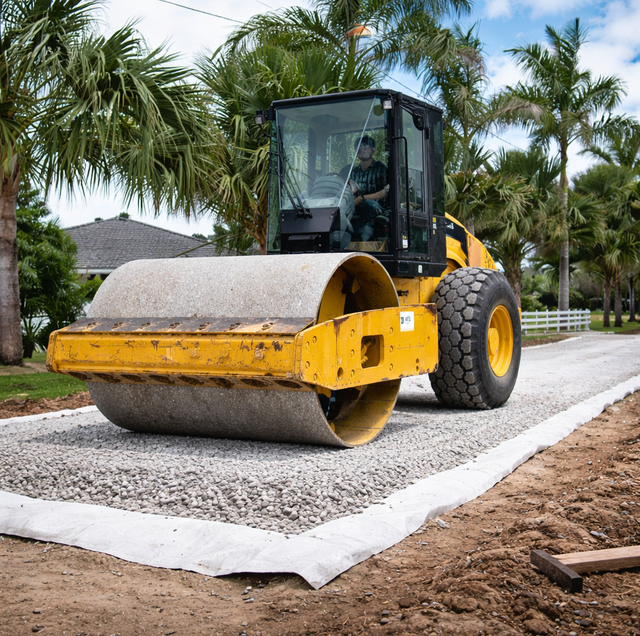
A gravel driveway looks like one of the simpler jobs a property owner can hire out. Spread some stone, run it flat, done. In practice, most of the work that decides whether that driveway holds up happens below the surface, before a single piece of gravel is even delivered. Two installers can quote what sounds like the same job and hand you completely different results a year later: one driveway stays firm and drains clean, the other develops ruts, potholes, and soft spots that need constant patching.
The difference almost never comes down to the gravel itself. It comes down to what the installer does with the ground beneath, how they compact each layer, and whether they plan for water rather than ignoring it. Asking the right questions before you sign a contract is one of the easiest ways to catch a problem before it starts. Below are ten worth asking, what a solid answer sounds like, and what should make you pause.
The 10 Questions to Ask Before You Hire
Are you licensed and insured? This is the baseline question, and it matters more than it might seem. Ask specifically about general liability coverage at minimum, and expect an answer given without hesitation or vague deflection. If equipment damages a fence, a septic line, or a neighbor's yard during the job, insurance is what keeps that repair from landing on you. A good answer is quick and specific. A bad answer is a change of subject or a promise to "look into it."
What will you do to the ground before any gravel goes down? This is the question that separates installers who understand driveways from installers who just deliver stone. The existing soil needs to be graded and often requires the removal of old vegetation, roots, or a failed prior surface before a new base can go in. An installer who can describe this step in a sentence or two, unprompted, is telling you they treat prep as the actual job. An installer who jumps straight to "we'll just add fresh gravel on top" is describing a patch, not an installation.
What base material are you using, and why that one? A driveway is only as strong as what's underneath the visible layer. Ask what they use for a sub-base; common answers include crushed concrete, crushed asphalt millings, or a limerock-type aggregate, and ask why they chose it for your property. Each has different drainage behavior and a different way of locking together under weight. You're not looking for a brand name; you're looking for a reason. "That's just what we always use" is a weaker answer than "that material compacts well and drains, which matters given how your yard slopes."
Will you install geotextile fabric between the soil and the base? Fabric is a thin, permeable barrier laid over bare soil before the base layer is applied. Its job is to keep the base material from slowly working its way down into the native soil, and to keep soft native soil from pumping up into your gravel when it's wet and under weight. Skipping it is one of the most common shortcuts on a rushed or vague quote, and it's also one of the hardest problems to fix later without tearing the driveway back up. If an installer says fabric isn't necessary for your site, ask them to explain the soil conditions that make it unnecessary, rather than taking "we don't usually bother" at face value.
How do you handle grading and water runoff across the driveway? Water is what actually destroys a gravel surface over time; the stone itself rarely fails on its own. A driveway needs a subtle slope or crown so water sheds off to the sides instead of pooling in the middle or channeling down the length of the drive. Ask specifically where the water is supposed to go once it leaves the gravel. If the answer is essentially "it'll figure itself out," that's a driveway that will need re-grading within a season or two.
How many layers will you compact, and how? A base that's dumped in one thick lift and rolled once tends to stay loose in the middle even when the surface looks firm. A base built and compacted in stages, then topped and compacted again, holds its shape under vehicle weight for years longer. Ask what equipment they compact with; plate compactors and rollers are typical, and whether they compact in stages or all at once. This is a technical question, and a real installer will answer it like one.
How will you handle what's already there, an old driveway, dead grass, roots, or debris? If there's an existing surface or heavy growth on the site, ask directly whether it gets fully cleared or partially reused. A crew working with a mini skid steer can strip vegetation, break up an old surface, and move material off site efficiently, but only if that's actually part of the scope you're being quoted. Some installers grind up an old asphalt or concrete surface and use the broken material as sub-base rather than hauling every bit of it away, which can be a reasonable approach depending on the material's condition. Get clarity on which path they're taking and why.
What does your warranty or follow-up policy actually cover? Gravel driveways settle some in the first weeks and months as traffic compacts the base further; that's normal. What isn't normal is deep rutting, standing water, or the stone disappearing into the soil within the first year. Ask what happens if that shows up. A confident installer describes a specific follow-up process. A vague "we'll take care of you" with no detail is not a policy; it's a hope.
Can I see a driveway you've installed that's at least a year or two old? Fresh work always looks good. A driveway that's had a full season of rain and regular traffic on it tells you far more about whether the base and drainage plan actually worked. An installer confident in their work will usually have an address or photos to point to. Reluctance to show older work, versus only offering brand-new projects, is worth noticing.
How do you handle site protection during the job? Heavy equipment moving stone and grading soil can chew up a lawn, crack an edge of existing pavement, or scrape a garage door if the crew isn't careful. Ask how they protect what's around the work zone: plywood tracking mats, careful staging of material, clear boundaries for equipment. This isn't a technical question about the driveway itself, but the answer says a lot about how the crew operates on your property day-to-day.
Red Flags Worth Taking Seriously
A few patterns tend to show up together. A bid that skips a real walk-through of your yard, and lists "gravel driveway install" as a single vague line item with no mention of base material, fabric, or grading, is usually built around skipping those same steps once the crew is on site. An installer who can't describe their process without prompting, but is quick to promise the driveway will "look great," is selling you the finished appearance rather than the structure underneath it. And an installer who won't put scope, materials, and follow-up terms in writing is asking you to trust memory over documentation, which rarely favors the property owner if something goes wrong later.
None of these are automatic disqualifiers on their own. A newer company can still do solid, careful work with less of a track record behind them. The pattern is what matters: does this person's answers get more specific the more you ask, or vaguer?
One More Thing Worth Watching For
Beyond the ten questions, pay attention to how an installer talks about your specific property rather than driveways in general. A soft spot near a downspout, a slope toward the garage, a stretch of ground shaded most of the day and slower to dry after rain- these details change how a driveway should be built. An installer who walks the site and references what they actually saw is planning for your ground. One who gives a flat number with no breakdown, without ever really looking at the layout, is quoting a generic job and hoping your property behaves like every other one. The driveways that hold up years later are almost always the ones where someone looked at the specific problems on that lot before deciding how to solve them.
Frequently Asked Questions
It depends heavily on square footage and whether an old surface needs to be fully removed first. A simple regrade and resurface on an already-clear site can often wrap in a single work day; a job that includes tearing out an old asphalt or concrete drive, hauling debris, and rebuilding the base from scratch typically spans several days once you account for compaction time between layers.
Sometimes, but it depends on the condition of the old surface. There's a real difference between grinding an old surface up for reuse as sub-base and leaving it in place: a badly cracked or heaved slab usually needs to be broken up and hauled off or crushed, but a surface that's still flat and stable enough not to have heaved can sometimes be built on top of directly, with the new base and gravel going right over it and no demo phase needed. That shortcut only holds up if the old surface isn't trapping water underneath it, which is something an installer needs to check on site, not assume from a photo or a quick look from the curb.
The most common cause isn't the gravel itself; it's an under-compacted base settling unevenly under repeated vehicle weight, combined with water cutting small channels along wheel paths that never get redistributed. Driveways where every vehicle follows the identical tire path, without occasional light regrading to spread the stone back out, develop this pattern fastest.
Yes, though it's minor compared to other surfaces. Most gravel driveways benefit from an occasional pass with a box blade or rake to redistribute stone that's migrated toward the edges, plus a periodic top-dressing of new material every few years as the surface layer thins from traffic and weather. Edges also need to be checked so grass and roots don't creep in and break up the border.
Crushed concrete tends to compact into a hard, angular base with good load-bearing strength. Crushed asphalt millings contain residual binder that can help the material knit together under compaction, and some installers favor it in wetter conditions for that reason, though results vary by source material. Limerock-type aggregate is a traditional base material valued for compacting into a firm, relatively smooth surface. None of these are interchangeable without adjusting the compaction approach, which is part of why the base material question matters.
Yes, though the value isn't in lining up two numbers side by side. Two quotes for the "same" driveway often differ because one includes fabric and a full base rebuild while the other resurfaces over the existing grade with a thinner top layer. It also helps to know that installers typically figure material in loose yardage, and the compacted volume that actually ends up on the ground typically runs about 20-25% less than that loose figure, so two quotes citing different yardage numbers aren't automatically comparable. Haul-off of old material is often the single biggest swing item between two bids, so read each quote for what's actually included: base material, fabric, grading, haul-off, compaction steps, rather than just scanning for a total.
Get a free gravel driveway estimate — Polk Services will walk your property, point out drainage and grading issues before they become problems, and answer every one of these ten questions on the spot, on gravel driveways in Plant City, Winter Haven, and anywhere inside the radius. Polk Services LLC serves Lakeland, Highland City, and Mulberry. Call (863) 344-5806.
