

4 Habits That Keep Your Yard's Grade From Slipping
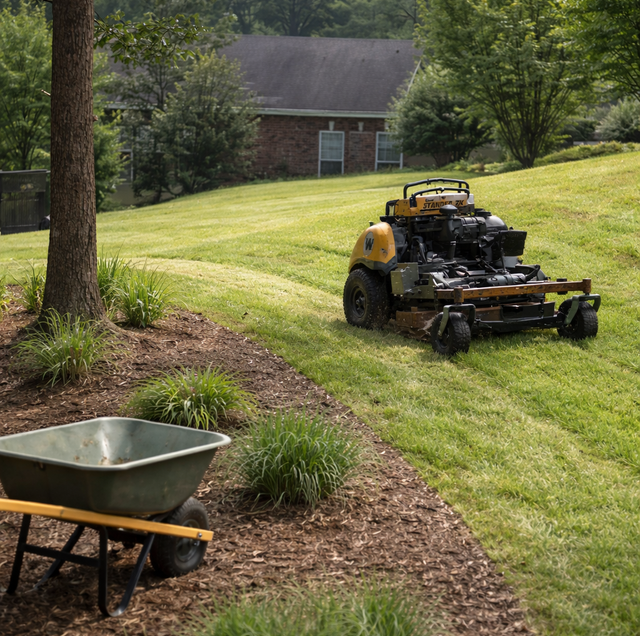
Quick Answer: A correctly graded yard is a starting condition, not a permanent one. Mowing pattern on slopes, how mulch beds get re-topped, where soil piles near the house, and whether drainage paths stay clear either preserve the original fall or slowly erase it.
A regrade fixes the ground's shape on the day the crew packs up. What happens to that shape over the next few years depends on what happens after, not on how well the job was done. Grass grows in whatever pattern it's mowed. Mulch beds get topped off whenever they look thin, usually without checking whether the new material changes the slope beneath. Soil moves a little every time it rains, and where it moves to depends on habits nobody thinks of as grading decisions at all. None of that shows up as one dramatic failure. It shows up as a yard that, a few years later, doesn't drain quite the way it used to, and nobody can point to the day it changed.
The Grade Is Finished, the Habits Around It Aren't
The fall built into a yard during a regrade is a snapshot: a target slope, cut and compacted to move water toward a specific exit point on the day the work finished. Nothing about that fall stays locked in place afterward. Rain moves loose soil particles a little at a time, roots grow and die and leave voids behind, and every pass of a mower or a wheelbarrow presses the surface in whatever direction it happens to travel. That's not a defect in the original work; it's just what happens to any shaped surface exposed to weather and traffic over years rather than months.
The difference between a grade that holds and one that drifts usually isn't one big event. It's a handful of small, repeated choices nobody connects to drainage at all: which direction the mower runs on a slope, how a mulch bed gets refreshed, where the wheelbarrow ends up dumping material near the house. Repeated every season for a few years, they add up to a different slope than the one that was cut.
How Mowing Direction Shapes a Slope Over Time
On a slope or across the low, wide dip of a swale, the direction a mower travels changes what happens to the soil underneath the grass. Mowing straight up and down a slope compresses the same narrow wheel tracks on every pass, and those tracks become slightly lower and harder than the grass around them. Water finds that compacted track fastest, and once it starts following it, the track keeps getting deeper: a shallow channel that wasn't there when the grade was cut.
Mowing along the contour, moving across the slope roughly level rather than straight down it, spreads that wheel pressure evenly instead of concentrating it into repeat tracks. That's the erosion-control answer for a walk-behind mower; a riding mower or zero-turn is run up and down a real slope instead for the machine's own stability, so the wheel-track fix there is to vary the up-and-down line slightly on each pass rather than mowing the same track every time. On a swale specifically, mowing along its length keeps the channel's shape consistent, rather than grading cross-ruts into the bottom that catch and hold water after the rest of the yard has drained.
You can feel the difference underfoot before you see it in a storm. Walk a slope mowed the same direction for a couple of seasons, and the wheel tracks are noticeably firmer and lower than the grass beside them, the same way a groove wears into a wooden porch step where feet land in the same spot year after year. That firmness is compacted soil, and compacted soil sheds water faster than the surrounding ground, creating the perfect setup for a channel to start forming along that track.
Mower type decides the safe slope direction: a walk-behind runs across the face, never straight up and down. A rider or zero-turn is the opposite, up and down only, since crossing sideways is what rolls one.
The Early Erosion Signs Worth Checking For After Rain
A grade doesn't fail all at once; it shows small warning signs first, and catching them in the first season is the difference between a few minutes with a rake and a repair that needs fill and compaction. The main one is a rill: a narrow, shallow groove cut into bare soil or thin turf, usually starting at the top of a slope or swale and running downhill, wider at the bottom than the top. A rill an inch or two deep caught early can be tamped down and reseeded or sodded in an afternoon. Left through a few more storms, that groove widens on its own, since water follows the path it cut last time before finding a new one.
Walk the yard a day or two after a heavy rain, while the ground is still wet, and check three things: any bare or thinning patch of soil for a groove or a fan-shaped deposit of sediment at its base, the low point of any swale for a scoured, exposed channel instead of grass, and the base of any slope for mulch or soil washed down from higher ground. Sediment collecting at the bottom means soil is actively moving off the top, even if the top still looks fine from a standing view.
Fresh, narrow grooves after one storm: the easiest stage, usually just hand-tamping the loose material back into the channel and reseeding or laying a small patch of sod over it.
Grooves that reappear in the same spot after being filled once: a sign something is concentrating water at that exact location, worth a closer look, since the same spot rarely re-erodes by coincidence.
Why Re-Topping a Mulch Bed Can Quietly Shift the Grade
Mulch beds are refreshed on a schedule unrelated to grading, usually whenever the old layer looks thin. A fresh layer raked in without checking depth against what's already there adds height every time, and nobody's tracking the running total. A bed that started at two or three inches over the original grade can end up six or eight inches deep after several years of top-ups, especially near the house, since that's where people are most careful to keep coverage full.
That extra height matters most where a bed meets a foundation, a walkway, or a slab. Each re-topping raises the surface without lowering anywhere else, so the original fall away from the structure gets buried under material that's higher than it needs to be, in the worst case higher than the point it's supposed to drain toward. The fix isn't skipping mulch; it's checking depth first: pull back the layer at the bed's edge, measure how deep it sits, and add only enough to bring thin spots to 2 or 3 inches, rather than piling a full new layer over material that never broke down.
Before topping a mulch bed, push a finger down to bare soil at a few spots. At two to three inches already, skip that spot; add material only where it's actually thinned, not as a blanket refresh.
When Piled Material Quietly Tilts Back Toward the House
This is the version of the mulch problem that does the most damage, and it happens even when the original grade next to the house was cut correctly. Every time soil, mulch, or leftover fill is piled against a foundation wall, a porch skirt, or a shed's base without checking where the top of the pile sits relative to the siding, the material forms a small ramp that slopes back toward the structure rather than away from it. The grade underneath might still be correctly sloped; it's the material added on top, one wheelbarrow load at a time, creating the reverse pitch.
It happens gradually enough to miss. Leveling a low spot near a foundation, filling around a new pad, or piling leftover mulch somewhere convenient rarely gets a second look at the slope of what was just added. A few inches added here and there over a couple of years is enough to turn a foundation edge that used to shed water into one that funnels it against the wall instead, right where moisture does the most damage to siding, sill plates, and slab edges.
The check is simple and worth doing at least once a year: at any spot where mulch, soil, or gravel touches the house, confirm the material's surface is higher right at the wall and falls away as it extends a foot or two out, not level or dipping back toward the structure. Separately, check that at least a few inches of foundation stay exposed above the mulch line, nothing packed up against the siding itself. A pile that slopes back toward the house at the wall, even a correctly-falling grade with too much material stacked at the base, is routing water toward the foundation regardless of how the grade underneath was originally cut.
Keeping Swales and Drain Outlets Clear of Debris
A swale or a French drain outlet only works if water can reach it and keep moving once it does. Leaves, pine straw, clippings, and washed-in mulch build up exactly where a channel is shallowest and slowest, usually right at the outlet where it's supposed to daylight into a ditch, a lower part of the yard, or the street. A partial blockage doesn't stop drainage outright; it backs water up behind the debris, slowing the flow enough for more sediment to settle and build the blockage further with each storm.
The same applies to any pipe outlet or grate: a screen meant to keep debris out of a pipe still needs to be checked and cleared, since a clogged screen backs water up the same way a blocked open channel does. A five-minute walk after a big storm, clearing anything sitting in the swale's low point, does more to keep a regraded yard working than almost any other habit here, because it's the one thing that has to be done repeatedly rather than gotten right once.
Seasonal leaf drop is the heaviest debris load most yards see, but not the only one. Mulch washed out of a bed during hard rain, clippings left in a swale after mowing along it, and windblown debris all collect in the same low, slow-moving spots. None of it takes long to check for; it's just easy to forget about a channel that only does visible work a few times a year, right when it matters most.
Frequently Asked Questions
Twice a year on a fixed schedule, plus a spot-check within a day or two after any unusually heavy rain, catches most problems while they're still small. Scheduled walks catch slow drift like mulch buildup or wheel-track compaction; the after-storm check catches a fresh rill before the next rain widens it.
A shallow rill responds well to a hand fix, but two things push it out of DIY territory: a rill that keeps forming along the same line after being filled more than once, and one deep enough that the sides have started to undercut rather than just channel. At that point, a simple patch usually washes out again within a storm or two. The fix needs to address why water is concentrating there in the first place, sometimes a small check dam or a section of erosion-control fabric pinned over the channel until grass or groundcover roots back in, not just more soil in the groove.
It can, depending on the plant. Groundcovers with a dense, fibrous, mat-forming root system (the creeping varieties often used on banks) knit the top few inches of soil together more effectively than turf grass alone, resisting rills before they start. A groundcover still needs time to establish before it offers real protection, and a slope already actively eroding usually needs the fall itself corrected first.
For the immediate edge where a mower can't get close, yes, and it's gentler than forcing a mower deck over it. Just keep the trimmer head from scalping the swale bottom itself, since cutting the grass there too short removes the root mass holding the channel's shape and leaves bare soil exposed the next time it rains.
Faded mulch stays roughly where it was placed and needs only a light refresh once it's thinned from breakdown. Washed mulch shows a visible trail: a bare or thin patch at the top of a bed or slope and a pile or fan of mulch collected at the bottom or against an edging strip. Re-topping the bare spot without addressing why it washed, usually too little groundcover or water concentrating from upslope, just sets up the same washout after the next storm.
Yes. A partial pile still slows water enough to drop sediment behind it, and a wet, matted layer left in place can smother the grass or groundcover lining the swale, weakening the root mass that holds the channel's shape. Clearing leaves out before they mat down protects both the flow and the vegetation, keeping the channel from eroding.
A correctly graded yard doesn't ask for much to stay that way, mostly just noticing a handful of ordinary spots a little more often than you already do: which way the mower's pointed on a slope, how deep the mulch actually is before adding more, where the last few wheelbarrow loads ended up next to the house, and whether the swale's still clear the next time it rains hard. Skipped for a few years running, those small oversights add up to a yard that needs the same regrade it already had once.
Schedule a yard grade check-up — catch early erosion, a mulch bed that's crept too high, or a blocked swale before it undoes a correctly graded yard. Polk Services LLC serves Lakeland, Highland City, and Mulberry. Call (863) 344-5806.
