

Site Prep Concrete Removal: A Builder's Sequencing Guide
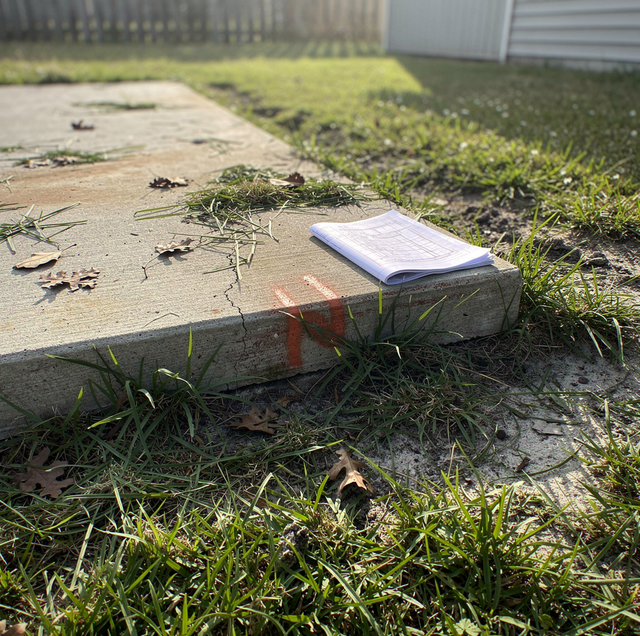
The existing-conditions sheet shows one hatched rectangle marked for removal, scaled off a survey of unknown vintage and drawn by someone who walked the property once. The foundation plan sits on top of it, footings dimensioned to a string line nobody has set yet. Between those two sheets is everything the lot is still holding: the shed slab that matches the hatch, a pad off its back corner that never got measured, a walkway running out of frame, and a block pier line under the sod where an older structure stood before the one that made it onto the drawing.
That gap is a schedule item before it is a demo item. Concrete that is not on the plan still has to leave, and it leaves in a narrow window: after the locate clears, before your excavation and layout crews need clean ground to work on. Site prep concrete removal earns its place in the schedule by hitting that window and leaving the lot in a known state, not by being the loudest day on the job.
Reading the Plan Against the Lot
Walk the site with whoever is doing the demo before you hand a date to the excavation sub. The sheet is the starting point; the lot sets the actual scope.
Full extent of each pour: Sod creeps over slab edges by years' worth of growth, and the rectangle on the plan is often the only part still visible when the survey was done. Tracing the full extent of each pour on the walk, where sod has crept over the edges and swallowed a corner, moves the scope more than anything else. Where an edge runs under a drive, a bed, or a structure rather than under sod, it gets probed and confirmed after the locate marks are in, rather than guessed at on the walk.
Concrete nobody drew: Condenser pads, generator pads, a mower-shed apron, sidewalk stubs that dead-end into grass. These rarely make the sheet, and they all sit inside the new footprint often enough to matter.
Vertical work in the same footprint: Short retaining sections, curbs and stem walls get missed because the plan reads them as landscaping rather than concrete to be removed.
What stays: The apron the other trades are driving on, a walk to a structure that is not part of the job, any tie-in the new work is designed to meet.
One scope rule is better raised on the walk than discovered mid-morning: where a demo hits an unexpected older layer underneath, the work stops, and the change in scope is agreed with you before it continues. You get a phone call while the machine is still parked instead of an argument at the handoff.
The Concrete That Has to Leave First
Site prep on an infill or teardown-adjacent lot usually means the same short list: old shed slabs, generator pads, AC-condenser pads, storage-building foundations, and small structural footprints, all coming out with machinery. Around those sit the pieces that show up on almost every lot with history, including structural footings and block-pier foundations, partial driveway sections, walkways and sidewalks, patios, walls and vertical concrete, and equipment pads.
The scope line, stated plainly so you can plan the rest of the job around it: house-scale structural foundation demolition is referred to a licensed demolition contractor. If your plan calls for taking a standing house and its full foundation off the lot, that is a separate contractor carrying a different license, and it belongs on your schedule as its own line item. Everything ancillary to that work, the pads and slabs and pier lines that are not the house itself, is what this scope covers.
Nothing gets poured, paved or set back in on the way out, either. The work is removal, excavation, grading and haul-off. Your concrete crew or foundation sub follows on ground that has already been cleared rather than working around a pile somebody left for them.
Where Demo Sits in the Trade Sequence
In schedule order, the demo slots in like this: locate request in and mark confirmed, then concrete broken out and hauled, then dig out the old material, roots, stumps, and buried debris the removal exposes, then layout and footings.
Two dependencies are the ones that actually bite. The first is stakes. Set survey stakes after the concrete is gone, not before, because a machine working a slab line will take them out and the layout has to be re-set. The second is the gap between demo and dig. If a pad is still sitting there on the morning the excavation crew arrives, that crew has a lot it cannot open up.
For rough planning, a roughly 500-square-foot driveway is typically broken out in about 2 to 4 hours by machine. That is the shape of the number to build a morning around when you are stacking demo and dig on the same day, with the usual caveats about access and what is underneath.
The removal runs on a compact mini skid steer, and a full-size skid steer with a hydraulic breaker, with a dump trailer on site for haul-off. Breaking, loading, and hauling happen in the same visit, which is the difference between a lot that is ready and a lot with a pile on it waiting for a second trip.
Utility Marks and the Hold on Your Schedule
Sunshine 811 is free, but it carries a 2-business-day wait for utility marks, and work is held until those marks are confirmed. Put the request in on the day you set the demo date, rather than the day before the machine rolls, because that wait is a hard dependency that sits in front of every other date on this part of the schedule.
Old slabs on infill lots often cap abandoned service runs: shed conduit, irrigation mains, a capped water line. A breaker hammer finds them before anyone else does, so confirm marks and probe slab edges before the first strike.
What Stays, and How It Gets Protected
Mark the keep line in paint on the slab itself. Describing it over the phone or pointing at it on a sheet is how a section that was supposed to remain ends up in the trailer, and nobody is putting it back.
The same goes for anything the other trades depend on. If the existing apron is the only stable access to the rear of the lot, or a walk is carrying material traffic, say so before the walk-through ends. Protection here is mostly a matter of the demo sub knowing what the site is being used for by everybody else, which is information only you have.
Trees that stay are the other one. Root zones within a demo footprint are workable, but the machine path and the material staging spot should be settled before the day starts rather than left to whoever gets there first.
What the Site Looks Like at Handoff
The deliverable is a site condition, not a pile of broken material with a promise attached. Concrete out; footing and pier voids opened up or backfilled per the plan; buried debris pulled from the footprint; spoil hauled off; and the lot left at a workable grade. Rough grading up to a target pad height is separate work with its own sequence, so treat the handoff as clean, level enough to work, and ready for whoever is next.
Where a footprint needs material back after old pours and buried debris come out, fill delivery is part of the same scope. Grading and ground leveling across the cleared footprint sit there too.
The point of defining the handoff this precisely is to make your next date real. When the condition of the lot at the end of demo day is predictable, the excavation and layout dates are no longer estimates.
What a Recurring Demo Relationship Needs
Repeat work runs on direct owner-to-owner coordination rather than a dispatch layer, which matters mostly because scope questions get answered in one call instead of three.
What makes it run smoothly from your side is short: send the existing-conditions sheet early, even in draft form; name the one date that cannot move, usually the excavation booking; say plainly what stays; and flag site access constraints before they become a discovery on the morning of.
What makes a demo sub painful is equally short. Arriving without confirmed marks. Leaving material behind for a second trip. Going quiet when the scope changes underground. Treating your sequence as their problem to interpret.
Send the demo sub the existing-conditions sheet and a few phone photos of each pour on the same day you set the excavation date. Scope questions surface then, not on the morning the machine is already on site.
A demo sub who has worked several of your builds already knows how you stack trades, what you want the lot to look like at handoff, and where you like material staged. That familiarity is the part that shows up in your schedule rather than in a conversation.
Frequently Asked Questions
Only if you say so. Broken concrete and excavated soil are two separate loads leaving on two different routes, and a lot that has both needs the call made before the trailer is loaded. Soil hauled off as spoil that you meant to keep for backfill later turns into imported fill, so the material staying on site gets stockpiled and marked at the walk rather than sorted out on the day.
No, but the trailer has to sit somewhere while it fills, and that spot is a scope item. It wants to be on the pour you are demolishing or on the apron the other trades already drive, not on the pad footprint your excavation crew opens next. Name it on the walk, and the machine never crosses ground you needed intact.
It gets painted on the concrete itself during the walk rather than described in words afterward, so the line the machine works to is the same one agreed on by everyone standing over it. The mark goes on both faces of the break so it reads from the machine seat whichever side the operator approaches from. A keep line that has to move later is a scope change discussed before the machine starts rather than discovered after.
Not the demo sub. The removal contractor helps coordinate permitting, but never pulls or issues a permit itself. The application stays with whoever holds the job, and the demo scope gets described to match what you filed rather than the other way around.
No, and the distinction matters at booking. A phased scope is two visits planned and booked as two visits from the start, each one ending with the lot clear of everything that came out that day. A second trip for material left behind is the first visit having failed. The practical rule is that phasing must be named when the work is booked, not requested on the day, because the section left standing must be chosen to align with the access route the other trades need.
Deep utility excavation, septic and sewer line work, large-scale commercial earthmoving, and any dig requiring a licensed underground-utility contractor are out of scope. Those belong with the subs who carry that license, and they are better scheduled around the demo than stacked on top of it.
Send over the demo sheet and lock a removal date — your excavation crew starts on clean, marked ground, from concrete demolition in Bartow to Plant City. Polk Services LLC serves Lakeland, Highland City, and Mulberry. Call (863) 344-5806.
