

Why Your Mower Scalps the Same Spot (And How to Fix It)
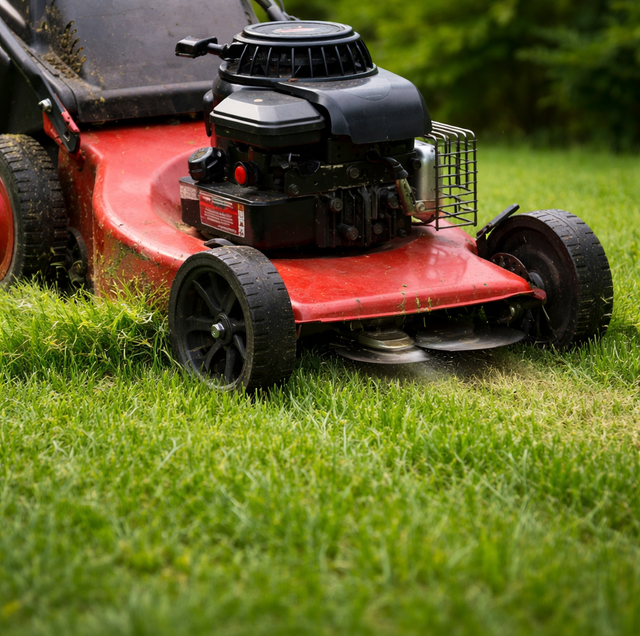
Quick Answer: A mower deck cuts at a fixed height above whatever is directly under it. A spot even a half inch higher than the surrounding lawn, from a root flare or fill that was never blended flush, gets scalped short on every pass.
Same bare patch, every time you mow. You have swapped the blade, double-checked the deck height, even eased off the throttle over that one section, and it still comes back scalped while the rest of the lawn cuts clean. That's rarely a mower problem or a grass problem. It's a ground problem: one specific patch sitting just a little higher than everything around it.
How a Mower Deck Actually Follows the Ground
A rotary deck doesn't float on the exact patch of ground directly under the blade. It rides on a set of wheels or rollers spaced several feet apart, and the deck holds the blade at a fixed height above the plane those wheels define, not above whatever single spot happens to be under the blade housing at that instant. Across most of a lawn that distinction doesn't matter, because the ground under the wheels and the ground under the blade sit at roughly the same level, and the blade cuts the same amount of grass off the top everywhere.
The moment a rise in the ground is narrower than the space between the wheels, the two readings split apart. The wheels keep riding on the lower ground on either side of the bump, so the deck maintains its cutting plane at the height set relative to the surrounding lower ground. The bump itself pokes up through that plane, and the blade cuts into it well below where it cuts the grass around it, sometimes down to the crown of the plant or into bare soil, on every single pass.
Why a High Spot Gets Hit Every Pass, Not a Low Spot
This is the part that throws people off, because most of what gets written about uneven yards is about low spots and standing water. A depression works the opposite way: if it's narrower than the wheelbase, the wheels stay riding on the higher ground around it instead of dropping into it, so the deck's cutting plane stays lifted above the low spot and the grass down in it gets left taller and shaggier instead of shorter. It's the ground that's proud of its surroundings that takes the hit, because that's the only condition where the deck's fixed reference plane cuts into the plant deeper than it's set to cut anywhere else.
Run your flat palm across the patch and the turf beside it, the way you'd feel for a lump under a rug before you saw it. At a true high spot, your hand lifts noticeably before it reaches the bare or brown area, then settles back down past it. That small rise, often not even visible standing up and looking at the yard, is exactly what the mower deck is reacting to on every pass.
What's Usually Sitting Under That Spot
A handful of specific things create a proud patch like this, and narrowing down which one you've got changes how you fix it:
A root flare from a tree: As a tree matures, the base of the trunk and the structural roots running out from it thicken and push the soil above them upward in a ring. If that flare sits anywhere near the mowed lawn, the ground directly over it rises a little more every year, even though nothing was ever added there.
An old patch that was dug and refilled: Utility repairs, a removed stump, an old post hole, or backfill from a prior grading job often get packed back in a little proud on purpose, since loose fill settles over the following months. When that settling doesn't fully occur, or the crew erred on the high side to begin with, the patch sits above grade indefinitely rather than dropping flush.
A shallow natural crown: Some yards have a low, gradual high point built into the original grade, often near where an old structure pad, a driveway edge, or two separate grading passes met years ago. It's rarely dramatic enough to notice by eye, but a mower deck doesn't need dramatic.
Fill that cured differently than what's around it: Soil type and compaction affect how much a filled area settles over time. If the material used in one patch was denser or looser than the native soil around it, the two areas end up at slightly different levels even after both have fully settled.
Why Raising the Deck Doesn't Actually Solve It
Setting the whole mower higher looks like an easy fix, and it does hide the problem for a mow or two. But the yard doesn't get taller everywhere else along with it; it just gets shaggier everywhere that isn't the high spot. You end up choosing between an uneven cut you can see across the whole lawn or a scalped patch in one place, and neither is the actual fix. The blade is still cutting relative to the local ground surface; you've only changed how much margin it has before it reaches bare soil at the one point where the ground itself is out of line with everywhere else.
Confirming It's a Grade Issue Before You Touch Anything
Before assuming the worst, check it the way a grading crew would. A mason's string line pulled taut between two stakes and checked with a torpedo level works over a longer stretch if the affected area runs several feet.
Lay a straight 2x4 or mason's string line across the spot and a few feet of turf on either side. A gap under the board on both sides confirms a true high spot, not a mower-wheel-track illusion.
Call 811 before digging out an old buried stump, root flare, or backfilled utility repair. The locate marks buried gas, power, water, and communication lines before you cut into that ground, and takes a day or two to complete.
Fixing the High Spot for Good
The fix is almost always to bring that patch down to match its surroundings, not to build up everything around it. Lift the sod in the affected area with a flat spade or a sod cutter, peel it back in one piece if you can, and shave the soil underneath down in thin layers until a straightedge laid across the spot sits flush on both sides. Work the edges of the cut down gradually over the last foot or two rather than stopping at a hard step, so the transition disappears under the grass instead of becoming a new ridge of its own. Re-lay the sod, tamp it firm by hand, and water it the same day so the roots stay in contact with the soil underneath.
If a living tree's root flare is the actual cause, cutting into major structural roots close to the trunk isn't a good trade, since it can destabilize the tree for a modest cosmetic gain. In that case, the better move is a wider, gentler taper that eases the mower's approach to the flare over several feet instead of trying to erase the rise right at the trunk. A slight, gradual grade change reads very differently to a fixed-height deck than a sharp one does.
Getting Grass Back Over the Repaired Area
A patch that was just shaved down usually needs a little help filling back in, even with the sod relaid. Topdress with a thin layer, no more than a quarter inch at a time, of soil that matches what's already there. St. Augustine spreads aggressively via surface runners and typically fills back in from the edges over the following weeks with little help. Bahia is a different grass entirely: it grows in bunches with only short rhizomes underground and doesn't reliably close a bare patch on its own, so a Bahia lawn's repaired spot usually needs to be overseeded or plugged rather than left to fill in by itself. Piling on a thick layer of topdressing all at once just recreates a version of the same high spot you removed. If the repaired area is wide enough that runners alone will take a long stretch to close the gap, plugging it with a few small sod pieces spaced through the bare ground gets it covered faster than waiting on runners alone.
Frequently Asked Questions
Partly. Anti-scalp rollers or wheels mounted close to the blade edge give the deck an extra local reference point right next to where it's cutting, which can soften a scalp on a very gradual rise by letting the blade ride up slightly as it crosses the bump's edge. They don't help on a sharper, more defined high spot, since the roller still has to ride up onto the same raised ground the blade is cutting, at which point the deck is just following the bump instead of correcting for it.
A mower cutting at normal height only removes the upper leaf blade, which the plant regrows quickly. Cutting into a high spot goes low enough to remove the growing crown, the small cluster of tissue near the soil line where new leaf growth originates on grasses like St. Augustine and Bahia. Damage that low doesn't regrow the same way a trimmed leaf tip does, which is why the spot browns out or goes bare instead of just looking a bit shorter.
Yes, and it's one of the more common causes on a lot that's had a tree removed. Stump grinding chews the visible wood into loose chips and leaves them in the hole, but the chips settle and decompose over the following one to two years, sometimes unevenly, and any structural root flare below the grind line doesn't go anywhere. A high spot that appeared a year or two after a stump was ground out is worth checking for exactly this.
Yes, and a change in mowing pattern is often what makes it visible rather than the spot itself changing. Running the same pass direction week after week concentrates the scalping into the same narrow band every time, while alternating direction spreads a milder version of the same cut across a wider strip and reads as general unevenness rather than a single distinct bare patch. A new mower with a different deck height setting, or even a blade sharpened at a slightly different angle, can also be what suddenly reveals a rise an older setup was cutting just high enough to miss.
No, and the math shows why. Closing even a half-inch difference by building up the surrounding grade instead of lowering the high point would take repeated applications over a season or more, since a safe topdressing depth is only about a quarter inch at a time. Removing material at the one high point is a single afternoon's work by comparison. Topdressing still belongs in this repair, just afterward, to blend the edges of the lowered spot into the surrounding lawn, not as a way to avoid touching the high point itself.
The seam itself usually knits together within a couple of weeks as roots reestablish across the cut line. For St. Augustine, small gaps at the edges close on their own through surface runners within three to six weeks during active growing months. For Bahia, those same edge gaps need to be overseeded or plugged rather than left to close naturally, and a wider plugged or seeded area can take a full growing season to blend in completely.
Getting a mower deck to stop reacting to one raised patch isn't about a different blade, a different height setting, or a different pass pattern. It's about correcting the one square foot of ground that's out of step with the rest of the yard. Once that's flush, the deck treats it exactly the same as everywhere else, because it never had any other setting to begin with.
Schedule a grading assessment — get the high spot identified, shaved flush, and blended into the surrounding lawn so your mower no longer catches it. Polk Services LLC serves Lakeland, Highland City, and Mulberry. Call (863) 344-5806.
